







What is Data Sonification?
While space is a vacuum where sound as we know it cannot travel, it is overflowing with data. Telescopes like NASA's Chandra X-ray Observatory, the Hubble Space Telescope, and the James Webb Space Telescope collect information in the form of ones and zeros.
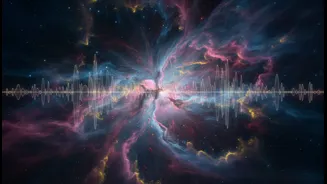
This digital data, representing different wavelengths of light and radiation, is usually translated into the breathtaking images we are familiar with. Sonification is the process of taking that same data and translating it into sound instead of pictures. It is the auditory equivalent of data visualisation, using properties like pitch, volume, and rhythm to represent information. This allows us to experience cosmic phenomena not with our eyes, but with our ears.
A Symphony from the Stars
The process is both an art and a science. For a typical sonification, a computer program scans across an image, usually from left to right. The vertical position of a light source determines the musical pitch—light towards the top of an image gets a higher note, and light near the bottom gets a lower one. The brightness of that light controls the volume, with brighter spots sounding louder. Different types of data or celestial features can be assigned different instruments. For example, in the sonification of the Crab Nebula, X-ray data from Chandra is played by brass instruments, visible light from Hubble is represented by strings, and infrared data from Spitzer is heard through woodwinds. This creates a rich, multi-layered composition that represents the scientific data with surprising musicality.
Hearing the Pillars of Creation
One of the most iconic images given this treatment is the Pillars of Creation, a vast star-forming region in the Eagle Nebula. In its sonification, a horizontal scan across the image generates the sounds. The ethereal structure of the pillars, which are immense towers of interstellar gas and dust, can be heard as sweeping changes in pitch. Data captured in X-ray light and visible light create two distinct melodies that can be heard separately or together, offering a new way to appreciate the object’s complexity. Background stars might be converted into the sound of water droplets, adding texture to the cosmic soundscape. It transforms a static image into a dynamic auditory experience.
An Inclusive and Insightful Cosmos
The primary motivation behind NASA's sonification project, which began in earnest at the Chandra X-ray Center in 2020, is accessibility. For decades, the wonders of astronomy have been largely inaccessible to people who are blind or have low vision. By translating data into sound, this initiative opens the door to the cosmos for a community that was previously excluded from the visual splendour of space. The project was developed in collaboration with accessibility experts and members of the blind community to ensure it is a meaningful tool. But the benefits extend to everyone. The human ear is exceptionally good at detecting patterns, nuances, and changes over time. For scientists, listening to data can reveal subtle details that might be missed in a visual analysis, potentially leading to new discoveries.
The Future of Listening to Space
NASA's Universe of Sound program continues to expand, with a growing library of sonified objects from the Galactic Center to distant galaxy clusters. The project has been met with overwhelmingly positive feedback, with studies showing that it not only helps with learning but also elicits strong emotional responses from listeners. Recently, the team has even created sheet music based on sonified data, allowing musicians to literally play the score of the Crab Nebula. This initiative underscores a fundamental shift in science communication. It proves that by presenting information in multiple ways, we create more avenues for connection and understanding. It’s a reminder that the universe has stories to tell, and now, we have one more way to listen.