
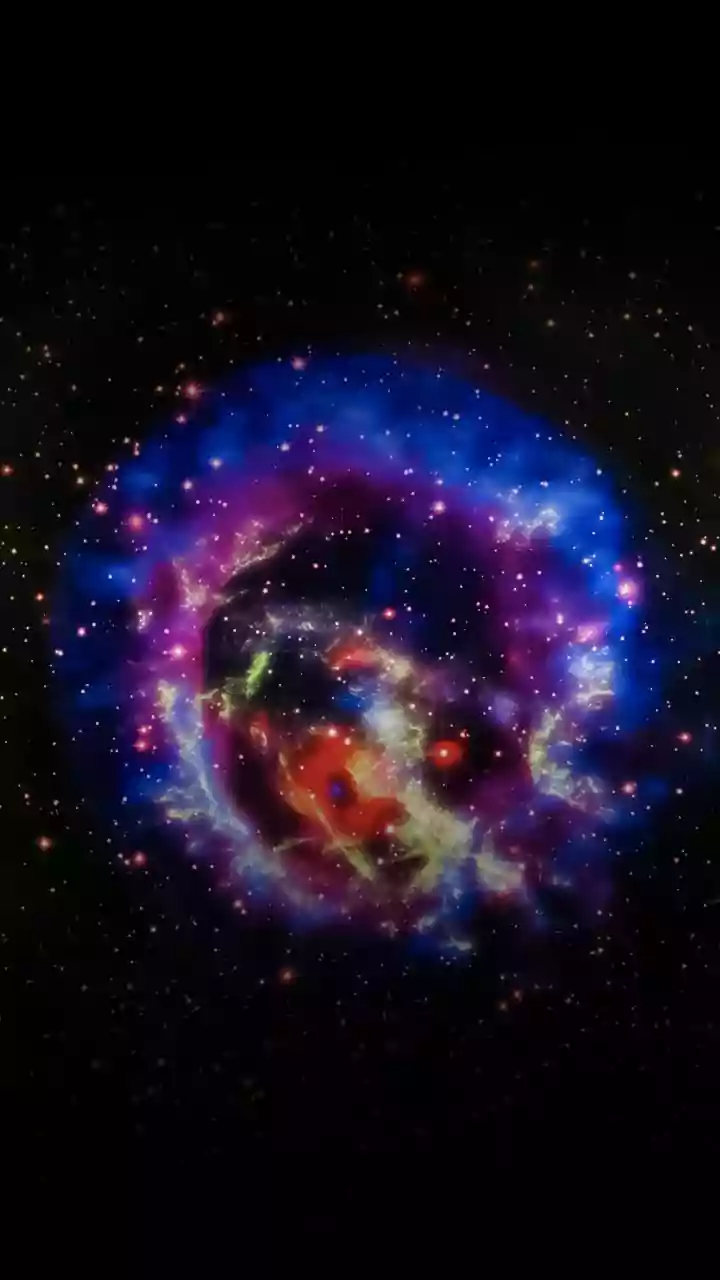


The Star's Final, Fiery Act
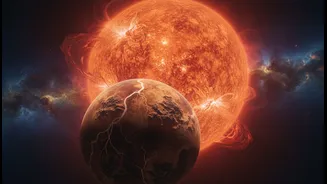
For most of its life, a star like our sun is in its 'main sequence,' calmly fusing hydrogen into helium. But when that hydrogen fuel runs low, the star's core contracts and heats up, causing its outer layers to swell dramatically. This is the red giant
phase. A star can expand to hundreds of times its original size, engulfing any planets unfortunate enough to be in its inner system. After this violent expansion, the star sheds its outer layers, leaving behind a tiny, incredibly dense core called a white dwarf. This stellar remnant, roughly the size of Earth but containing about half the sun's mass, is the final stage for most stars in the universe.
A Zone of Total Destruction
The red giant phase is catastrophic for nearby worlds. When our own sun expands in about five billion years, it will almost certainly swallow and vaporize Mercury and Venus. Earth's fate hangs in a delicate balance. For decades, astronomers believed our planet was doomed to be engulfed. However, recent research suggests a slim chance of survival. As the sun expands, it also loses mass, which weakens its gravitational pull and could allow Earth's orbit to drift outward to safety. The outcome depends on a complex interplay between the star's expansion and this mass loss. But even if Earth escapes being swallowed, the intense heat will have long since boiled away its oceans and atmosphere, rendering it uninhabitable.
The Unlikely Survivors
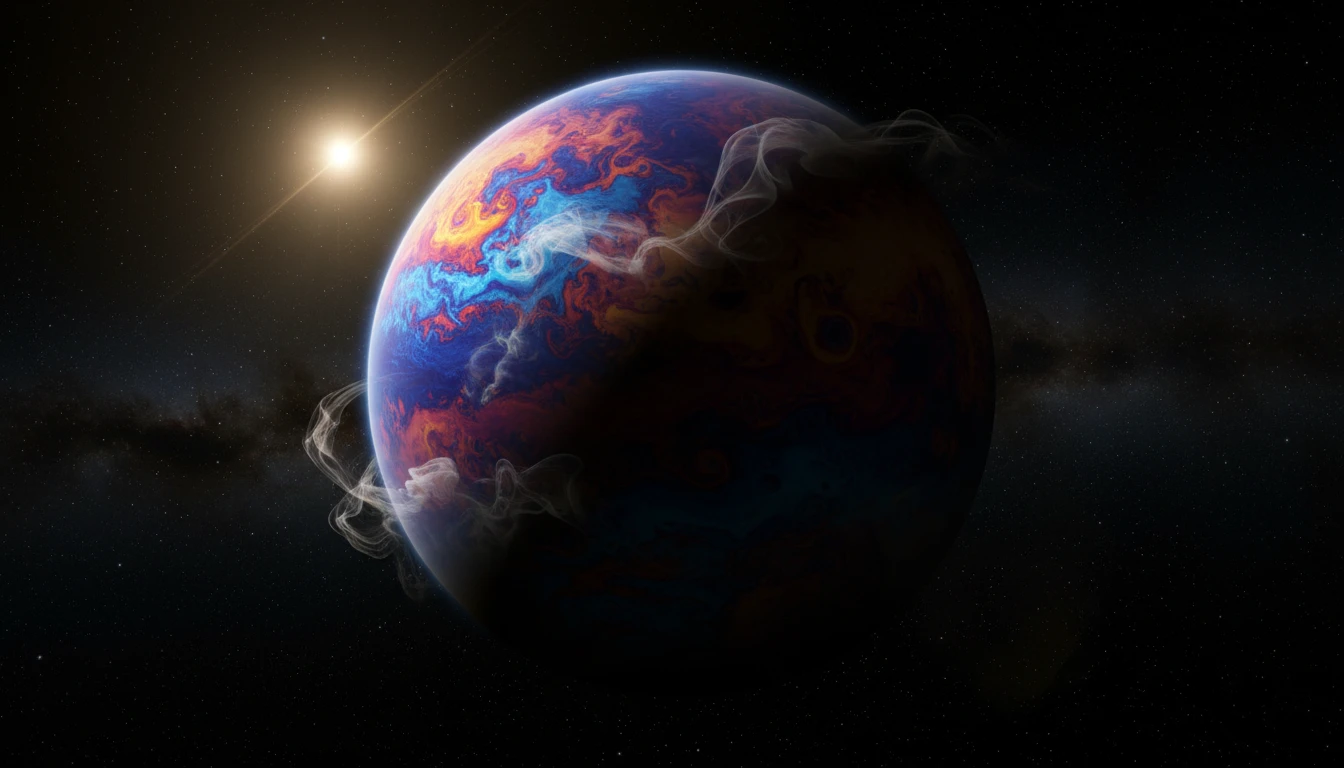
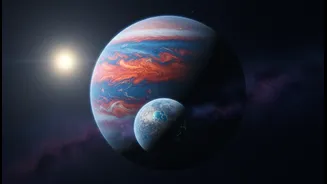
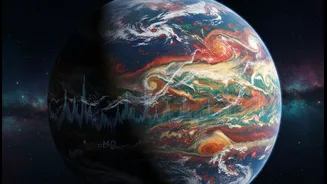
For a long time, the existence of planets around white dwarfs was purely theoretical. Now, thanks to powerful instruments like the James Webb Space Telescope (JWST), astronomers are finding them. One remarkable example is WD 1856 b, a Jupiter-sized planet orbiting its white dwarf star at a shockingly close distance—completing a full orbit every 34 hours. This is 50 times closer than Earth is to the sun. At that proximity, it should have been destroyed when its star became a red giant. The leading theory is that the planet originally had a much wider, safer orbit and migrated inward billions of years after its star's death, likely due to gravitational nudges from other objects in the system. JWST observations of its atmosphere support this, showing it was significantly reheated during this inward journey.
The Planet That Shouldn't Exist
Even more baffling is the planet named Halla (also known as 8 Ursae Minoris b). This gas giant orbits a star that has already gone through its red giant phase. According to stellar models, the star would have expanded well beyond Halla's current orbit, meaning the planet should have been consumed. Yet, there it is. One theory proposed that the host star was once a binary pair; the two stars merged, which prevented the resulting star from expanding enough to engulf the planet. However, newer research suggests the star is too young for this merger scenario, reopening the mystery. Another possibility is that the planet is a 'second-generation' world, formed from the debris created by the violent stellar merger. The survival of Halla challenges our understanding of planetary evolution, proving that the universe is full of surprises.
A Glimpse of Our Solar System's Future
These 'zombie' planetary systems are more than just cosmic curiosities; they are a time machine, offering a preview of our own solar system's distant future. The discoveries of survivors like WD 1856 b suggest that while Earth's fate is uncertain, the gas giants—Jupiter and Saturn—are likely to endure. As the sun sheds its mass, their orbits will expand, pushing them further out into the reshaped solar system. Studying the atmospheres and compositions of these surviving worlds gives scientists unprecedented insight into the final chapters of planetary life. It shows that even after the violent death of a star, planetary systems can persist, albeit in a dramatically altered form. Stellar death, it turns out, is not always the end for the worlds that call a star home.