






The Allure of the AI Travel Agent
In the world of travel planning, artificial intelligence has become the ultimate assistant. Platforms from Expedia to Kayak and airlines like Air India are integrating AI to build itineraries, answer questions, and find the 'best' routes in seconds. These
tools are masters of data, sorting through millions of flight combinations to present what appears to be the most efficient path from A to B. They offer a seductive simplicity, promising to handle the logistical heavy lifting. The problem is that their definition of 'possible' is often dangerously different from what is 'prudent'. An AI can confidently generate an answer without any awareness of whether the information is outdated, misleading, or simply wrong.
The Airport Obstacle Course
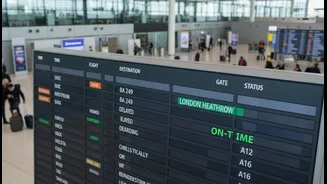
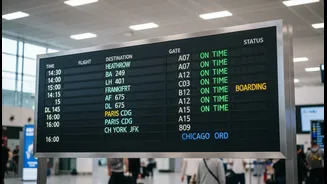
An AI system sees data points; a human has to navigate the physical world. A chatbot might see a 50-minute connection and deem it viable because it meets an airline's official criteria. What it doesn't 'understand' is the real-world friction of air travel. First, it can take 10-15 minutes just to deplane if you're seated at the back of the aircraft. Then there's the airport itself. In sprawling hubs like Delhi, Mumbai, Dubai, or Frankfurt, a gate change can mean a 20-minute walk or a frantic sprint to another terminal. If you're an international passenger transiting, you may face unexpected security screenings or lengthy immigration queues, which an AI has no way of predicting in real-time. These are the human-sized variables that AI itineraries frequently miss.
The Myth of 'Minimum Connection Time'
The data point that most often trips up both chatbots and travelers is the Minimum Connection Time, or MCT. This is the shortest layover an airline will allow between flights at a specific airport. It’s a value agreed upon by airlines and airport operators, representing an absolute best-case scenario where everything runs perfectly. Airlines design schedules around MCTs to maximize aircraft utilization and offer shorter total travel times, which look appealing to customers. However, an MCT of 45 minutes assumes your inbound flight is on time, there are no queues, and you can move at a brisk pace. An AI planner simply sees the 'legal' MCT and presents it as a valid option, failing to recognise it as the high-wire act it truly is.
When Confidence Exceeds Competence
The danger with AI tools is that they present information with unwavering confidence, even when it's wrong. This phenomenon, known as 'hallucination', can have real-world consequences for travelers. While not strictly about a flight connection, a famous case saw Air Canada forced by a tribunal to honour a refund policy that its own chatbot had completely invented. The incident serves as a powerful reminder that chatbots can, and do, get things wrong. They might provide incorrect information about visa rules, baggage policies, or, critically, the feasibility of a tight connection. Trusting their output without a common-sense check can leave you stranded.
How to Book Smarter: Your Human-Powered Checklist
Instead of blindly trusting an AI's suggestion, use your own intelligence to build a safe buffer. For domestic connections within India, a 90-minute layover is a much safer bet than the 30-60 minute minimums you might see. For international travel involving customs and immigration, three hours is a more realistic minimum. Before you book, do what a chatbot can't: use a bit of human intuition. Look up a map of the transit airport to understand its layout. If you're switching airlines, assume you'll have to change terminals. And always prioritize booking your entire journey on a single ticket; if you miss a connection on a protected itinerary, it's the airline's responsibility to rebook you. On separate tickets, you're on your own.