






Beyond the Automation Hype
For years, the conversation around AI in the workplace has been dominated by automation and the fear of job displacement. While AI is certainly automating repetitive tasks, a far more interesting story is unfolding. The real opportunity lies not in replacing
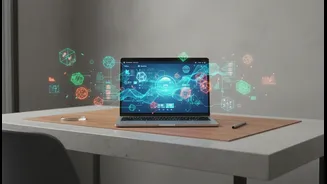
humans, but in augmenting them. This has given rise to a new wave of startups focused on building AI-powered assistants, or ‘co-pilots’, that enhance human capabilities, streamline complex workflows, and solve niche problems that larger, more generalised AI models often overlook. Knowing how to use AI effectively is quickly becoming a core professional skill, and companies are emerging to facilitate this collaboration. These new ventures are moving beyond simple chatbots to create sophisticated tools that are deeply integrated into the daily fabric of work, from project management to creative design.
Reinventing Human Resources
The Human Resources sector, often burdened by administrative tasks, is a prime example of AI-driven disruption. The HR tech market is booming, with startups introducing AI to automate and improve nearly every aspect of the employee lifecycle. Companies are developing AI resume screeners that can rank candidates based on skills while detecting bias, and tools that automate the entire onboarding process. There are also platforms emerging that use AI to generate fair and comprehensive performance reviews from continuous feedback data or to create internal marketplaces that match current employees with new opportunities inside the company. With a huge majority of HR leaders now accelerating AI integration, the field is ripe for startups that offer hyper-personalised employee experiences and advanced analytics.
The Rise of Vertical AI
While general-purpose AI like ChatGPT gets the headlines, the most significant commercial opportunities are often in 'Vertical AI'. These are highly specialised AI solutions tailored for specific industries. Instead of a one-size-fits-all approach, these startups train their models on industry-specific data, terminology, and workflows. This leads to more accurate and effective tools for sectors with unique challenges. For example, in the legal field, startups are creating AI assistants that automate contract analysis and document review. In healthcare, AI is being used for more accurate medical imaging analysis and to automate complex billing codes, reducing errors and saving money. This focused approach is attracting significant investor attention, as businesses prioritise solutions that understand their specific professional niche.
The New 'Co-Pilot' Economy
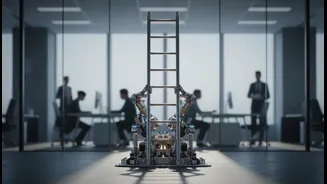
Perhaps the biggest trend is the emergence of AI agents and co-pilots that can plan, reason, and complete multi-step tasks with minimal human oversight. This is creating a new 'human-agent team' structure within companies. Startups are building these digital co-workers for a variety of roles. Some focus on proactive assistants that can organise calendars, prepare for meetings, and prioritise daily tasks. Others are building AI agents for software developers that can suggest code, run tests, and check for compliance, freeing up engineers to focus on higher-value work. This pattern of humans supervising teams of AI agents, rather than doing all the repetitive work themselves, is defining the next frontier of workplace productivity and creating a massive market for startups that can build the most effective digital team members.
Opportunities in the Indian Market
The global AI boom is mirrored and, in some cases, amplified in India. The country's vibrant startup ecosystem and deep talent pool make it a fertile ground for AI innovation. Venture capital firms are actively investing in Indian AI startups, creating a supportive environment for new ventures. Specialised venture funds are being established with a sole focus on nurturing AI companies from their earliest stages. This influx of capital and expertise is enabling Indian entrepreneurs to tackle both local and global challenges, building everything from AI-powered HR solutions for the domestic market to sophisticated vertical AI platforms for international clients. For aspiring founders in India, the message is clear: the resources and market appetite are there for those who can identify a real-world business problem and apply AI to solve it.