
The Ultimate Food Delivery Problem
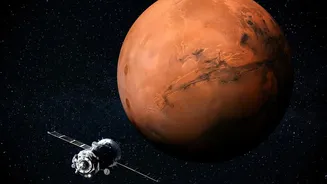
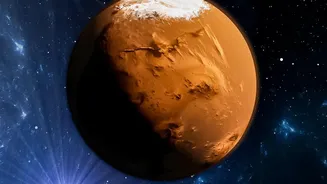
A round trip to Mars could take two to three years. The sheer volume and weight of pre-packaged meals required for a crew over that time would be immense, making the launch costs astronomical. Beyond cost, the nutritional value of pre-packaged food degrades
over long periods. Freshly grown produce would provide essential vitamins and a varied diet that packaged meals cannot. Consequently, for any long-term human presence on Mars, relying on resupply missions from Earth is not a sustainable strategy. The only viable option is for astronauts to grow their own food using resources available on the planet, a concept known as in-situ resource utilization (ISRU).
Mars Isn't Exactly Fertile Ground
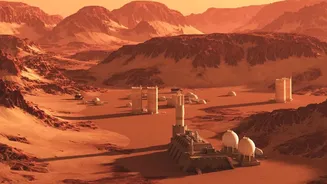
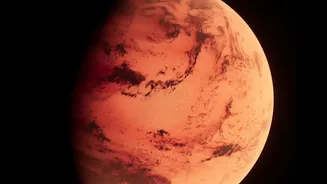
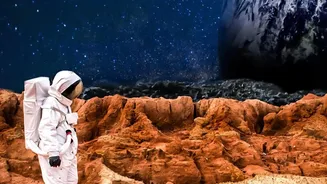
Unfortunately, the Red Planet is not a ready-made garden. The Martian 'soil', technically called regolith, is a fine, dusty layer of crushed rock created by meteorite impacts and erosion. While it contains some of the basic minerals plants need, it's completely devoid of the organic matter and beneficial microbes that make Earth's soil fertile. Worse, Martian regolith is laced with toxic perchlorate salts, which would need to be washed out before it could be used for agriculture. Add to that the thin atmosphere, intense cosmic radiation, and freezing average temperatures, and it becomes clear that Martian farming requires a highly controlled environment.
Building a Martian Greenhouse
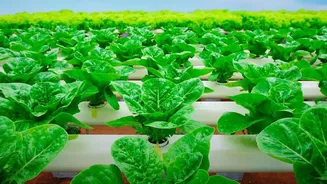
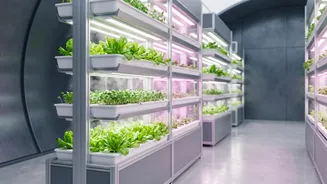
To overcome these challenges, astronauts will need to farm inside pressurized, climate-controlled habitats. These Martian greenhouses would protect plants from radiation and the cold, while maintaining a breathable atmosphere. Since sunlight on Mars is weaker and can be obscured by massive dust storms, powerful and efficient LED lights would be needed to provide the right spectrum for photosynthesis. Given the scarcity of rich soil, soilless farming techniques are leading contenders. Hydroponics, where plants are grown in nutrient-rich water, and aeroponics, where roots are misted with a nutrient solution, are highly efficient methods already tested on the International Space Station (ISS). These systems use less water and space than traditional farming, making them ideal for a resource-constrained Martian colony.
The Astronaut's Menu
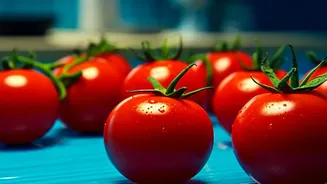
So, what might be on the menu? Scientists are focusing on crops that are nutritious, grow quickly, and produce a high yield. Experiments using Martian soil simulants—materials created on Earth to mimic the composition of Mars's surface—have successfully grown crops like lettuce, tomatoes, radishes, peas, and rye. Potatoes, famously grown by Mark Watney in "The Martian," have also been successfully cultivated in experiments using hyper-arid soil from a Peruvian desert, which closely resembles Martian conditions. Some research even involves genetically engineering plants to be more resistant to drought, cold, and radiation, essentially creating 'super plants' designed for survival on Mars.
More Than Just a Meal
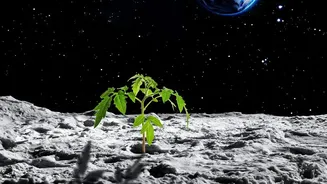
The benefits of a Martian garden extend far beyond nutrition. For astronauts living in a sterile, confined, and high-stress environment millions of miles from home, the act of gardening can provide profound psychological benefits. Tending to living plants offers a connection to Earth and nature, reduces stress, and provides a meaningful and engaging task. Studies conducted with astronauts on the ISS have shown that they find working with and consuming plants to be enjoyable and beneficial to their well-being. As one astronaut noted, simply seeing a few green soybean plants had a surprisingly dramatic and positive effect. In the isolation of space, a small patch of green can be a powerful antidote to the monotonous red landscape outside.