


The Timeless Wisdom of Clay
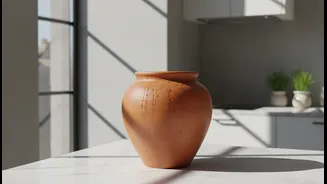
For generations, terracotta has been a cornerstone of Indian kitchens, and for good reason. This natural, porous clay material is celebrated for its ability to cook food slowly and evenly. Because it allows heat and moisture to circulate, it helps retain
the nutritional value of ingredients, tenderises meats, and deepens the flavour of spices. This slow-cooking process means less oil is often needed, and the natural alkalinity of clay can help balance the pH of acidic foods, resulting in a richer, less sharp taste. Beyond cooking, its inherent ability to keep hot foods hot and cold items cool makes it incredibly versatile.
A Modern Makeover for a Classic
The return of terracotta isn't just about nostalgia; it's about smart adaptation. Designers are taking the traditional material and giving it a contemporary upgrade. While old-school clay pots were often bulky and singular in purpose, today’s versions are being designed with modern life in mind. This includes the application of food-safe, lead-free glazes that prevent the absorption of food particles and make cleaning easier, a common issue with purely unglazed pots. Some modern terracotta even incorporates special formulations to improve resistance to thermal shock, allowing a pot to move from a gas flame to an oven without the risk of cracking. This evolution blends the health benefits of clay with the durability and convenience expected in a fast-paced kitchen.
Smart Shapes for Small Spaces
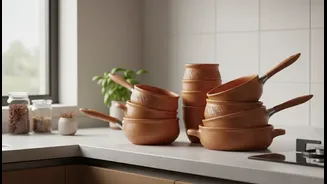
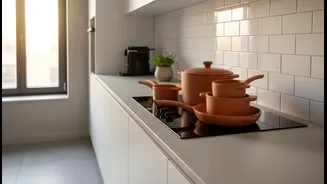
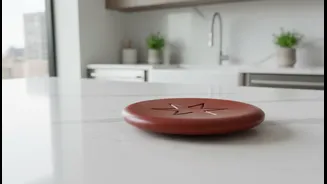
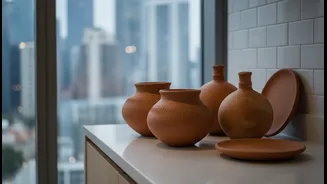
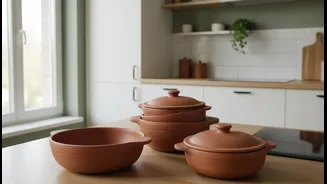
The most significant innovation for compact kitchens lies in the reshaping of the cookware itself. Recognising that cabinet and counter space are at a premium, brands are creating modular and stackable designs. Imagine pots that nest perfectly within one another, or a set where lids are designed to be flat and low-profile, allowing them to be stacked vertically without toppling over. Some designers are creating multi-functional pieces, like a deep kadai whose lid can be flipped over and used as a shallow pan or a serving platter. This dramatically reduces the number of individual items you need to own and store. Instead of a cluttered cabinet filled with mismatched pots and pans, you get a streamlined system where each piece works in harmony with the others, occupying a minimal footprint.
Function Meets Form and Philosophy
This trend isn't only about practicality; it’s also about aesthetics and sustainability. The earthy, rustic tones of terracotta bring a sense of warmth and authenticity to a kitchen, a welcome contrast to cold stainless steel. For many, choosing terracotta is a conscious move away from mass-produced, synthetic-coated pans toward natural, non-toxic materials. As a completely natural and biodegradable product, clay cookware aligns with a growing desire for eco-friendly living. Owning a beautiful, handcrafted terracotta pot that you use for both cooking and serving connects you to a rich culinary heritage while supporting artisanal traditions. It proves that you don't have to sacrifice style or values for the sake of functionality, even in the smallest of spaces.