




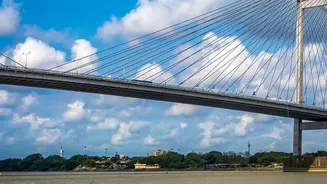
Kolkata carries many titles, but perhaps none is as evocative as the 'London of India'. This moniker harks back to an era when its grand colonial architecture dominated the skyline, earning it the status of the British Empire’s second city.
The City of Palaces
The nickname
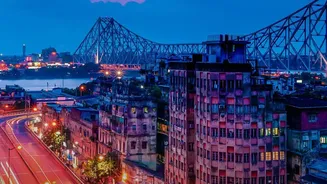
'London of India' isn't just a casual comparison; it's rooted in a time when Kolkata, then Calcutta, was the epicentre of British power in Asia. From 1772 to 1911, it served as the capital of British India, a hub of commerce, politics, and culture that the empire shaped in its own image. The British constructed a city of grand boulevards, stately administrative centres, and imposing monuments, reflecting architectural trends from their homeland. This deliberate city planning, which mirrored European capitals, along with its strategic location on the Hooghly River—much like London on the Thames—cemented the comparison. The cityscape became so filled with palatial residences and public buildings that Kolkata also earned the nickname 'City of Palaces'.
The Crown Jewel: Victoria Memorial
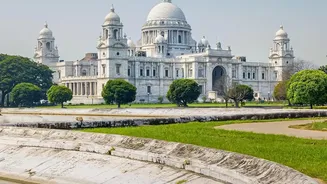
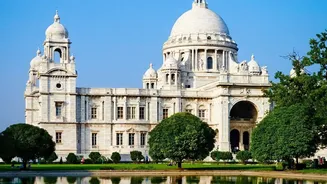
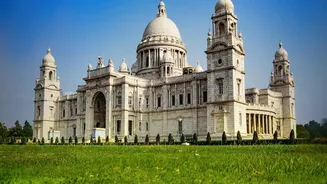
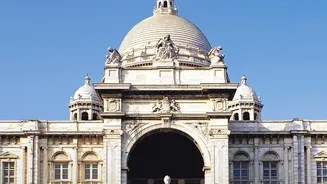
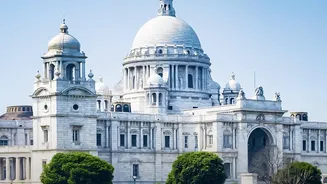
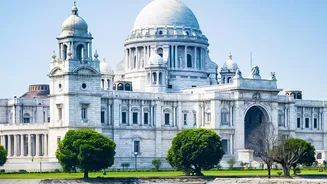
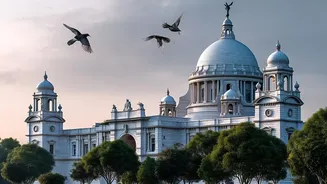
No single structure embodies this colonial legacy more than the Victoria Memorial. Conceived by Lord Curzon after the death of Queen Victoria in 1901, this colossal monument was intended as a tribute to the empress. Built between 1906 and 1921, it is a stunning example of the Indo-Saracenic revivalist style, a blend of British and Mughal architectural principles with flourishes from other traditions. Architect William Emerson designed the edifice, which is constructed from the same white Makrana marble used for the Taj Mahal, creating a visual echo of the famous Mughal tomb. The memorial's grand dome, sprawling gardens, and galleries filled with remnants of the Raj make it the most recognisable symbol of Kolkata’s imperial past.
A Walk Through Dalhousie Square
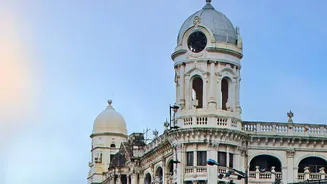
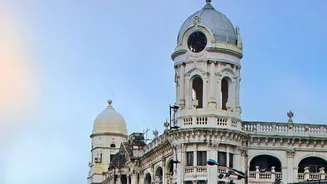
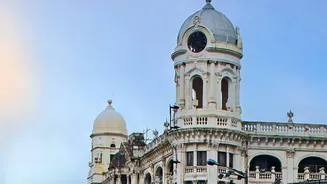
Beyond the Victoria Memorial, the heart of colonial Calcutta was Dalhousie Square, now known as B.B.D. Bagh. This area remains a living museum of British architectural influence. Dominating the square is the Writers' Building, a massive red-brick structure that once served as the administrative headquarters for the clerks of the British East India Company. Nearby, the General Post Office (GPO) impresses with its towering dome and imposing Ionic-Corinthian pillars. This district, which still serves as a central business and administrative hub, contains one of the world's most concentrated collections of British colonial architecture, where Victorian, Neoclassical, and Baroque facades stand side-by-side.
Gothic Spires and Neoclassical Grandeur
The European influence is also profoundly felt in the city's religious and civic buildings. St. Paul's Cathedral, completed in 1847, was the first Episcopal Church in the eastern world and was built to serve the growing European community. Designed in a Gothic Revival style, its soaring tower was modelled after the Bell Harry Tower of England's Canterbury Cathedral. This 'Indo-Gothic' style was adapted for the Indian climate, blending British aesthetics with local building needs. Similarly, the Raj Bhavan, the former residence of the Governor-General, was designed to mirror the grandeur of English country houses, cementing the city's administrative importance with a powerful architectural statement.
A Nickname Forged in History
While the grand buildings provide the visual evidence, the 'London of India' moniker was also about function. Calcutta was the financial and political engine of British India, a bustling river port that connected the subcontinent to the rest of the empire. However, any name carries complex weight from a colonial past. Today, Kolkata has its own vibrant identity, famously known as 'City of Joy'. The colonial era landmarks are no longer just symbols of imperial power ; they have been absorbed into many parts of modern Indian metropolis . They stand not as replicas of London , but as integral parts of Kolkata 's unique and layered history , reminders of a past that has shaped , but no longer defines , this dynamic city.