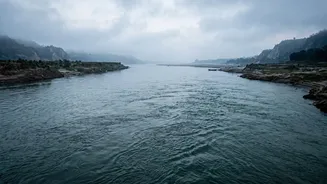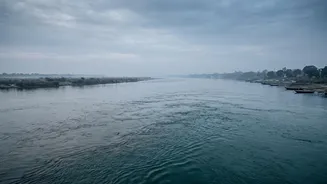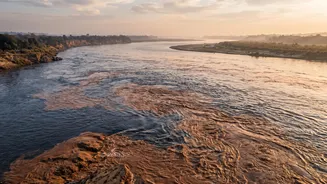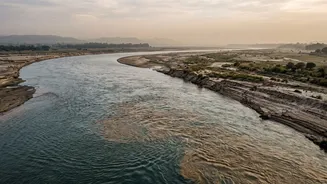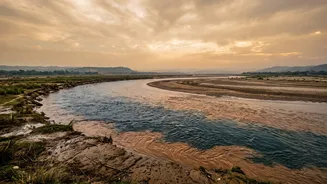









A three-decade-old treaty that has defined water sharing between India and Bangladesh is set to expire this December, forcing both nations to the negotiating table. The outcome will be a crucial test of their strategic partnership.
The Clock Ticks on a 30-Year-Old Pact
Signed on December 12,
1996, the Ganges Water Treaty was a landmark agreement designed to manage the sharing of water from the Ganga river during the critical dry season, from January to May. For 30 years, it has provided a framework for apportioning the flow downstream of India's Farakka Barrage, which is located about 20 kilometres from the Bangladeshi border. The treaty, signed by then-Prime Ministers Sheikh Hasina of Bangladesh and H.D. Deve Gowda of India, balanced India's need to divert water to maintain the navigability of the Kolkata port with Bangladesh's absolute dependence on the river for agriculture, fishing, and preventing environmental degradation. With no clause for automatic renewal, the pact's expiration at the end of 2026 puts a vital, if sometimes contentious, bilateral issue back in the spotlight.
More Than Just the Ganges
While the Ganges treaty is the immediate focus, it represents only a fraction of the complex water relationship between the two neighbours, who share 54 transboundary rivers. The most prominent unresolved issue is the sharing of the Teesta river's water, a deal for which has been stalled since 2011 due to opposition from the Indian state of West Bengal. The Teesta is a lifeline for northern Bangladesh, and the failure to secure a pact has long been a sore point in Dhaka. This larger context of unresolved water issues complicates the Ganges negotiations. For Bangladesh, any new agreement on the Ganges is seen as an opportunity to address the broader principles of hydro-diplomacy, with many officials and experts hoping to set a precedent for future agreements on other shared rivers.
Stakes Are High for Lower Riparian Bangladesh
As the lower riparian country, Bangladesh is acutely vulnerable to changes in river flows. The Farakka Barrage has been blamed for decades for a host of problems downstream, including reduced freshwater availability, which impacts everything from irrigation for millions of farmers to the health of the Sundarbans mangrove forest, the world's largest. Decreased dry-season flow increases salinity intrusion in southwestern Bangladesh, harms fisheries, disrupts navigation, and degrades soil quality. Bangladeshi officials have emphasised that any new or renewed treaty must include a 'guarantee clause' to ensure a minimum flow, a provision they say was stronger in an earlier 1977 agreement but absent from the 1996 pact.
The Diplomatic Dance
Both New Delhi and Dhaka have publicly stated that the Joint Rivers Commission (JRC) is the designated platform for discussions. While technical-level meetings have reportedly continued, the last ministerial-level JRC meeting was held in 2022 after a 12nd gap, highlighting the slow pace of formal negotiations. The political landscape has also shifted. A new government is in place in Dhaka, and its Prime Minister, Tarique Rahman, has been invited to visit India. Observers believe a highnd level political meeting between the two prime ministers will be necessary to finalise any new treaty. Bangladesh has formed a highnd level committee to prepare for negotiations, signalling its intent to secure a deal that protects its national interests in a new era of climate uncertainty and increased water demand.
Simply renewing the old treaty may no longer be sufficient. Climate change is altering rainfall patterns and glacial melt, making river flows more erratic and unpredictable. Experts on both sides argue that any new agreement must be more dynamic and account for the entire river basin, not just the flow at Farakka. Bangladesh wants a revised pact that guarantees its required share during the lean season, while India faces its own domestic pressures, including the needs of West Bengal. The upcoming deadline is more than a procedural expiration; it is an opportunity to modernise a critical agreement to reflect new environmental realities and reaffirm the 'neighbourhood first' policy that is a cornerstone of regional diplomacy.