







Tyres: Your First Line of Defence
Your tyres are the only part of the vehicle that touches the road, making them the single most critical safety component in the rain. Wet roads significantly reduce grip, and worn tyres dramatically increase the risk of hydroplaning, where a layer of water
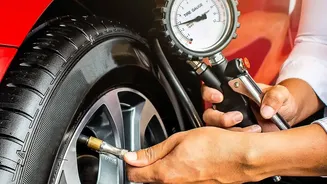
builds up between the rubber and the road, causing a total loss of control. Before any trip, inspect your tyres for adequate tread depth. Experts suggest a minimum depth of 3mm for monsoon safety. An easy method is to use a one or two-rupee coin; if the top of the coin's emblem is fully visible within the groove, your tyres are likely too worn for wet conditions. Also, check the tyre pressure, including the spare. Incorrect pressure affects braking, handling, and the tyre's ability to channel water away.
Brakes: Crucial for Wet-Road Stopping
Stopping distances are significantly longer on wet surfaces. Your braking system, which may feel perfectly fine in dry weather, is put to the test during a downpour. Before your trip, it's vital to have the brakes inspected. Listen for any squealing, grinding, or vibrating sounds when you apply the brakes, as these are clear warning signs. A mechanic should check the thickness of the brake pads and the condition of the brake discs. Additionally, the brake fluid should be checked. If the fluid is dark or cloudy, it may have absorbed moisture, which can reduce braking effectiveness. Having a responsive and reliable braking system is non-negotiable for navigating slippery roads and unexpected traffic situations.
Vision: Wipers and Lights are Essential
In heavy rain, visibility can drop to almost nothing in seconds. Your ability to see and be seen is paramount. Inspect your windscreen wipers thoroughly. The rubber on wiper blades degrades quickly in the heat, often leaving them cracked and hard by the time the monsoon arrives. If they leave streaks, skip patches, or make noise, replace them immediately. Top up your windshield washer fluid with a proper cleaning solution, not just water, as it helps remove oily road grime that rain can smear across the glass. Equally important are your vehicle's lights. Walk around the car and check that all lights—headlights (low and high beam), taillights, brake lights, and indicators—are working correctly. Clean any foggy or yellowed headlight lenses to ensure maximum brightness.
Under the Bonnet: Key Fluid and Battery Checks
The high humidity and constant dampness of the rainy season can be tough on your car's engine components and electrical system. Before you leave, check essential fluid levels, including engine oil and coolant. An engine running hot in slow-moving traffic during a downpour can be a holiday-ruining problem. The battery is another potential point of failure. An old or weak battery is more likely to give up during the monsoon due to the increased load from wipers, lights, and the defogger. Check the battery terminals for any corrosion (a white, powdery deposit) and ensure the connections are tight. If the battery is more than a few years old, it’s wise to have it tested at a workshop.
Preparing for the Unexpected
Even with a perfectly maintained car, things can go wrong. A well-stocked emergency kit is a crucial part of your preparation. For a rainy getaway, this kit should be tailored to wet conditions. Include essentials like a powerful flashlight, a basic tool kit, jumper cables, and a tyre inflator or puncture repair kit. It’s also wise to pack a tow rope, a reflective warning triangle, a first-aid kit, and an umbrella. These items can make a huge difference if you find yourself stranded on the side of a highway in the middle of a downpour, waiting for assistance. A little preparation goes a long way in turning a potential crisis into a manageable inconvenience.