






Our New Eyes in the Sky
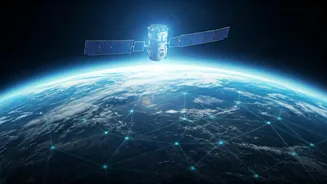
The term 'project season' perfectly captures the current mood in the world of climate science and space technology. It refers to a significant surge in the launch and operation of highly specialised satellites designed to monitor our planet's health with
unprecedented detail. Think of it as a coordinated, global effort to create a comprehensive health report for Earth. These are not just ordinary cameras in orbit; they are sophisticated instruments capable of measuring everything from soil moisture and glacier melt to forest density and greenhouse gas concentrations, providing a torrent of data to scientists and policymakers.
India's Crucial Role: NISAR and TRISHNA
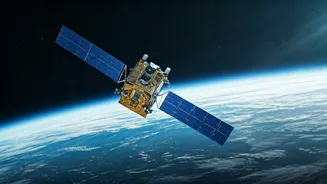
India is at the heart of this new season, primarily through two landmark collaborations. The recently launched NISAR (NASA-ISRO Synthetic Aperture Radar) mission, a joint $1.5 billion project between ISRO and NASA, is a game-changer. It is the world's first radar imaging satellite to use dual frequencies (L-band and S-band) to produce incredibly detailed images of the Earth’s surface, day or night, regardless of cloud cover. NISAR will map the entire planet every 12 days, tracking changes as small as a centimetre. This data is vital for monitoring Himalayan glaciers, landslide-prone areas, and changes in agricultural land. Joining it soon is the TRISHNA (Thermal infraRed Imaging Satellite for High-resolution Natural resource Assessment) mission, a partnership with the French space agency, CNES, scheduled for launch in 2026. TRISHNA will focus on measuring the planet's surface temperature in high resolution, a key metric for understanding water stress in crops, managing water resources, and monitoring urban heat islands.
From Complex Data to Daily Life
The real power of this 'project season' lies in translating this complex satellite data into tangible benefits for people on the ground. For India, this means a paradigm shift in several sectors. Farmers will get more precise information about soil moisture and crop health, enabling more efficient irrigation and potentially higher yields. Disaster management agencies will have better tools to predict floods, and droughts, and monitor the aftermath of cyclones. Urban planners can use data from missions like TRISHNA to design cooler, more sustainable cities by identifying and mitigating urban heat islands. Furthermore, by providing open access to its data, missions like NISAR empower scientists, researchers, and entrepreneurs across the country to develop innovative solutions for local and national challenges.
A Global Collaborative Effort
While India's contributions are significant, this 'project season' is a truly global affair. Europe's Copernicus Programme, for instance, provides vast amounts of free and open data on climate and the environment, which is used by scientists and governments worldwide, including in India, to tackle issues like water resource management. Newer commercial ventures are also entering the fray. A satellite called GEMS2-Amethyst, launched in March 2026, has just begun delivering three-dimensional temperature and humidity data, filling critical gaps in global weather observation. This web of interconnected missions creates a robust, multi-layered view of the Earth's systems, where the data from one satellite can complement and enhance the findings of another.
The Path Forward
The launch of these satellites is just the beginning. The next major challenge is to build the infrastructure and expertise needed to process, analyse, and disseminate the petabytes of data they will generate. Making this information accessible and understandable to the people who need it most—from a farmer in Punjab to a policymaker in New Delhi—is paramount. The success of this project season will not be measured by the number of satellites in orbit, but by our ability to use their data to build a more resilient and sustainable future. India's active and leading role in these global missions shows a commitment to not only monitoring the climate crisis but also to finding science-based solutions.