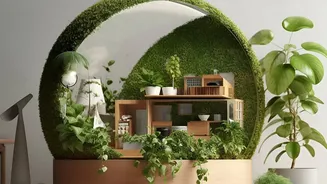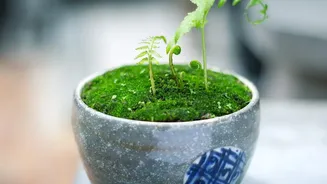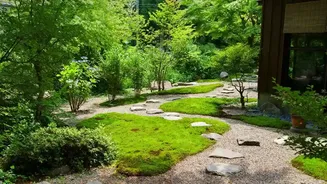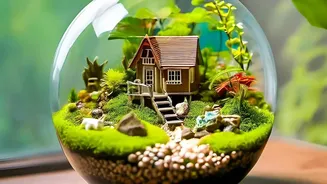


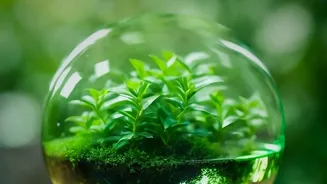
Looking for a touch of green that’s simpler than traditional houseplants? Moss gardening offers a serene, low-maintenance way to bring nature indoors, creating miniature landscapes in a dish with just a few natural elements.
The Allure of the Miniature Garden
Moss gardens are a quiet rebellion
against the demanding nature of many indoor plants. Unlike their rooted counterparts, mosses are incredibly self-sufficient. They don't have roots, instead absorbing moisture and nutrients through their leaves directly from the air. This makes them perfect for creating contained, tranquil scenes that evoke the feeling of a lush forest floor. The appeal lies in their simplicity and the calming effect they bring to a space. They are an exercise in mindfulness, offering a beautiful, natural aesthetic without requiring much upkeep. Beyond their beauty, mosses also contribute to a healthier indoor environment by helping to purify the air and stabilize humidity levels.
Gathering Your Natural Materials
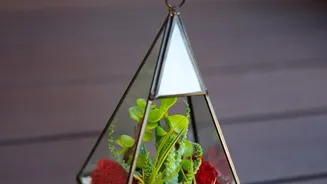
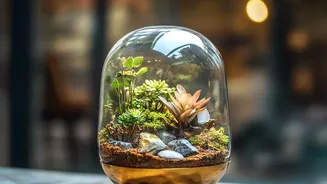
Creating your own moss garden is simple, and part of the joy is assembling the components. You will need a suitable container, such as a shallow ceramic bowl, a glass terrarium, or any dish that complements your decor. To ensure a healthy environment for the moss, you'll need a base layer of small pebbles or gravel for drainage. On top of that, a thin layer of activated charcoal is recommended to filter impurities and keep the arrangement fresh. While moss doesn't need deep soil, a shallow layer of a substrate like peat moss or potting mix can provide a stable, moist base. The key decorative elements are, of course, the moss itself, along with additions like smooth pebbles and interesting pieces of driftwood to create structure and visual interest. A spray bottle for misting is essential for care.
Choosing the Right Types of Moss
Not all moss is the same, and different types can create varied textures and effects. Mosses are broadly categorized into two groups: acrocarpous, which grow in upright clumps, and pleurocarpous, which grow in flat, spreading sheets. For creating lush, mounded shapes, Cushion Moss (Leucobryum glaucum) is a popular choice due to its pillow-like appearance. Mood Moss (Dicranum scoparium) offers a rich, velvety texture and grows in lovely, twisting clumps that add depth. For a carpet-like effect to cover the base of your design, Sheet Moss (Hypnum) is ideal. You can often find these varieties at garden centres or online, sometimes sold in dormant form, ready to be revived with water.
Step-by-Step Assembly and Design
Once you have your materials, arranging your garden is a creative process. Start by cleaning your container thoroughly. Add your base layer of pebbles, followed by the sprinkle of activated charcoal. Lightly moisten your substrate and add a thin layer over the base. Now, begin placing your 'hardscape'—the larger pebbles and driftwood. These pieces will form the structure of your miniature landscape. Arrange them to create focal points and interesting contours. Once you're happy with the placement, gently press the moss onto the substrate around your hardscape. Don't bury it; moss needs surface contact. You can use different types of moss to create contrast—a sheet of Hypnum moss as a 'lawn' with a few clumps of Cushion Moss as 'hills'.
Simple Care for Lasting Greenery
Maintaining your moss garden is refreshingly simple. The most crucial element is moisture. Moss should be kept moist but not waterlogged. A light misting every few days with filtered or distilled water is usually sufficient. Tap water can contain minerals and chlorine that may harm the moss over time. Light is another key factor. Moss thrives in indirect, diffused light. A north facing window or a spot that receives soft ambient light is perfect. Keep your garden away from direct sunlight which can quickly dry it out and cause it to turn brown. If you notice any debris like fallen leaves gently remove it to prevent mould.