





A Digital Shield Against Cosmic Threats
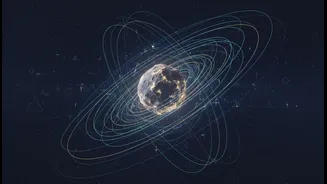
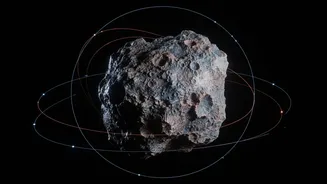
The core of the European Space Agency's effort is its Near-Earth Object Coordination Centre (NEOCC), which has developed a suite of freely available online tools. Known as the NEO Toolkit, this digital suite allows anyone from professional astronomers
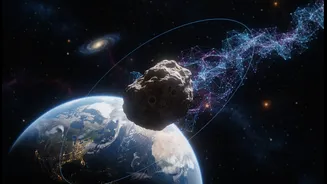
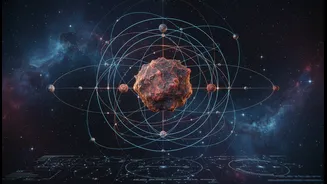
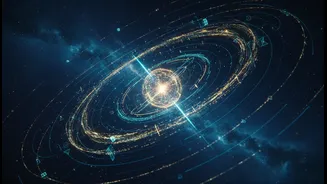
to curious citizens to visualize and analyze the orbital paths of asteroids. The toolkit includes functions like the Orbit Visualisation Tool, which creates 3D models of asteroid orbits, and the Flyby Visualisation Tool, which simulates close approaches to Earth. These aren't just fancy graphics; they are sophisticated instruments that help scientists calculate observation times, plot an asteroid's path across the sky from any location on Earth, and ultimately, assess its risk. By providing precise, high-accuracy data, these tools form a digital shield, offering a clear picture of what is happening in our cosmic neighborhood.
The Power of Open-Source Science
Perhaps the most crucial aspect of ESA’s strategy is its commitment to open access. By making the NEO Toolkit and vast datasets from missions like Gaia publicly available, the agency is democratizing planetary defence. This open approach stands in stark contrast to a world where critical data might be held in secret by individual nations. Instead, any researcher, university, or even skilled amateur astronomer around the world can access the same high-quality information. This allows for independent verification, crowdsourced problem-solving, and a diversity of perspectives. When the goal is protecting the entire planet, the most effective strategy is to have as many eyes on the sky as possible. Open data platforms ensure that a scientist in India has access to the same foundational tools as one in Europe, fostering a truly global collaborative effort.
From Data to Deflection
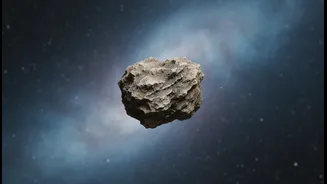
Accurate data is the essential first step in any planetary defence scenario. Before we can think about deflecting a potentially hazardous asteroid, we must know everything about it: its size, composition, and, most importantly, its exact trajectory. This is where the data from ESA’s tools and missions becomes indispensable. For instance, data from the Gaia space telescope, originally designed to map the Milky Way, has been revolutionary for asteroid science. It has helped identify and refine the orbits of over 150,000 asteroids. This precise orbital information is the foundation upon which future deflection missions, like NASA’s DART and ESA’s follow-up Hera mission, are built. Without knowing exactly where an asteroid will be, trying to intercept it is impossible. These open tools provide the bedrock of certainty needed for such critical operations.
A Global Watchtower, Not a Silo
The threat of an asteroid impact is a global problem that requires a global solution. ESA's open-data philosophy is a practical embodiment of this principle. The agency chairs the United Nations-mandated Space Mission Planning Advisory Group (SMPAG), which helps coordinate a unified space-based response to potential impacts. This cooperative spirit is mirrored in how data is shared. When a new object is detected, observatories worldwide contribute follow-up observations, which are compiled and made available through clearinghouses like the Minor Planet Center. ESA's NEOCC is a key node in this network, using the incoming data to continuously update risk assessments. This collaborative network, powered by open-source tools and shared information, acts as a global watchtower, ensuring that humanity is not caught off guard. It's a model of international scientific cooperation that recognizes our shared vulnerability and our collective strength.