


A Perfect Touchdown
The Indian Space Research Organisation (ISRO) successfully conducted the third and final Reusable Launch Vehicle Landing Experiment (RLV-LEX-03) at the Aeronautical Test Range in Chitradurga, Karnataka. In the test, the uncrewed winged vehicle, Pushpak,
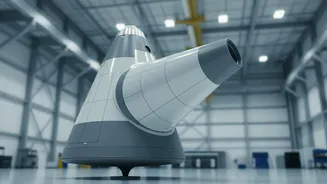
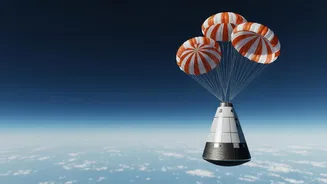
was lifted to an altitude of 4.5 km by an Indian Air Force Chinook helicopter and released. From there, it navigated its own way to the runway, autonomously correcting its course against strong winds and landing with pinpoint precision at over 320 kmph before using a brake parachute to stop. This mission successfully simulated the high-speed landing conditions of a vehicle returning from orbit, proving the robustness of ISRO's autonomous navigation, control, and landing systems.
The 'Space Plane' Dream
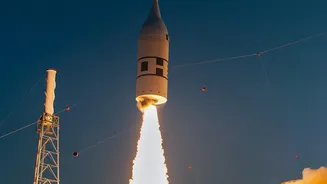
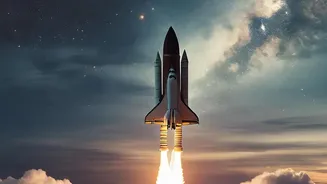
For decades, rockets have been single-use machines. The most expensive parts burn up or crash into the ocean after launching a satellite, making each mission incredibly costly. A Reusable Launch Vehicle (RLV) changes that paradigm. Think of it like the difference between a disposable paper cup and a ceramic mug you can use every day. ISRO's RLV-TD (Technology Demonstrator) is designed to function like a space plane. It will launch vertically like a rocket, deploy its payload in orbit, re-enter the atmosphere, and then land horizontally on a runway just like an airplane, ready to be refurbished for another mission. This reusability is the key to drastically cutting down the cost of accessing space.
Why Autonomy is a Game Changer
The 'autonomous' part of the landing is what makes this achievement so significant. Pushpak lands itself without any human pilot. It uses a sophisticated suite of sensors, including a Ka-band Radar Altimeter, and an advanced guidance algorithm to understand its position, speed, and altitude, making real-time adjustments to achieve a perfect landing. This capability is crucial because a vehicle returning from space is moving at hypersonic speeds, and the landing process happens too quickly for manual control. Perfecting this autonomous technology not only ensures the safety and success of the landing but also eliminates the immense cost and complexity associated with ocean-based recovery operations that other space programs sometimes use.
The Economics of Reusability
The ultimate goal of the RLV program is to make satellite launches significantly cheaper. Currently, the structural cost of a launch vehicle accounts for up to 80% of its total price, with fuel being a relatively small fraction. By reusing the most expensive components—the winged body, avionics, and propulsion systems—ISRO aims to reduce the cost of putting one kilogram of payload into Low Earth Orbit by a massive margin. This would make India an even more competitive player in the multi-billion dollar global satellite launch market. Affordable launch services will benefit Indian telecommunication companies, Earth observation services, and a burgeoning ecosystem of space-tech startups, fueling innovation across multiple sectors.
India's Next Steps in the Space Race
This successful series of landing experiments (LEX) is a critical milestone, but the journey is not over. ISRO is following a methodical, step-by-step approach. Having mastered hypersonic flight and autonomous landing, the next phase will involve more complex challenges, eventually leading to an orbital re-entry experiment where the vehicle will be launched into space and return to Earth to test its heat shields and re-entry manoeuvres. The final goal is to develop a Two-Stage-to-Orbit (TSTO) launch vehicle, where the winged first stage would fly back and land after deploying a smaller, expendable upper stage that carries the satellite to its final orbit. While still several years away, the recent success of Pushpak proves that ISRO is well on its way to achieving this ambitious vision.