
The 1920s Faux Bob
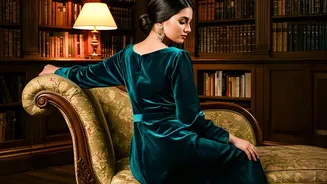
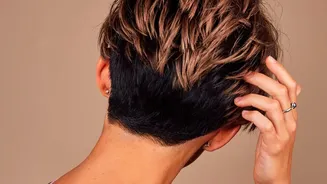
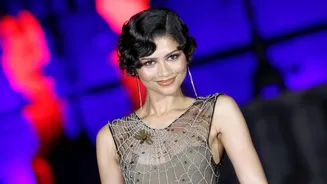
The 1920s marked a major shift in women's fashion, with many chopping their long locks for a short, boyish bob. But for those who weren't ready for such a commitment, the faux bob was the perfect solution. This clever trick creates the illusion of a bob on long hair.
Start by creating a loose, low ponytail at the nape of your neck, but don't pull the hair all the way through the elastic on the last loop. Let the ends of your hair fall forward to create 'bangs'. More authentically, women would create a flat braid or a series of pins at the nape to serve as an anchor. Then, the rest of the hair would be rolled upwards and tucked into this base, creating the iconic silhouette without a single snip. For a touch of flapper flair, create a few finger waves around your face using a strong-hold gel and a comb to press 'S' shapes into the hair.
The 1940s Victory Rolls
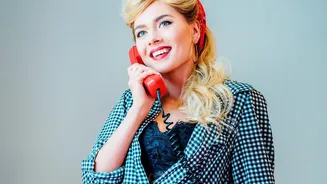
Named after the aerobatic manoeuvre of fighter planes, Victory Rolls became a staple of 1940s glamour. This style looks intricate, but at its core, it's all about creating voluminous rolls that frame the face. Start by sectioning the front parts of your hair on either side of your parting. Taking one section, backcomb it gently at the root to create some volume. Then, hold the section up and roll the hair inwards towards your scalp, as if rolling it around your fingers or a toilet paper tube for an even shape. Once you have a neat roll, secure it in place with bobby pins hidden inside the loop. Repeat on the other side. The rest of your hair can be left down in soft waves or pulled back into a simple chignon. Don’t worry if they aren't perfectly symmetrical; a little bit of character is part of the charm.
The 1950s High Ponytail
Simple, chic, and full of personality, the 1950s ponytail is a far cry from today's sporty version. It was defined by volume at the crown and soft, curled ends. To achieve this look, start by separating a section of hair at the crown and teasing it to build height. Gently smooth over the top layer so it looks polished, not messy. Next, gather the rest of your hair into a high ponytail. For a classic 'Barbie Pony' finish, take small sections from the front (if you left any out) or from the ponytail itself and wrap them around the base to hide the elastic, securing with bobby pins underneath. Use a curling iron to create soft, bouncy curls in the ponytail, and consider tying a ribbon or small scarf around the base for a final, authentic touch.
The 1960s Half-Up Bouffant
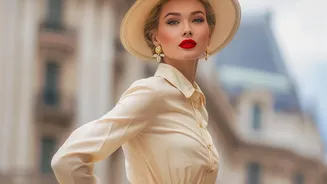
The 1960s were all about volume, and the bouffant was queen. A full beehive can be intimidating, but a half-up version inspired by icons like Brigitte Bardot is much more approachable for at-home styling. The secret is backcombing. Start by separating a large, circular section of hair at the crown. Working with smaller pieces from this section, use a teasing comb to backcomb the hair, pushing it towards the roots to build a voluminous cushion. Once you've created enough height, gently smooth the top layer of hair over the teased section. Gather the sides of your hair and pull them back, pinning them underneath the 'bump' to secure the style. A strong-hold hairspray is your best friend here. Leave the rest of your hair down, either straight or with a slight flip at the ends, for a classic Swinging Sixties look.