





The View from Above
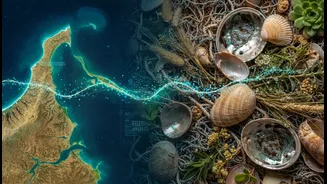
Satellites provide a powerful, large-scale perspective on our planet. Circling the globe, they collect vast amounts of data, creating a long-term, consistent record of environmental changes. For coastal communities, this technology is invaluable for monitoring
threats like shoreline erosion, rising sea levels, and changing sea ice patterns. Programs from agencies like NASA provide accessible archives of imagery that can quantify coastal changes over decades, turning qualitative observations into hard data. This allows scientists and planners to see slow-moving trends that are invisible day-to-day. However, this high-tech view has limitations. Satellite data records are relatively recent, often spanning only a few decades, and can miss crucial historical context. They can also lack the granular, on-the-ground detail needed to understand the true health of a local ecosystem.
Wisdom Passed Through Generations
Indigenous knowledge, often called Traditional Ecological Knowledge (TEK), offers a completely different, yet equally vital, perspective. It is an evolving body of wisdom acquired over hundreds or thousands of years through direct contact with the environment. This knowledge isn't static; it's a deep, lived understanding of the relationships between plants, animals, weather patterns, and landforms. For coastal peoples, TEK includes multi-generational observations about everything from historical sea ice conditions to the specific soils best for cultivation. This knowledge is passed down through stories, cultural practices, and direct experience, providing a rich, long-term baseline of environmental information that predates any satellite. While Western science is excellent at quantifying change, TEK provides the holistic context, connecting ecological shifts to cultural and social well-being.
A 'Two-Eyed Seeing' Approach
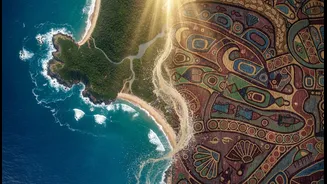
The most effective climate planning happens when these two ways of knowing—the satellite and the traditional—are brought together. This concept, sometimes called a "two-eyed seeing" approach, uses the strengths of both Indigenous and Western science side-by-side. For instance, in a project in Sanikiluaq, an Inuit community in Nunavut, TEK about local marine conditions helped overcome gaps in satellite data caused by cloud cover and Arctic darkness. The combination of AI, satellite imagery, and Indigenous expertise led to the discovery of new fishing locations, helping the community adapt to climate-driven changes. Similarly, local observations from fishers and residents in Mexico provided crucial context for satellite-detected changes in bay depth and erosion, identifying the human activities driving them. This integration validates local observations with quantitative evidence and adds indispensable real-world meaning to satellite data.
Empowering Community-Led Action
When communities are involved in monitoring their own lands using these combined tools, the impact is significant. In the Peruvian Amazon, Indigenous communities equipped with satellite data and smartphones to patrol their lands saw a dramatic reduction in deforestation. This approach empowers communities to gather their own evidence against illegal logging or mining and advocate for their rights. This is not just about collecting data; it's about building community evidence that informs stronger, more effective climate adaptation plans. Projects that successfully merge these knowledge systems result in climate strategies that are not only technically sound but also have strong community buy-in, making them more likely to succeed. By putting these tools directly in the hands of the people who have stewarded these lands for generations, it strengthens local governance and resilience.
Building a Bridge of Trust
Integrating these powerful knowledge systems is not without its challenges. The process requires building trust and respect between scientists and Indigenous knowledge holders. Key issues include data sovereignty—ensuring that Indigenous communities control how their knowledge is used, shared, and stored—and navigating the ethical considerations of merging different worldviews. Some Indigenous knowledge holders note that the pace of climate change is so rapid that it challenges even their time-tested ability to predict environmental patterns. However, successful collaborations, like those between NASA and the Passamaquoddy and Ute Mountain Ute Tribes, show a path forward. These partnerships are built on a mutual agreement to share information, co-develop research, and ensure the work benefits the community directly.