



Seeing the Invisible
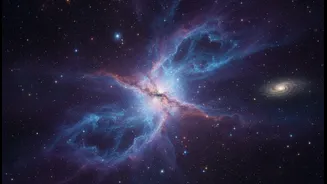
Many of the most breathtaking space photos are what scientists call “false-color” images. Because telescopes like the James Webb Space Telescope (JWST) and Hubble often see in light invisible to the human eye—like infrared or ultraviolet—scientists assign
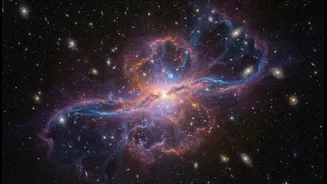
visible colors to different wavelengths of this light. This isn't to deceive, but to reveal. A recent image of the Dumbbell Nebula, for instance, assigns red to hydrogen gas and blue to oxygen. Suddenly, you’re not just seeing a colorful cloud; you’re seeing the chemical makeup of a dying star's final act, a preview of our own Sun’s fate in about six billion years. This technique turns abstract data into a visual story about the elements that build the cosmos.
A New Look at an Old Collision
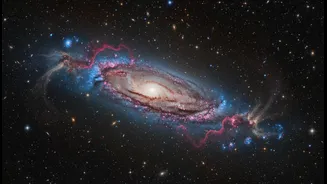
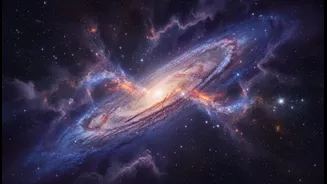
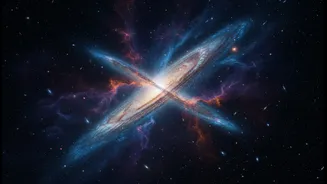
To mark its fourth year of science operations in July 2026, the JWST released a spectacular new view of Centaurus A. This galaxy has long fascinated astronomers because it’s the result of a violent collision between two other galaxies billions of years ago. While previous telescopes showed a bright blob obscured by dark dust lanes, Webb's infrared vision cuts right through that dust. The new images reveal a stunning, textured field of millions of individual stars, allowing scientists to perform “galactic archaeology.” By studying these different generations of stars, they can piece together the galaxy’s chaotic history, from its initial collision to subsequent bursts of star formation. What was once a mysterious blur is now a detailed historical record.
Making Sense of Star Birth
Star formation is a messy, chaotic process hidden within dense clouds of gas and dust. It’s nearly impossible to observe with conventional telescopes. But Webb’s ability to peer through these cosmic clouds is changing everything. A July 2026 image of the FS Tau region, for example, captured infant stars, or “protostars,” breaking free from their stellar nursery. Another recent image from June 2026 focused on the Orion Molecular Clouds, showcasing young stars at every single stage of formation. By color-coding the different temperatures and densities of the gas, these images allow us to witness the entire lifecycle of a star in one frame—from a dense clump of gas to a brilliant, shining star with jets of matter shooting out from its poles. It makes an incredibly complex process feel intuitive.
Counting the Stars in Our Own Backyard
Even our own galaxy, the Milky Way, holds mysteries. Its center is so densely packed with stars, gas, and dust that it’s incredibly difficult to see clearly. In June 2026, ESA’s Euclid telescope released the largest and most detailed image ever taken of the galactic heart in visible light, containing an estimated 60 million stars. To get this shot, the telescope stared at the region for 26 hours. The result is more than just a glittering star field. By being able to distinguish individual stars in this crowded area, astronomers can now better hunt for exoplanets using a technique called microlensing, where a nearby star acts as a “cosmic magnifying glass” for a more distant one. This single image provides a treasure map for finding new worlds right in our own galactic neighborhood.