







The 'Why' Behind the Rules
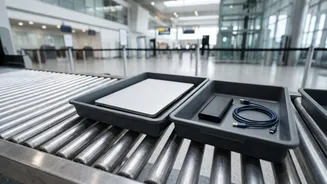
First, let's understand why security personnel insist on this separation. It comes down to two main factors: scanner clarity and fire safety. The batteries and dense internal components of electronics like laptops can be so thick that X-ray machines can't
see through them clearly. This creates a blind spot where other prohibited items could potentially be hidden. By placing these devices in a separate tray, screeners get an unobstructed view, ensuring everyone's safety. The second reason is specific to power banks. They contain high-capacity lithium-ion batteries, which are classified as dangerous goods. If damaged, they can overheat and cause a dangerous fire, a phenomenon known as thermal runaway. This risk is why aviation authorities worldwide have such strict rules about how they are transported.
Power Banks: The Carry-On Only Rule
This is the most critical rule to remember: power banks and any spare lithium-ion batteries are absolutely forbidden in checked luggage. They must be in your carry-on bag. This is a non-negotiable safety regulation from India's Bureau of Civil Aviation Security (BCAS) and global aviation bodies. The logic is that if a battery were to catch fire in the cabin, the crew can see it and extinguish it immediately. A fire in the cargo hold could go undetected and become catastrophic. Furthermore, as of early 2026, the Directorate General of Civil Aviation (DGCA) has banned the use of power banks to charge devices during flights in India. Passengers must now keep them stowed in a seat pocket or under the seat, not in overhead bins, to ensure they are visible.
Know Your Limits: The 100Wh Guideline
Not all power banks are created equal. In India, like in most parts of the world, the limit is based on Watt-hours (Wh). You can carry power banks up to 100Wh without needing any special permission from the airline. This covers most standard power banks on the market, typically up to about 27,000mAh. For larger power banks between 100Wh and 160Wh, you must get prior approval from the airline. Anything over 160Wh is completely banned from passenger aircraft. Always check the Wh rating printed on your device; if it's not marked, security may confiscate it. Most airlines, including Air India, also limit passengers to a maximum of two spare batteries or power banks.
The Ultimate Hack: A Dedicated 'Go-Bag' for Electronics
The secret to a seamless security experience is preparation. Instead of scattering your electronics throughout your carry-on, consolidate them. Use a dedicated electronics pouch, a tech dopp kit, or even a large, clear ziplock bag. Into this bag go your laptop charger, phone cable, power bank, and any other small gadgets. When you reach the security line, you simply pull out two items: your laptop and this single kit. This strategy prevents you from having to dig through your entire bag, holding up the queue while you search for a stray cable. It transforms a multi-item scramble into a simple, two-step process, saving you time and stress.
Packing Your Carry-On Like a Pro
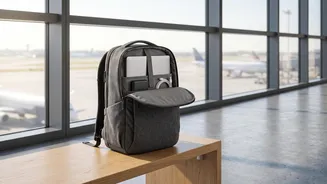
How you layer your bag also makes a huge difference. Pack your dedicated electronics kit and your laptop last, so they are right on top and easily accessible. There’s nothing worse than having to unpack folded clothes just to get to your computer. Delhi Airport's guidance suggests placing all large electronics like laptops, tablets, and even phones in a tray for screening. Having everything in one easily retrievable pouch means you can empty your pockets and get your electronics into the tray in a single, fluid motion. This small habit of strategic layering is one of the most effective ways to ensure you get through the security check quickly and without any last-minute panic.