








A New Gateway for the Humanities
The Graduate Aptitude Test in Engineering, or GATE, has traditionally been the entry point for engineering graduates seeking postgraduate admission. However, the introduction of the GATE Humanities and Social Sciences (XH) paper has changed the landscape.
This paper is specifically designed for students from arts, commerce, and social science backgrounds, testing them not on engineering principles but on reasoning, comprehension, and a chosen humanities subject like Economics, English, Philosophy, Psychology, or Sociology. This has opened the doors for them to apply for Master's and PhD programmes in some of India's most prestigious technical institutions, including various Indian Institutes of Technology (IITs) and the Indian Institute of Science (IISc).
From Liberal Arts to the Laboratory
Top institutes like IIT Delhi, IIT Madras, IIT Jodhpur, and IIT Mandi are now welcoming these students into their doctoral and interdisciplinary programmes. These are not watered-down courses but rigorous research opportunities within established Departments of Humanities and Social Sciences that have existed in IITs for years. Students are pursuing PhDs in fields ranging from sociology and philosophy to linguistics and public policy, often in an environment rich with cutting-edge technology and scientific research. The goal is to foster a multidisciplinary approach, allowing social scientists to engage directly with the technological advancements shaping society.
Why Technology Needs Social Science
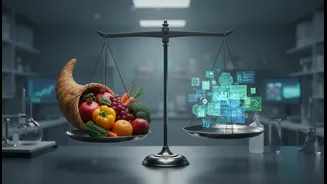
The integration of humanities scholars into tech hubs is more than an academic exercise; it's a response to a growing global need. As technology, particularly AI, becomes more embedded in our lives, complex ethical and societal questions arise that engineers alone cannot answer. How do we design AI that is free from bias? What is the societal impact of mass automation? How should digital platforms be governed? These are fundamentally social science questions. Bringing sociologists, ethicists, and economists into the fold helps ensure that technology is developed with a human-centric approach. This perspective is crucial for creating solutions that are not only technically sound but also socially responsible, equitable, and widely adopted. The World Economic Forum has even identified skills cultivated by the humanities, like critical thinking and emotional intelligence, as among the most valuable for the future job market.
A Two-Way Street of Learning
For humanities students, the benefits are clear: access to world-class research facilities, generous fellowships, and the opportunity to work in a diverse, innovative environment. It positions them for unique careers in public policy, tech ethics, user experience research, and academia, where an understanding of both society and technology is invaluable. But the learning is mutual. Engineers are increasingly exposed to critical thinking about the human impact of their work, moving beyond just finding a technical solution to asking whether it's the right solution for society. This cross-pollination encourages a more holistic and responsible form of innovation, breaking down the traditional silos that have long separated the 'two cultures' of science and the humanities.