







A Trail of Cosmic Dust
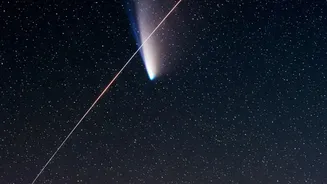
Each October, Earth travels through a stream of dust and debris left behind by one of the most famous objects in our solar system: Halley's Comet. As these tiny particles, many no bigger than a grain of sand, hit our atmosphere at incredible speeds—around
66 kilometres per second—they burn up, creating the streaks of light we call meteors. Because these shooting stars appear to radiate from a point within the constellation Orion, they are named the Orionids. This makes the shower a special event; every meteor you see is a tiny, ancient piece of Halley's Comet flaming out in a brief moment of glory. The comet itself won't be visible from Earth again until 2061, but its legacy lights up our sky every year.
Peak Viewing Times for 2026
The Orionids are active from early October to early November, but the best time to watch is during the peak. For 2026, mark your calendar for the night of October 21-22. Some forecasts suggest activity might also be strong on the following night, October 22-23, so it's worth trying on both nights if you can. The number of meteors can vary, but under perfect, dark-sky conditions, you might see between 15 and 20 meteors per hour. This is a more modest rate than some other major showers, but the Orionids are known for their speed and brightness, often leaving persistent, glowing trails.
The Challenge: A Bright Moon
Viewing conditions in 2026 will be impacted by a bright waxing gibbous Moon, which will be around 80% illuminated during the peak. The Moon's glare can wash out fainter meteors, significantly reducing the number you'll be able to see. However, there's a window of opportunity for dedicated observers. The Moon is expected to set around 3 a.m. local time. This creates a period of true darkness between moonset and the start of pre-dawn twilight. For the best chance of seeing the Orionids in 2026, set an alarm and plan your viewing for these crucial pre-dawn hours.
Where to Go for the Best View
The single most important factor for a successful meteor shower viewing is getting away from city lights. Light pollution from cities and towns can make it impossible to see all but the very brightest meteors. For residents of Delhi-NCR or other major metros, this means travelling to a darker location is essential for a good experience. Find a rural spot with a wide, open view of the sky, free from tall buildings and trees. High-altitude locations like Ladakh or Spiti Valley, or arid regions like Rajasthan, often offer the clearest skies. But even a local park or a field an hour's drive from the city can make a huge difference.
What to Bring (and What to Leave at Home)
You don't need any special equipment to watch a meteor shower. In fact, telescopes and binoculars are not recommended, as they narrow your field of view, and you want to see as much of the sky as possible. Your eyes are the best tool for the job. The key is comfort and patience. Bring a reclining chair, a blanket, or a yoga mat so you can lie back and look up without straining your neck. Dress in warm layers, as even pleasant nights can get chilly in the pre-dawn hours. Pack some snacks and a warm drink. Most importantly, allow your eyes at least 20-30 minutes to fully adapt to the darkness. This means avoiding looking at your phone screen, as its bright light will ruin your night vision.
How to Watch the Shower
Once you're settled in a dark spot, lie back and look up. While the meteors radiate from the constellation Orion, you don't need to stare directly at it. Meteors will appear all across the sky, and those that appear farther from the radiant point will often have longer, more dramatic trails. The shower is visible from both the Northern and Southern Hemispheres, so viewers across India can enjoy the show. Orion will rise in the east after midnight. Patience is crucial; meteors appear in spurts, so you might see several in a few minutes, followed by a lull. Just relax, take in the expanse of the starry sky, and wait for the show to begin.