







From Builder to Buyer: The Big Shift
For most of its history, from the Mercury and Apollo missions to the Space Shuttle, NASA operated on a traditional government model. It owned the hardware, managed every detail of development, and directly oversaw operations. If NASA wanted a rocket,
its engineers would design it, and its contractors would build it to exact specifications. But with the retirement of the Space Shuttle in 2011, NASA was left without a domestic way to send its own astronauts to the International Space Station (ISS), forcing it to rely on Russia's Soyuz spacecraft. This critical gap, coupled with budget pressures, sparked a radical change in thinking. Instead of building a new government-owned vehicle, NASA decided to buy transportation as a service from the commercial sector. This marked the beginning of a fundamental pivot from being the sole operator to becoming an anchor customer in a new space economy.
Why Make the Change?
The primary driver behind this strategic shift was simple: cost. By fostering competition among private companies, NASA aimed to drive down the price of accessing low-Earth orbit (LEO). The traditional model of developing spacecraft was incredibly expensive and time-consuming. The new commercial approach, using fixed-price contracts, incentivized companies to be efficient and innovative. This frees up NASA's significant, but limited, budget and its top engineering talent to focus on its core mission: deep space exploration. By outsourcing the routine task of getting to LEO, NASA can concentrate on ambitious goals like the Artemis missions to the Moon and eventual human exploration of Mars. Essentially, NASA is letting the private sector handle the local commute so it can plan the grand interstellar road trip.
The Stars of the Show: Cargo and Crew
The most visible successes of this new model are the Commercial Resupply Services (CRS) and the Commercial Crew Program (CCP). First came the cargo. Through the CRS program, NASA contracted with companies like SpaceX and Northrop Grumman (formerly Orbital ATK) to deliver supplies, experiments, and hardware to the ISS. Following the success of cargo delivery, the Commercial Crew Program tasked SpaceX and Boeing with developing spacecraft to ferry astronauts. SpaceX's Crew Dragon became operational in 2020, successfully ending America's reliance on Russia for crewed flights to the station. These programs work on a public-private partnership basis, where NASA provides technical oversight and funding, but the companies own and operate their vehicles, selling services to the agency.
The Next Frontier: Commercial Space Stations
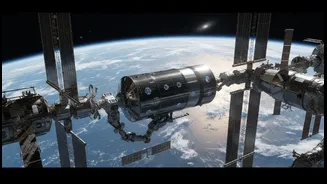
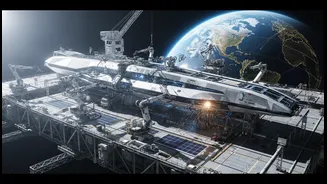
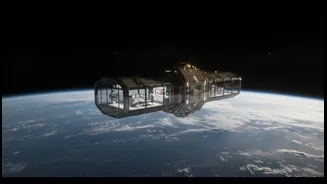
With the ISS scheduled for retirement around 2030, NASA is already applying its commercial strategy to what comes next. Rather than build a multi-billion dollar replacement, the agency is fostering the development of privately owned and operated space stations in low-Earth orbit through the Commercial LEO Destinations (CLD) program. Companies like Blue Origin, Sierra Space, and Axiom Space are developing concepts for these new orbital outposts. The vision is for NASA to be just one of many customers, renting space and services for its research and astronaut missions in a bustling orbital economy that could also include tourism, in-space manufacturing, and marketing.
Risks, Rewards, and the Road Ahead
The commercial approach has delivered significant rewards. It has lowered costs, stimulated a vibrant American space industry, and allowed NASA to focus on its exploration mandate. However, it hasn't been without challenges. Both Boeing and SpaceX faced technical hurdles and delays in their crew programs. There are also valid concerns about ensuring astronaut safety when relying on private companies and the risk of being dependent on a small number of providers. More recently, NASA has adjusted its strategy for commercial space stations, acknowledging that the business case is proving difficult and that a purely private approach may be too risky without more government support. Despite these hurdles, the model is expanding. NASA is now using commercial partnerships for lunar payload deliveries and even a recent mission to Mars, indicating this new way of doing business is here to stay.