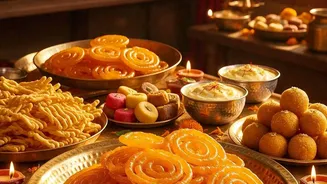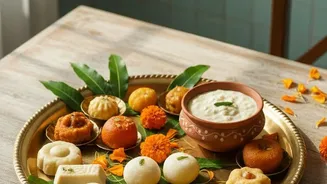

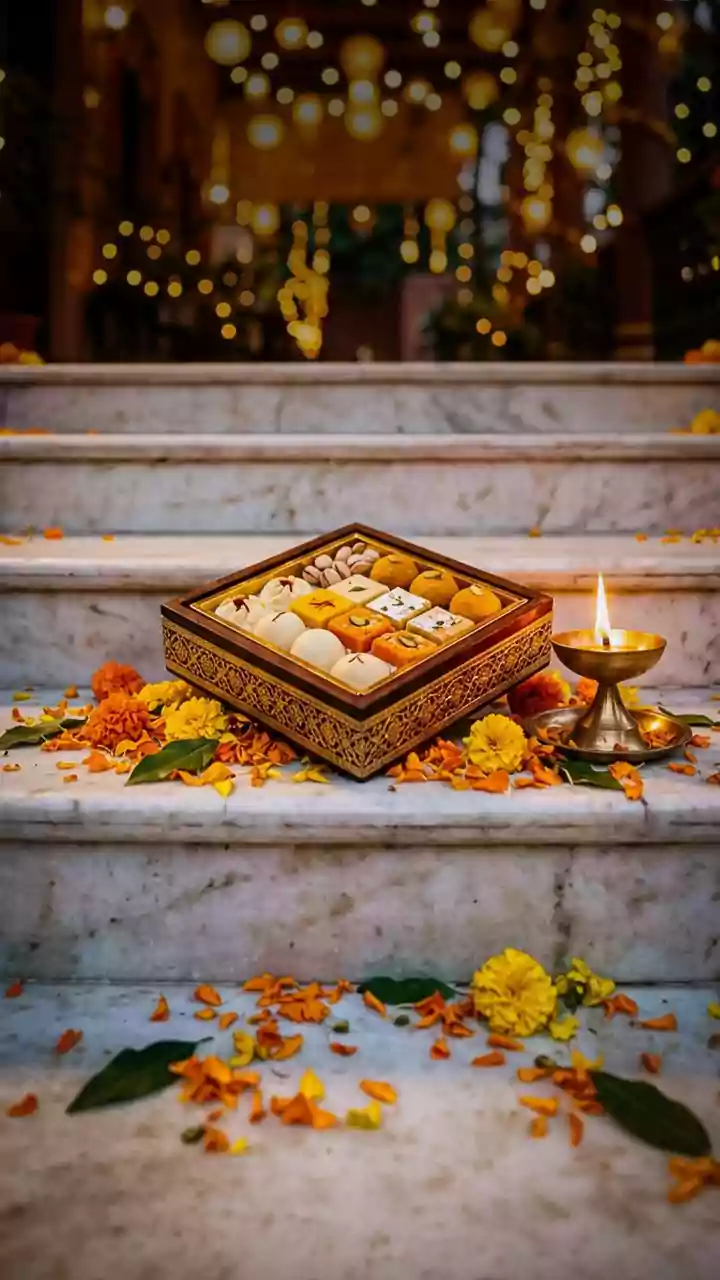

As diyas flicker to life, the air across India fills with a familiar, festive aroma: that of freshly prepared sweets. More than just dessert, Diwali mithai is a story of tradition, a taste of home, and a reflection of regional diversity.
West: The Flaky and The Fried
In Western India,
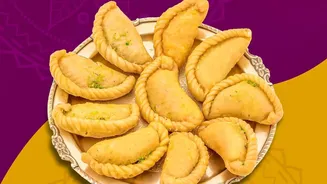
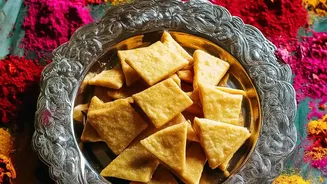
particularly Gujarat and Maharashtra, Diwali is synonymous with a platter of homemade snacks and sweets called 'faral'. Among the stars is the Ghughra, a crescent-shaped pastry with a crispy, flaky crust. Known as Karanji in Maharashtra and Gujiya in other parts of India, this delicacy is typically filled with a sweet mixture of khoya (milk solids), nuts, and semolina, then deep-fried to golden perfection. While some versions are dipped in sugar syrup, many Gujarati households prefer them with a simple dusting of powdered sugar, allowing the rich, nutty filling to shine. Another beloved Maharashtrian treat is the Shankarpali, a diamond-shaped, deep-fried cookie. Made from a simple dough of flour, ghee, sugar, and milk, it offers a satisfying crunch that beautifully balances the array of richer sweets on the Diwali table.
North: The Rich and The Robust
North Indian kitchens are famed for their use of milk, ghee, and nuts, and their Diwali sweets are no exception. Gujiya, the northern cousin of the Ghughra, is an absolute must-have, especially in states like Uttar Pradesh and Rajasthan. These pastries are filled with khoya, nuts, and dried fruits before being fried and often dipped in a sweet syrup. Another classic is the Balushahi, which resembles a doughnut but boasts a unique flaky texture. The dough is fried in ghee on low heat and then soaked in sugar syrup, resulting in a sweet that is crispy on the outside and soft and syrupy within. From Punjab comes Pinni, a rustic and wholesome sweet ball made from whole wheat flour, ghee, jaggery, and loaded with nuts. It's not only a festive treat but also a source of warmth and energy during the approaching winter.
East: The Magic of Chhena
The eastern state of West Bengal is the heartland of sweets made from 'chhena' (fresh cottage cheese). During Diwali, which coincides with Kali Puja, these milky delicacies take centre stage. Rasgulla, perhaps the most famous Bengali export, consists of soft, spongy chhena balls boiled in a light sugar syrup. It’s a refreshingly light sweet that melts in the mouth. Another favourite is Sandesh, a more delicate sweet made by combining fresh chhena with sugar or jaggery. It is often flavoured with cardamom or saffron and pressed into intricate moulds, creating a treat that is as beautiful as it is delicious. These sweets showcase a different philosophy, focusing on the subtle, fresh flavours of milk over heavy syrup or intense frying.
South: The Ancient and The Iconic
In Southern India, jaggery, rice flour, and ghee are cornerstone ingredients for festive sweets. Adhirasam, a sweet with a history stretching back a thousand years, is a Diwali staple in Tamil Nadu. It's a deep-fried pastry made from a dough of rice flour and jaggery, with a texture that is crispy on the outside and soft and chewy on the inside. The preparation is considered an art, requiring skill and patience. From Karnataka comes the iconic Mysore Pak, a rich, dense sweet made from just three ingredients: gram flour, sugar, and an abundant amount of ghee. Depending on the preparation, it can either be soft and porous, melting in your mouth, or have a slightly crumbly, fudge_like texture. This beloved sweet is so popular it's a fixture in sweet shops across the country.