





Putting Numbers on the Impact
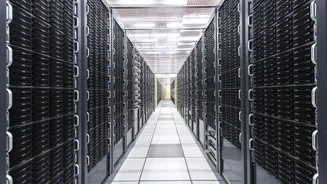
For the first time since the artificial intelligence boom, researchers have put a facility-level estimate on the environmental cost of the cloud. The Harvard study, published in Nature Sustainability, analyzed 403 of the largest 'hyperscale' data centres
across the United States between May 2024 and April 2025. It found these facilities consumed a staggering amount of electricity, estimated to be between 68 and 99 terawatt-hours. At the higher end, that's comparable to the annual electricity usage of entire states like Michigan or Tennessee. This massive energy draw resulted in approximately 25.7 million metric tons of carbon dioxide emissions, an amount similar to the annual emissions of the entire country of Denmark. Researchers noted this figure is already two to three times higher than estimates from 2018, underscoring the explosive growth of the industry.
Fossil Fuels Powering the Cloud
Despite widespread corporate pledges to transition to clean energy, the study revealed a stark reality: more than half of the electricity powering these massive data centres came from fossil fuels. Natural gas was the largest contributor at 38%, followed by coal at 15%. The carbon footprint of a data centre is not uniform across the country; it heavily depends on the local energy grid. For instance, the same computing task generates significantly more carbon in a state like Wyoming, which relies heavily on coal, compared to Oregon, which has a large supply of hydropower. The study found that just four states—Virginia, Oregon, Ohio, and Iowa—accounted for over half of the total electricity consumption, highlighting the intense geographic concentration of this infrastructure.
The AI and Data Explosion
The primary driver behind this escalating energy demand is the insatiable appetite for data and, more recently, the computational intensity of artificial intelligence. Training large AI models like GPT-4 consumes enormous amounts of power, and as businesses and consumers integrate AI into daily life, the demand on data centres skyrockets. The International Energy Agency (IEA) has warned that global data centre electricity consumption could double by 2030, with AI accounting for the majority of that growth. This boom is putting immense pressure on electrical grids, with some utilities struggling to keep up with requests for new connections, and has even caused some major tech companies to miss their own climate targets.
Beyond Electricity: The Water Footprint
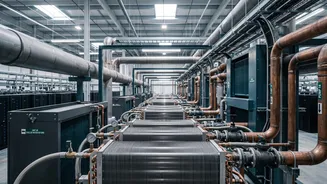
A data centre's environmental impact isn't limited to its carbon emissions. These facilities also consume vast quantities of water, primarily for cooling the thousands of servers packed inside. A single large data centre can use millions of gallons of water per day, equivalent to the consumption of a small town. This direct water use is a growing concern, especially as many data centres are located in water-stressed regions. However, the indirect water footprint is even larger. The majority of a data centre's water consumption happens off-site at the power plants—particularly coal, gas, and nuclear—that generate its electricity. This means that even a data centre using advanced on-site water-saving techniques can still have a massive water impact if its electricity comes from a thirsty source.
The Search for Greener Data
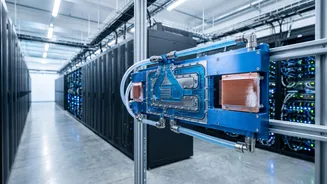
The industry is not sitting idle. Tech giants are among the world's largest corporate buyers of renewable energy, often signing Power Purchase Agreements (PPAs) to fund new wind and solar farms. Innovations in cooling technology, such as direct-to-chip liquid cooling and immersion cooling, promise to drastically reduce the energy spent on preventing servers from overheating. Some data centres are even recycling their waste heat, providing it to local district heating systems or greenhouses. Furthermore, AI itself is being used to optimize data centre operations, dynamically managing cooling and power loads to reduce waste. The goal for many is to achieve 24/7 carbon-free energy, ensuring every kilowatt-hour is matched with clean power from the local grid in real-time.