



The Soaring Energy Demand of Our Digital World
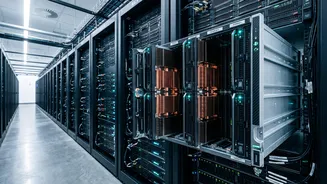
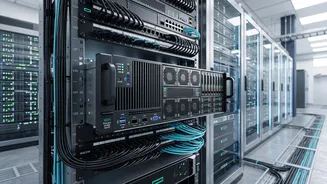
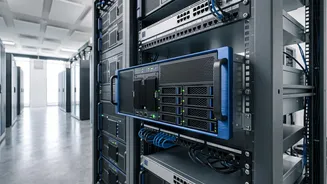
Every email sent, video streamed, and cloud document saved runs through a data centre. These facilities, packed with thousands of powerful computer servers, are the invisible engines of the modern economy. But they are incredibly thirsty for electricity.
According to a recent IEA report, data centres could consume over 1,000 terawatt-hours by 2030. This rapid growth is creating a significant challenge, with the IEA noting that planned projects in some markets could require more power than the region's current peak electricity demand. This isn't just a future problem; data centre electricity use already grew by 17% in 2025 alone, far outpacing the 3% growth in overall global electricity demand.
AI: The Power-Hungry Elephant in the Room
The primary driver behind this alarming forecast is the artificial intelligence boom. Training and running complex AI models, especially generative AI, is an extraordinarily energy-intensive process. A single AI-focused query can use nearly ten times the electricity of a standard Google search. The IEA estimates that AI will be responsible for about three-quarters of the growth in data centre power consumption over the next few years. This has led to a massive build-out of 'AI factories'—hyperscale data centres specifically designed for these demanding workloads. The power draw of these facilities is staggering; a typical AI data centre can consume as much electricity as 100,000 homes, with the largest new builds set to use 20 times that amount. This surge is forcing a reliance on fossil fuels in major markets like the US and China, with the IEA projecting that data centre-related carbon emissions could climb by 70% by 2030.
The Shift to Smarter Cooling
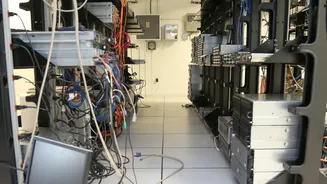
A significant portion of a data centre's energy bill—often up to 40%—goes toward cooling. Traditionally, this has been done with massive, power-hungry air conditioning systems, similar to those used in large commercial buildings. These Computer Room Air Conditioning (CRAC) units pump cold air through raised floors to prevent servers from overheating. However, this method is becoming increasingly inefficient, especially as the heat generated by dense clusters of AI-powering GPUs pushes conventional air cooling to its thermal limits. The inefficiency is a major bottleneck, and the industry is now urgently pivoting toward more advanced and sustainable cooling solutions as a primary strategy for managing spiralling energy costs and environmental impact.
Innovations in Cooling Technology
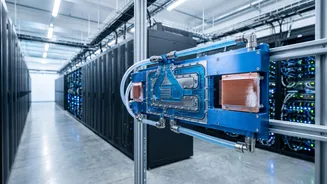
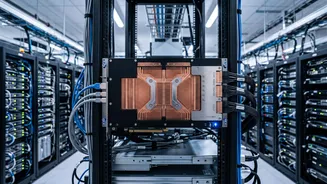
The focus has shifted dramatically to liquid cooling, which is far more effective at transferring heat than air. Two key technologies are leading the way. The first is 'direct-to-chip' cooling, where small pipes circulate a coolant directly over the hottest components, such as CPUs and GPUs. This targeted approach absorbs heat at the source and carries it away efficiently. The second, and even more radical, is 'immersion cooling'. In this method, entire servers are submerged in a non-conductive dielectric fluid. The fluid absorbs the heat directly from every component, virtually eliminating the need for fans and traditional air conditioning. Immersion cooling can slash a data centre's cooling energy consumption by as much as 95%, while also allowing for much denser packing of servers, saving physical space. While the upfront costs are higher, the long-term savings on energy make these technologies a crucial investment.
The Road Ahead for Global Tech
The IEA's warning is a call to action for the global technology industry and policymakers. The challenge is not just about building more power plants; it's about building smarter. For a rapidly digitising nation like India, where ambient temperatures are high and the digital economy is a key growth engine, embracing these efficient cooling technologies is a strategic necessity. High heat makes traditional air cooling even more expensive and less effective, making liquid cooling an essential component for future data centre developments. As major cloud providers like Microsoft and Google are already demonstrating, investing in advanced cooling is no longer a luxury but a fundamental requirement for sustainable growth in the age of AI. It’s a critical step in ensuring that the digital revolution doesn’t come at an unsustainable cost to our energy infrastructure and environment.