
The Key Players
At the center of this complex story are three main figures. First is Howard Lutnick, the billionaire businessman and CEO of Cantor Fitzgerald, who now serves as Commerce Secretary in the second Trump administration. Next is Nvidia, the world's leading
designer of AI chips, which has become a geostrategic asset. Finally, there's the legacy of former Nvidia CEO Jensen Huang, who resigned in November 2026 amid a scandal involving his personal conduct and alleged ties to a suspected Chinese intelligence asset. Lutnick, a longtime friend and political ally of Donald Trump, was tasked with overseeing the administration's trade and technology agenda, a role that placed him directly in the path of the escalating tech competition between the US and China.
A Policy of Access and Revenue
During the Trump administration, US policy on technology exports to China has been turbulent. After initial bans on the sale of certain advanced chips, the administration reversed course in some cases. One of the most unusual and controversial policies involved an agreement in 2025 that allowed Nvidia and AMD to resume selling specific, less-advanced AI chips to China. In a move described as unprecedented, the deal required the companies to give the US government 15% of the revenue from those sales. President Trump himself confirmed the deal, noting he negotiated it personally with Jensen Huang. Commerce Secretary Lutnick defended these sales, arguing they were necessary to keep China's tech sector reliant on American technology and prevent it from developing its own alternatives.
Lutnick's Role Under the Magnifying Glass
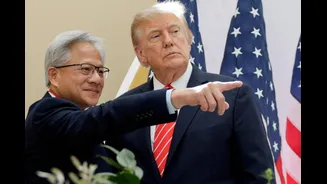
Howard Lutnick's role in shaping and executing this policy is now facing intense scrutiny from both Democrats and Republicans in Congress, as well as from within the Trump administration itself. Before becoming Commerce Secretary, Lutnick's investment bank, Cantor Fitzgerald, held over a billion dollars in Nvidia stock. Critics and lawmakers are questioning whether his past financial ties and his reportedly close relationship with Jensen Huang influenced his department's decisions. Huang himself stated in a podcast interview that Lutnick had called Nvidia a 'national treasure' and offered him direct access to the administration.
The Megaspeed Controversy
The scrutiny has zeroed in on the Commerce Department's handling of a Singapore-based company called Megaspeed International. Megaspeed, a major Nvidia customer, came under investigation for allegedly diverting restricted US chips to China. Reports indicate that for months, other senior administration officials, including Treasury Secretary Scott Bessent, pushed for Megaspeed to be placed on a trade blacklist, which would have restricted its access to American technology. However, Lutnick's Commerce Department, which has the final say, reportedly delayed or resisted this action. Bessent publicly criticized the delay, creating a rare and visible rift within Trump's cabinet.
Political Fallout and Future Implications
The controversy has ignited a firestorm in Washington. Lawmakers are demanding that Lutnick testify before Congress to explain his department's inaction regarding Megaspeed and the broader policy on chip exports. While President Trump has publicly stood by his Commerce Secretary, stating he would not be fired, the scandal has weakened Lutnick's standing and exposed deep divisions within the administration on how to handle the tech rivalry with China. Trump suggested Lutnick may have delayed action to avoid a 'blow-up' with Beijing. The affair raises critical questions about how national security, corporate influence, and trade policy intersect, issues that will undoubtedly continue to be debated as the US navigates its complex relationship with China's tech ambitions.