





New Rule: It’s About Spreading, Not Stacking
The old playbook often led to 'stacking' protein, consuming the majority in one large evening meal. Many adults still follow this pattern, eating a small amount of protein for breakfast and lunch, then having a huge serving at dinner. However, recent
studies show our bodies are far better at building and repairing muscle when protein intake is distributed evenly throughout the day. Research demonstrates that muscle protein synthesis—the process of repairing and building muscle—is about 25% higher when protein is consumed in balanced amounts across meals, compared to a skewed, dinner-heavy pattern. The body can only use so much protein at once; studies show amounts over 40 grams in one sitting offer no extra muscle-building benefit. The new strategy is to aim for 20-30 grams of high-quality protein at each meal, including breakfast, to keep your muscles supplied with a steady stream of amino acids.
New Rule: The 'Anabolic Window' Is Wider Than You Think
For years, gym-goers have raced to chug a protein shake within a 30-minute 'anabolic window' post-workout, fearing they'd miss the opportunity for muscle gains. While there's a kernel of truth here—your muscles are primed for repair after exercise—the window of opportunity is much larger than we thought. Extensive research, including a major meta-analysis, has found that the supposed urgency is largely a myth. As long as your total daily protein intake is sufficient, the precise timing after a workout has a minimal effect on muscle growth. The anabolic response to exercise remains elevated for at least 4 to 6 hours, and possibly up to 24 hours. Instead of sprinting for a shake, focus on having a protein-rich meal within a few hours of your workout. If you've eaten a meal a couple of hours before training, the need for immediate post-workout protein is even less critical.
New Rule: More Protein Is Crucial As You Age
The long-standing recommendation of 0.8 grams of protein per kilogram of body weight was a one-size-fits-all rule. But a growing body of evidence makes it clear this is not enough for older adults. After age 40, we naturally begin to lose muscle mass and strength, a condition called sarcopenia. To combat this, experts now recommend a significantly higher intake for people over 65, suggesting at least 1.0 to 1.2 grams of protein per kilogram of body weight daily. For those who are ill or frail, the recommendation is even higher, at 1.2 to 1.5 g/kg. This increased intake, especially when combined with resistance exercise, is crucial for maintaining muscle function, independence, and overall quality of life.
New Rule: Quality and Source Matter
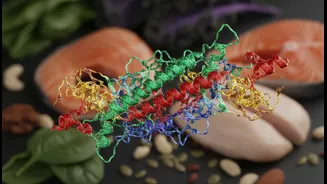
The debate between animal and plant-based protein continues, but the science is becoming more nuanced. Animal proteins like meat, eggs, and dairy are considered 'complete' and are generally more efficient at delivering the essential amino acids needed for muscle synthesis. Recent research from 2026 showed that lean pork stimulated significantly more muscle protein synthesis than an equivalent plant-based meal of rice and beans. However, this doesn't mean plant-based diets can't support muscle health. The key is ensuring an adequate intake of all essential amino acids. Soy protein, for instance, has been shown to be comparable to animal protein for building muscle mass. For those on plant-based diets, combining different protein sources (like rice and beans) and ensuring sufficient total intake can effectively stimulate muscle protein synthesis. It’s less about one source being 'good' and the other 'bad', and more about being strategic with your choices to meet your body's needs.