


The Dominance of a Few
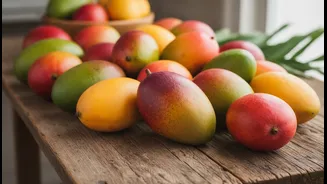
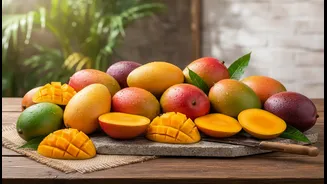
Walk into any major city market during mango season, and you are likely to find a familiar lineup: the rich Alphonso, the sweet Kesar, the reliable Dasheri, or the tangy Totapuri. These varieties have become commercial superstars for good reason—they
offer consistent flavour, have a relatively good shelf life, and are suited for large-scale distribution. However, this commercial success has created a monoculture of taste. Modern supply chains prioritise uniformity and high yields, which means farmers are often pressured to grow only these popular types to ensure a stable income. As a result, the incredible diversity of India's mango landscape, which boasts over 1,500 varieties, is rarely seen or tasted by the average consumer.
A Fading Library of Flavours
The focus on a handful of commercial varieties comes at a cost. Lesser-known, traditional cultivars—often called landraces—are being pushed to the brink. Varieties like the Jehangir, with its complex flavour, or the tiny, sweet Chandrakaran are fading from public memory because they don't fit the modern commercial mould. Many of these mangoes have shorter shelf lives, are grown in smaller, mixed orchards rather than vast plantations, or have appearances that consumers are not familiar with. Their disappearance is more than just an agricultural loss; it's a cultural one. Each variety carries a piece of regional history and culinary heritage, from the jaggery-flavoured Karuppatti Kai to the regal Imam Pasand, once a favourite of royalty. When these mangoes vanish, a part of our shared food story vanishes with them.
Enter the Mango Mela
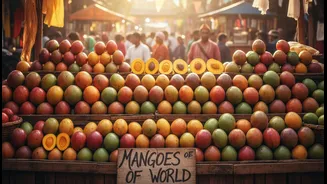
This is where mango fairs, or 'melas', step in as unlikely heroes. Events like the International Mango Festival in Delhi, the Uttar Pradesh Mango Festival in Lucknow, and numerous local fairs across states like Karnataka and West Bengal serve a vital purpose. These festivals are a vibrant celebration, but more importantly, they are a lifeline for biodiversity. They provide a direct-to-consumer platform for farmers who cultivate heritage varieties. By bypassing the long chain of intermediaries, growers can sell directly to interested customers, earn better margins, and get immediate feedback. For many farmers, this is the only viable way to continue growing mangoes that the mainstream market ignores.
More Than Just a Market
Mango fairs are powerful educational tools disguised as a fun day out. At these events, visitors can see, smell, and taste hundreds of different cultivars in one place. Some fairs in Haryana and Karnataka have showcased over 200 and 500 varieties, respectively. They often host mango-eating competitions, cooking demonstrations, and seminars that connect urban consumers with the realities of agriculture. By talking directly with growers, people learn to appreciate the unique stories and characteristics of each fruit—from the rose-scented Gulab Khas to the massive Fazli mango. This interaction builds a new market driven by curiosity and an appreciation for diversity, encouraging farmers to keep their heirloom trees.
A Taste of Discovery
Visiting a mango fair is an invitation to expand your palate. You might encounter the Amrapali, a hybrid of Dasheri and Neelam, which remains green even when ripe but has deep reddish-orange pulp. Or perhaps you will find the Malda, also known as Bombay Green, which is best eaten when still a bit raw. In June 2026, a fair in Kolkata planned to showcase endangered varieties from Malda district like Mishrikanda and Nawab Kusum in an effort to revive them and encourage cultivation. These fairs prove that the world of mangoes is infinitely more varied than what is available in a supermarket. They remind us that by choosing to try something different, we create an incentive for farmers to preserve the rich genetic library of India's national fruit.