





The Study At A Glance
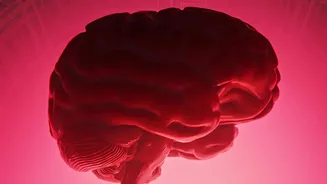
A clinical trial led by researchers at Maastricht University Medical Center in the Netherlands looked into the effects of long-term peanut consumption on brain health in older adults. Published in the journal 'Clinical Nutrition', the study specifically
investigated whether eating peanuts daily could improve brain vascular function and cognitive performance. The research team recruited 31 healthy men and women with an average age of 67 for this focused investigation. The goal was to see if this common legume could produce measurable changes in how the brain works.
How the 16-Week Trial Worked
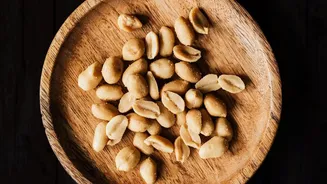
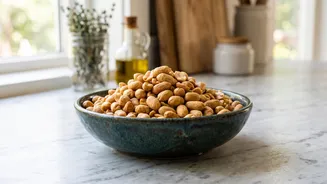
The study used a rigorous crossover design. Each of the 31 participants went through two phases, each lasting 16 weeks. In one phase, they consumed 60 grams of unsalted, skin-roasted peanuts daily, which is equivalent to about two standard servings. In the other phase, they acted as their own control group and did not eat any peanuts. An eight-week 'washout' period separated the two phases to ensure the effects of one didn't carry over to the next. Researchers used advanced MRI techniques to measure cerebral blood flow (CBF) and a standardized battery of tests to assess cognitive functions like memory.
Key Findings on Memory and Blood Flow
After 16 weeks of daily peanut consumption, participants showed notable improvements. Compared to the control period, global cerebral blood flow increased by 3.6%. The study also found a 5.8% improvement in verbal memory, measured during a delayed word recall test. Participants correctly remembered, on average, 1.4 more words from a list after a delay. Furthermore, participants saw a decrease in systolic blood pressure. However, the study did not find significant improvements in other cognitive areas like executive function or processing speed.
Why Peanuts? The Nutritional Science
Peanuts contain a unique mix of nutrients and bioactive compounds that may support brain health. They are rich in L-arginine, an amino acid the body uses to produce nitric oxide, which helps relax blood vessels and improve circulation. This could help explain the observed increase in cerebral blood flow. Additionally, peanut skins are a concentrated source of polyphenols like resveratrol, which have antioxidant properties and are believed to offer neuroprotective benefits. Peanuts also provide healthy unsaturated fats, niacin, and vitamin E, all of which have been linked to protecting against age-related cognitive decline in broader nutritional research.
Important Caveats and Limitations
While the findings are promising, it is crucial to view them in context. The study was small, with only 31 participants. Experts caution that these results do not prove that peanuts can prevent Alzheimer's disease or other forms of dementia. The research shows an association and a potential mechanism, but not a direct cause-and-effect prevention. One neurologist noted that it's unlikely any single food holds that much power and that overall dietary patterns remain the most important factor for long-term brain health. More extensive studies are needed to confirm these findings and understand their long-term implications.
The Takeaway for Your Health
This study adds to a growing body of evidence suggesting that nuts and legumes can be a valuable part of a brain-healthy diet, such as the Mediterranean or MIND diets. The research highlights that regular consumption of unsalted, skin-on peanuts may improve blood flow to the brain and offer a modest boost to verbal memory in healthy older adults. While not a magic bullet, including a handful of peanuts in a balanced diet could be a simple and enjoyable strategy to support cognitive function as you age. As with any dietary change, consistency and moderation are key.