






The Monsoon Snack Attack
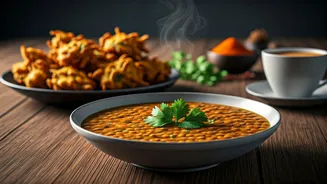
When the skies open up, a universal instinct kicks in across the subcontinent. It’s the desire for something hot, crispy, and decidedly indulgent. Whether it’s assorted pakoras, golden-brown samosas, or spicy bread pakodas, fried snacks and the monsoon
are a love story for the ages. The comforting crunch, the rising steam, and the warmth they provide are a perfect antidote to the damp chill outside. This culinary ritual is a shared experience, a thread that connects households from Kerala to Kashmir. But this experience is incomplete without its most crucial companion, the vibrant green sauce that sits beside it, waiting to elevate every single bite.
The Cool, Fiery Counterpoint
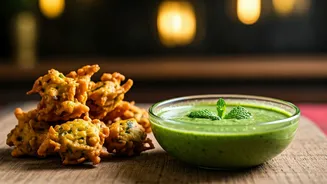
Enter the hero of our story: mint-coriander chutney. It’s the indispensable partner, the element that transforms a simple snack into a complete sensory experience. Its role is deceptively complex. On one hand, its bright, herbaceous flavour profile, driven by fresh pudina (mint) and dhania (coriander), cuts straight through the oiliness of the fried food, cleansing the palate and leaving it refreshed. On the other hand, the fiery kick from green chillies and the sharp tang from lemon juice or tamarind provide a thrilling contrast to the savoury, mild flavour of the pakora or samosa. It’s not just a dip; it's a carefully engineered balance of taste and texture, a cool fire that complements the comforting heat of the snack.
A Symphony of Simple Ingredients
The magic of this chutney lies in its simplicity. At its heart are two of India’s most beloved herbs: coriander, with its earthy, citrusy notes, and mint, with its cool, refreshing aroma. To this base, green chillies are added for heat—as much or as little as your heart desires. A knob of ginger brings a pungent warmth, while a clove of garlic might add a savoury depth. The all-important souring agent—be it the sharp tang of lemon juice, the subtle sourness of amchur (dry mango powder), or the complex sweetness of tamarind—is what makes the flavours pop. A pinch of salt and sugar, and perhaps a spoonful of water to achieve the right consistency, completes the masterpiece. Each ingredient is humble, but together they create a flavour profile that is greater than the sum of its parts.
The Taste of Home and Memory
Beyond its culinary function, this chutney is a vessel of nostalgia. For many, the whirring of the mixer grinder (or the rhythmic sound of a traditional sil-batta) conjures images of mothers or grandmothers preparing a fresh batch just as the rain began to fall. Every family has its own secret. Some add a spoonful of yogurt for a creamy texture, others toss in a few peanuts for body, and some swear by a pinch of black salt (kala namak) for that signature funky, sulphuric note that works so beautifully. This is not a chutney you buy in a jar. Its soul lies in its freshness, its slight variations, and the love with which it’s made. It’s the taste of home on a grey, wet afternoon.
Beyond the Pakora Platter
While it shines brightest on a rainy day, its versatility ensures it a permanent place in the Indian kitchen. It’s the lifeblood of the quintessential Bombay sandwich, soaking into the soft white bread and mingling with slices of boiled potato and cucumber. It’s the zesty drizzle over chaat, the cooling accompaniment to a plate of kebabs, and the simplest way to liven up a plate of dal and rice. This adaptability is a testament to its perfectly balanced flavour. It doesn’t overpower; it enhances. It’s a condiment, a dip, a sauce, and a marinade, all rolled into one glorious green paste.