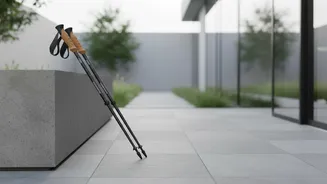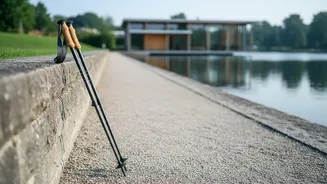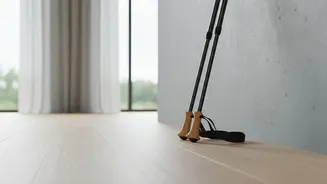




From Niche Sport to Mainstream Wellness
Nordic walking originated in Finland as a way for cross-country skiers to train during the snow-free summer months. This origin story is crucial because it baked a high level of athletic technique into its DNA, focusing on power, propulsion, and endurance.
For years, the ideal was the skier's powerful, fluid stride. However, its proven health benefits—engaging up to 90% of the body's muscles and burning significantly more calories than regular walking—were too good to stay in the world of competitive sport. The activity has since been embraced by people of all ages and fitness levels, shifting its primary purpose from elite training to accessible, low-impact, full-body wellness.
The Core Principles Remain Unchanged
Despite the shift towards a more casual user, the fundamental principles of Nordic walking are what deliver its benefits. The core of the technique is using the poles to propel yourself forward, not just as balance aids. This involves a coordinated, contralateral movement—the same as natural walking, where the opposite arm and leg move forward together. An upright posture and engaging the core are also foundational. Planting the poles correctly, at an angle behind you rather than in front like a hiking stick, is essential for propulsion and to avoid straining your joints. Without these core elements, you are essentially just carrying poles, missing out on the upper-body workout that makes the activity so effective.
The Shift: Less Intensity, More Consistency
The biggest change in technique isn't a radical reinvention but an adaptation of intensity. The 'everyday fitness' approach prioritizes a comfortable, sustainable rhythm over the powerful, athletic push of traditional Nordic walking. For skiers, the goal was maximum propulsion. For a health-conscious walker in a local park, the goal is consistent movement, good posture, and full-body engagement without undue strain. This means the arm swing might be less dramatic and the push-off from the poles less explosive. The focus shifts from performance to movement quality, making the activity more approachable and easier to maintain as a regular habit.
Technique Spotlight: The Grip and Release
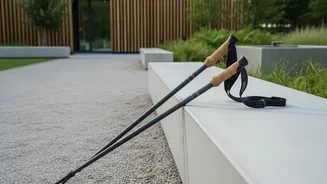
A key technique in traditional Nordic walking is the 'grip and release'. Walkers grip the pole as they plant it and then open their hand on the backswing to allow for a full arm extension. This can be tricky to coordinate for beginners. The everyday fitness adaptation often simplifies this. While the principle of relaxing the hand remains to avoid tension, the full, dramatic release is less critical. The emphasis is on a firm but not-too-tight grip during the push phase and simply relaxing the hand on the return, all while using the special glove-like strap to maintain contact with the pole. This modification makes the movement feel more natural and reduces one of the main learning hurdles.
Common Mistakes from the Casual Approach
The downside of Nordic walking's popularization is an increase in improper technique. The most common error is treating the poles like hiking staffs—planting them vertically in front of the body. This acts as a brake, slows you down, and puts stress on the wrist and elbow joints. Other frequent mistakes include using poles that are too long or too short, which can lead to poor posture and shoulder strain, or keeping elbows bent instead of using a longer, straighter arm swing. Many casual users also forget the all-important torso rotation, which is a key driver of core engagement. These mistakes significantly reduce the health benefits, turning a full-body workout back into a simple walk.