







The Promise of Regional Connectivity
The core idea behind developing regional airports is simple yet powerful: to make air travel affordable and accessible for the common citizen, especially in areas left behind by India's initial aviation boom. Before initiatives like the UDAN (Ude Desh
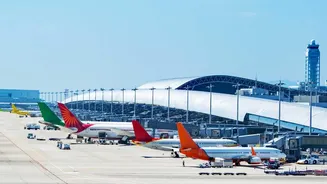
ka Aam Nagrik) scheme, air connectivity was heavily concentrated in a few metropolitan hubs. The goal was to bridge this urban-rural divide, using air travel as a catalyst for economic growth, tourism, and social integration in Tier-2 and Tier-3 cities. By connecting these smaller towns to the national grid, the policy aims to boost local economies, generate employment, and offer residents faster access to business opportunities, healthcare, and education.
How the UDAN Scheme Works
Launched in 2016, the UDAN scheme is a Regional Connectivity Scheme (RCS) designed to operationalise unserved and underserved airports. Its primary mechanism involves financial incentives to encourage airlines to fly on routes that might not otherwise be commercially profitable. This is achieved through a model of Viability Gap Funding (VGF), where the government subsidises a portion of the airline's losses on these specific routes. In return, airlines agree to cap fares for a certain number of seats on each flight, with a one-hour flight costing around ₹2,500. This cross-subsidy model, funded partly by a levy on major routes, aims to make flying a viable option for millions.
Successes and Tangible Benefits
The UDAN scheme has significantly expanded India's aviation map. The number of operational airports in the country has more than doubled, from 74 in 2014 to over 157 by 2024. Over the last decade, hundreds of new routes have been operationalised, connecting dozens of airports, heliports, and even water aerodromes. This has provided tangible benefits. Cities like Coimbatore, Dehradun, and Ranchi have seen a surge in tourism and business activity after getting better air connectivity. Industries such as logistics, hospitality, and real estate have received a boost, and local exporters in sectors like pharmaceuticals and textiles have gained faster access to markets.
The Hurdles on the Runway
Despite the successes, the journey has been turbulent. A major challenge is the financial sustainability of the routes. Many routes struggle to attract enough passengers to be viable once the three-year government subsidy period ends. A 2023 CAG report noted that a significant percentage of awarded routes never commenced operations, and of those that did, only a small fraction sustained operations beyond the concession period. Airlines face high operational costs, and low occupancy on many routes makes them unprofitable even with subsidies. Furthermore, infrastructure gaps, such as the lack of night landing facilities or poor road connectivity to the airport, often limit operational efficiency.
Beyond the Airstrip: A Holistic Approach
Experience from the UDAN scheme has shown that an airport alone is not a silver bullet. For a smaller city to become truly accessible, air connectivity must be part of a larger, integrated development strategy. This includes building the surrounding ecosystem: good roads to the airport, reliable local transport, and economic policies that help local businesses leverage the new connectivity. Experts argue that the long-term success of regional aviation depends on aligning flight routes with genuine economic activity, tourism potential, and industrial clusters. Simply put, subsidies can help create a market, but they cannot permanently replace one.