







Beyond a Percentage Chance of Rain
A standard weather app might show a 40% chance of rain, but this figure tells you very little about what actually matters for your safety. It doesn't specify the intensity, duration, or the nature of the precipitation. Will it be a light drizzle for an hour,
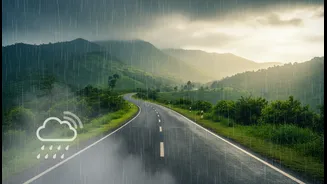
or a sudden, intense cloudburst that can dump massive amounts of water in minutes? For a road tripper or a trekker, this difference is critical. A short, heavy spell of rain is far more likely to trigger flash floods or destabilise a slope than a prolonged, gentle shower. The percentage simply indicates the probability of precipitation occurring at any point in a forecast area, not how it will behave or the impact it will have on the ground. This is why relying on this single metric can give a false sense of security.
The Real Danger: Saturated Ground
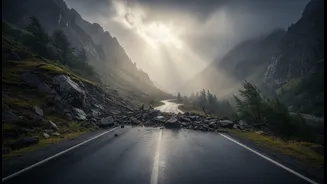
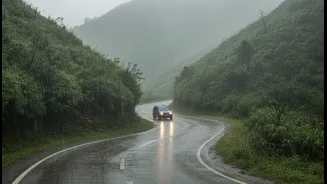
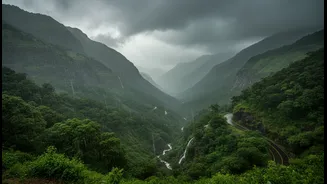
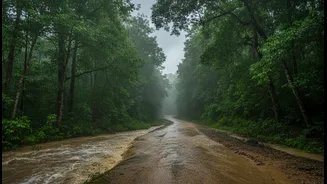
The greatest threats on roads and trails during the monsoon often come not from the rain itself, but from what the rain has already done. Prolonged rainfall saturates the soil, dramatically increasing its weight and reducing its stability. This is the primary trigger for landslides, which frequently block roads in hilly regions like the Himalayas and the Western Ghats. An itinerary can be completely derailed by a road closure that lasts for days. Unscientific road cutting and deforestation have made many slopes even more unstable. For drivers, the danger isn't just about a slippery surface; it's about the very ground beneath the road giving way. Never drive through flooded streets, as the water can hide deep potholes or completely washed-out sections of the road. Even a few inches of flowing water can be enough to sweep a vehicle away.
Trails, Treks, and Swollen Streams
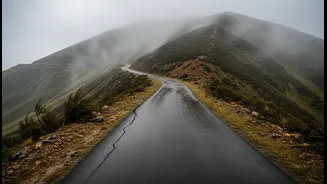
For hikers, the impact of rain is even more immediate. Trails can become slick with mud, making slips and falls more likely. More dangerously, what was a gentle stream in the morning can become a raging, impassable torrent by the afternoon. Heavy rain can cause severe trail erosion and trigger localised flash floods in narrow valleys. It's crucial to assess the terrain constantly. Pay attention to how quickly water levels are rising in streams and be prepared to turn back. Historic rainfall matters, too; even on a dry day, if it has been raining for the past week, the ground will be waterlogged and streams will be high. This cumulative effect is something a daily forecast won't capture but is vital for on-the-ground decision making.
How to Read Official Weather Alerts
To get a clearer picture of the potential risk, it's essential to understand the colour-coded warnings issued by the India Meteorological Department (IMD). These alerts are designed to communicate the expected impact of the weather. A 'Yellow' alert means 'Be Aware' and suggests you should stay updated as conditions could worsen. An 'Orange' alert means 'Be Prepared' for significant disruptions like waterlogging, traffic jams, and potential landslides. A 'Red' alert is the highest warning, advising you to 'Take Action' as severe weather is expected, posing a significant threat to life and property. During a Red alert, non-essential travel should be avoided entirely. Checking for these district-level alerts before you travel provides a much better sense of the real-world risk than a simple rain percentage.
Your Modern Monsoon Safety Toolkit
Preparing for a monsoon journey requires a more sophisticated approach to weather tracking. First, use official government apps like MAUSAM, by the IMD, which provides accurate, location-specific warnings and radar imagery. Apps like Skymet Weather also offer good localised forecasts. Beyond apps, always check local news and official advisories for your destination, as they will report on specific road closures or hazardous conditions. Before leaving, ensure your vehicle is in top condition, especially the tyres, brakes, and wipers. Pack an emergency kit with a torch, first aid, extra food, water, and a power bank. And most importantly, build flexibility into your itinerary. A beautiful monsoon journey is a safe one, and that means being willing to wait out a storm or change your route when the forecast demands it.