


What’s Happening Up There?
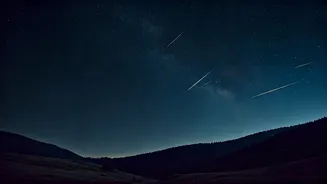
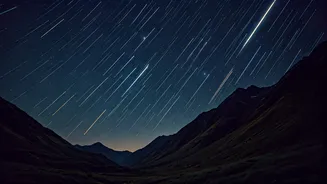
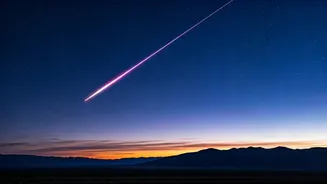
What you’re seeing isn't actually stars falling, but something far more interesting. Our planet is currently plowing through a trail of cosmic dust and debris left behind by a comet—in the case of the famous August Perseids, it's Comet Swift-Tuttle. As
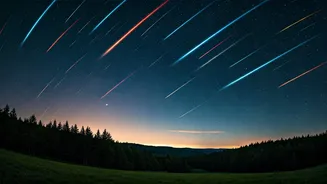
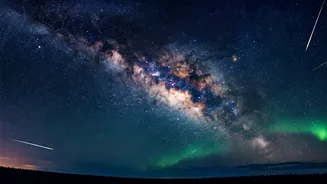
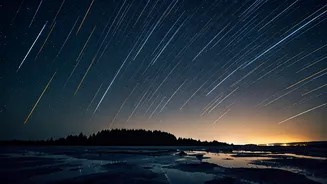
these tiny particles, some no bigger than a grain of sand, hit Earth’s atmosphere at incredible speeds (upwards of 130,000 mph), they burn up, creating brilliant, fleeting streaks of light. We call them meteors, or shooting stars. While random meteors can appear on any given night, a meteor shower happens when we pass through a dense cloud of this debris, turning the sky into a celestial fireworks display.
Why This Night Is Different
Not all meteor showers are created equal. Some are faint and sparse, but others, like the Perseids in August or the Geminids in December, are famous for a reason. They are dense, reliable, and often produce bright, fast-moving meteors, including the occasional “fireball”—an exceptionally bright meteor that can light up the entire sky for a moment and leave a lingering trail. On a peak night, under perfect conditions, you could see anywhere from 50 to 100 meteors per hour. It’s a spectacular and deeply human experience, connecting us to the same cosmos that our ancestors watched with awe and wonder.
Your Perfect Viewing Strategy
You don’t need any fancy equipment to enjoy the show, but a little planning goes a long way. First, timing is everything. The best viewing hours are typically after midnight and before dawn, when the part of the sky you're looking at is facing directly into the meteor stream. Second, location matters most. Get as far away from city lights as you can. Light pollution is the number one enemy of stargazing. A state park, a rural backroad, or even a suburban backyard with minimal streetlights can make a huge difference. Once you're settled, give your eyes at least 20-30 minutes to fully adjust to the darkness. Don't look at your phone—its white light will reset your night vision instantly.
The Stargazer's Packing List
Comfort is key, as you’ll be sitting still for a while. Think of it as a cosmic tailgate. Here’s what to bring: - **Something to lie on:** A reclining lawn chair or a thick blanket allows you to look straight up without straining your neck. - **Warm layers:** Even on a summer night, temperatures can drop significantly after midnight. A hoodie, a hat, and an extra blanket are your best friends. - **Snacks and a warm drink:** A thermos of hot chocolate or tea can make the experience cozier and help you stay out longer. - **Patience:** This isn't a movie; the show happens on its own schedule. There will be lulls followed by bursts of activity. Relax and enjoy the quiet moments. - **A red-light flashlight:** If you need light, a flashlight covered with red cellophane or a headlamp with a red-light mode will preserve your night vision.
Beyond the Shooting Stars
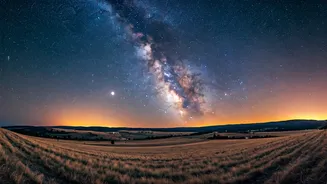
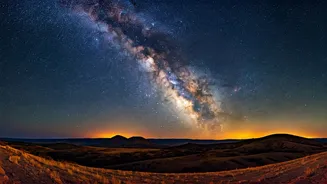
While you're waiting for meteors, take in the rest of the view. Once your eyes are dark-adapted, you may be able to see the faint, hazy band of the Milky Way stretching across the sky—our own galaxy seen from the inside. You can also try to spot familiar constellations. Look for the Big Dipper, Cassiopeia (which looks like a 'W' or 'M'), or the Summer Triangle, formed by the three bright stars Vega, Deneb, and Altair. A meteor shower is a gateway event; it’s an invitation to become more familiar with the universe that is always there, waiting for us to just look up.