






The Global Context: Tariffs and 'Friend-Shoring'
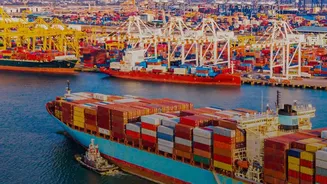
Recent years have seen a significant recalibration of global trade, largely driven by US policy. The primary mechanism has been the use of tariffs, particularly Section 301 tariffs, which have targeted goods from various countries, most notably China.
These tariffs, with rates reaching as high as 25% to 145% on certain electronics and industrial components, fundamentally alter the cost equation for importers. Alongside these protectionist measures, the US has championed a strategy known as 'friend-shoring'. Coined by US Treasury Secretary Janet Yellen, the policy encourages sourcing and manufacturing in countries that are political and economic allies, with India frequently named as a key partner. This dual approach of penalising rivals while rewarding allies creates a complex and volatile environment for nations like India, which are deeply integrated into global supply chains.
Direct Impact: The Rising Cost of Components
For Indian hardware manufacturers, the most immediate effect is on the landed cost of components. Many essential parts, from semiconductors and printed circuit boards (PCBs) to specialised industrial machinery, have historically been sourced from China due to its scale and cost-effectiveness. When the US imposes heavy tariffs on these Chinese goods, it triggers a ripple effect. Chinese manufacturers may pass on some of these costs, or global demand shifts, driving up prices from alternative suppliers. Even if an Indian company doesn't import directly from a tariff-hit nation, the disruption elsewhere in the supply chain tightens supply and inflates prices across the board. This volatility makes production planning and cost forecasting a significant challenge, directly squeezing profit margins for domestic manufacturers.
A Silver Lining: India as a Sourcing Hub
The same trade winds causing disruption also carry a significant opportunity. The 'China Plus One' strategy, a business imperative to diversify supply chains away from over-reliance on China, has gained massive momentum. US and other multinational corporations are actively seeking alternative manufacturing bases, and India is a prime candidate. This is amplified by the 'friend-shoring' policy, which positions India as a trusted partner for high-tech manufacturing. As a result, India is seeing increased investment from global tech giants like Apple, Google, and Amazon, who are expanding their manufacturing and operational footprints in the country. Government initiatives like the Production Linked Incentive (PLI) schemes further sweeten the deal, making India an attractive destination for hardware manufacturing.
The US-India Trade Exception
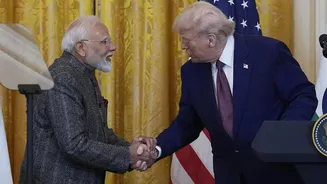
Recent bilateral discussions between the US and India have created specific carve-outs that directly benefit Indian hardware exporters. While the US has maintained a broadly protectionist stance globally, it has also moved to strengthen ties with New Delhi. Reports in 2026 indicate progress on a US-India trade deal that aims to reduce tariffs and create a more predictable trade environment between the two nations. For example, a stabilized tariff corridor for electronics exports from India to the US provides the kind of forward visibility that manufacturers need to make long-term investment decisions. This preferential treatment means that while sourcing from China becomes more expensive due to tariffs, sourcing from India becomes comparatively more attractive for the vast US market.
Navigating the New Normal
In this shifting landscape, Indian hardware manufacturers cannot afford to be passive. Relying on a single source for critical components is no longer a viable strategy. Building resilience requires a multi-pronged approach. This includes actively diversifying the supplier base across different geographies to mitigate geopolitical risk. It also means investing in domestic capabilities, supported by schemes like PLI, to reduce dependence on imports for essential parts. Furthermore, companies need to develop more agile and data-driven supply chain management systems to respond quickly to sudden price fluctuations and disruptions. By embracing these strategies, Indian firms can not only weather the storm of global trade shifts but also position themselves to thrive in the new world order.