



The Misleading Comfort of a Small Pot
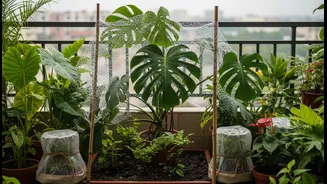
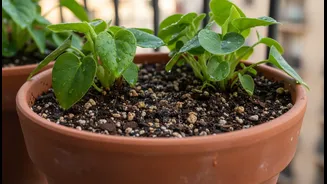
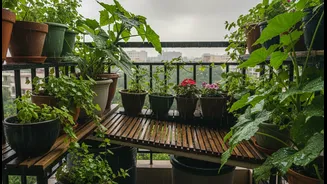
Many plant owners choose compact pots for their balcony gardens. They save space, are lighter to move, and seem proportionate to a young plant. The common wisdom is to avoid pots that are too large, which can hold excessive moisture. While this is true,
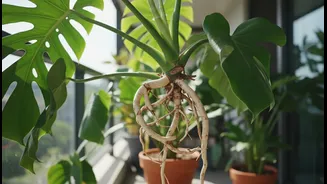
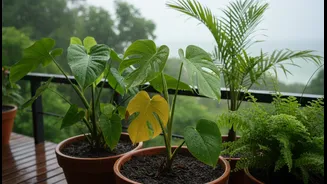
a pot that is too small presents an equally dangerous, though different, problem. When a plant's roots fill a small container, there is very little soil left to buffer changes in moisture and temperature. This limited volume of soil becomes a critical vulnerability, especially during prolonged rainy spells. The small space means soil can become compacted more quickly, reducing air pockets that are vital for healthy roots.
How Rain Turns a Cosy Pot into a Waterlogged Trap
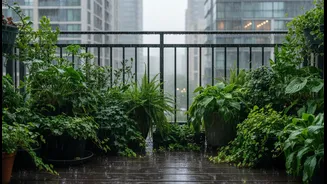
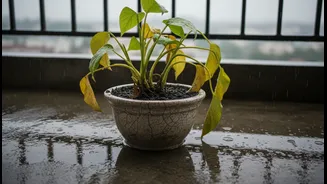
During a heavy downpour, a pot is designed to allow excess water to flow out through its drainage holes. However, the physics of water in a container are not that simple. Every pot, regardless of drainage, retains a certain amount of saturated soil at the bottom after watering, known as a 'perched water table'. In a tall, large pot, there is ample aerated soil above this wet zone. But in a compact, shallow pot, this saturated layer occupies a much larger percentage of the total soil volume, bringing it dangerously close to the majority of the roots. When rain is constant, the pot has no chance to dry out. The small soil volume gets saturated quickly, and the perched water table rises, effectively drowning the root system.
The Science of Suffocation: Why Roots Need to Breathe
Plant roots require oxygen for respiration, the process by which they convert sugars into energy to fuel growth. In a well-aerated soil, there are plenty of air pockets between soil particles. When a pot becomes waterlogged, water fills these pockets and pushes the air out. This creates an anaerobic (oxygen-deprived) environment. Without oxygen, root cells cannot function properly and begin to die. This decay is what we call root rot. Furthermore, these low-oxygen conditions are perfect for the fungi and bacteria that cause rot, such as Pythium and Phytophthora, allowing them to thrive and attack the stressed, dying roots.
Tropical Plants Love Humidity, Not Wet Feet
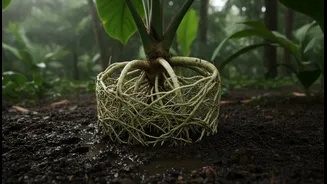
A common misconception is that because many tropical plants originate from rainforests, they must love constant water. While they do thrive in high humidity, their native environment often provides excellent drainage. Think of a plant growing on the forest floor: the soil is loose, full of decaying organic matter, and rainwater drains away quickly into the ground. They are not adapted to sitting in stagnant, waterlogged soil, which is exactly the condition a compact pot creates during a monsoon. Their roots are built for a balance of moisture and air, and when that balance is tipped, they suffer.
Preventing the Problem: Potting for Success
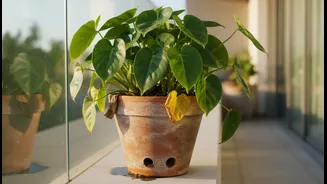
The solution lies in creating a pot environment that mimics the excellent drainage of a plant's natural habitat. Firstly, choose the right pot size; it should be just one to two inches wider in diameter than the plant's root ball, allowing room for growth without being excessively large. Secondly, ensure your pot has adequate drainage holes; more is better than one central hole that can get clogged. Thirdly, use a high-quality, well-draining potting mix. Standard garden soil is too heavy and will compact. Instead, opt for a mix amended with materials like perlite, orchid bark, or coarse sand, which create the large air pores needed to keep roots oxygenated, even in wet weather.