




First, What Is Sound Anyway?
Before we can understand why space is silent, we have to remember what sound actually is. It’s not a thing that flies through the air like a tiny bird. Instead, sound is a wave of energy—a vibration. When you clap your hands, you’re rapidly compressing
and decompressing the air molecules between them. That disturbance travels outwards in all directions, like ripples in a pond after you toss in a stone. Your eardrums are designed to detect these pressure waves. They vibrate in response, and your brain interprets that vibration as the 'sound' of a clap. The key takeaway here is the medium. For sound to travel, it needs something to travel through. On Earth, that medium is usually air, but it can also be water (which is why you can hear things underwater), or solids (which is why you can hear your neighbor’s music through the wall). Without a medium—without molecules to jostle against each other—the vibration has nowhere to go. It’s like trying to start a wave in an empty swimming pool.
The Great Cosmic Vacuum
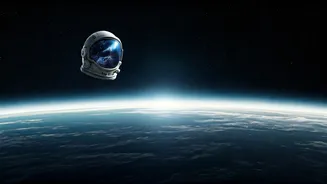
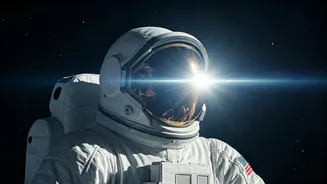
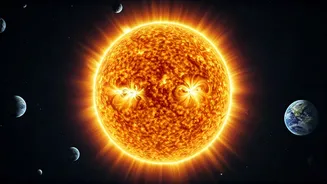
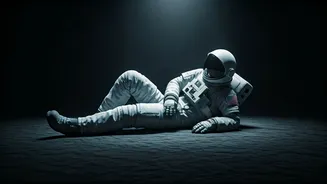
This brings us to space. The famous tagline from the movie *Alien*—“In space, no one can hear you scream”—is scientifically spot-on. Space is what we call a near-perfect vacuum. It’s not completely empty, but the particles are so incredibly far apart that for all practical purposes, there’s nothing there. While a cubic meter of air at sea level contains roughly 25 quintillion molecules, a cubic meter of interstellar space might contain only a handful of atoms. Because there is no atmosphere, there is no medium for sound waves to propagate through. If an astronaut outside the International Space Station were to (somehow) clap their hands, the motion would happen, but no sound would be produced. The vibrations would have no air molecules to push, no chain reaction to start, and no wave to carry the energy to another astronaut’s ear. The universe is the ultimate soundproofed room, not because it’s designed to be quiet, but because it’s fundamentally empty.
Hollywood Got It Gloriously Wrong
Of course, this is the exact opposite of what we see in movies. From the thundering engines of the Millennium Falcon in *Star Wars* to the explosive destruction of a Klingon warbird in *Star Trek*, the cinematic universe is a very noisy place. A silent, scientifically accurate space battle would be, let's face it, pretty boring on screen. The massive, bass-heavy explosions and whining laser blasts are there for dramatic effect. They give us a sense of scale, power, and danger that visuals alone can’t always convey. Filmmakers make a conscious choice to sacrifice scientific accuracy for emotional impact. George Lucas and his sound designer, Ben Burtt, knew perfectly well that TIE fighters wouldn't actually roar. But that iconic sound—a blend of an elephant’s call and a car driving on wet pavement—is unforgettable. So while the science is wrong, the storytelling is right. It’s a useful reminder that art isn’t a physics documentary; it’s meant to make us feel something.
Are There Any Sounds in Space?
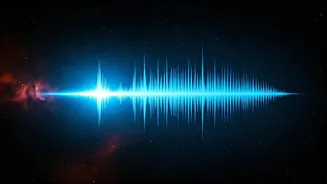
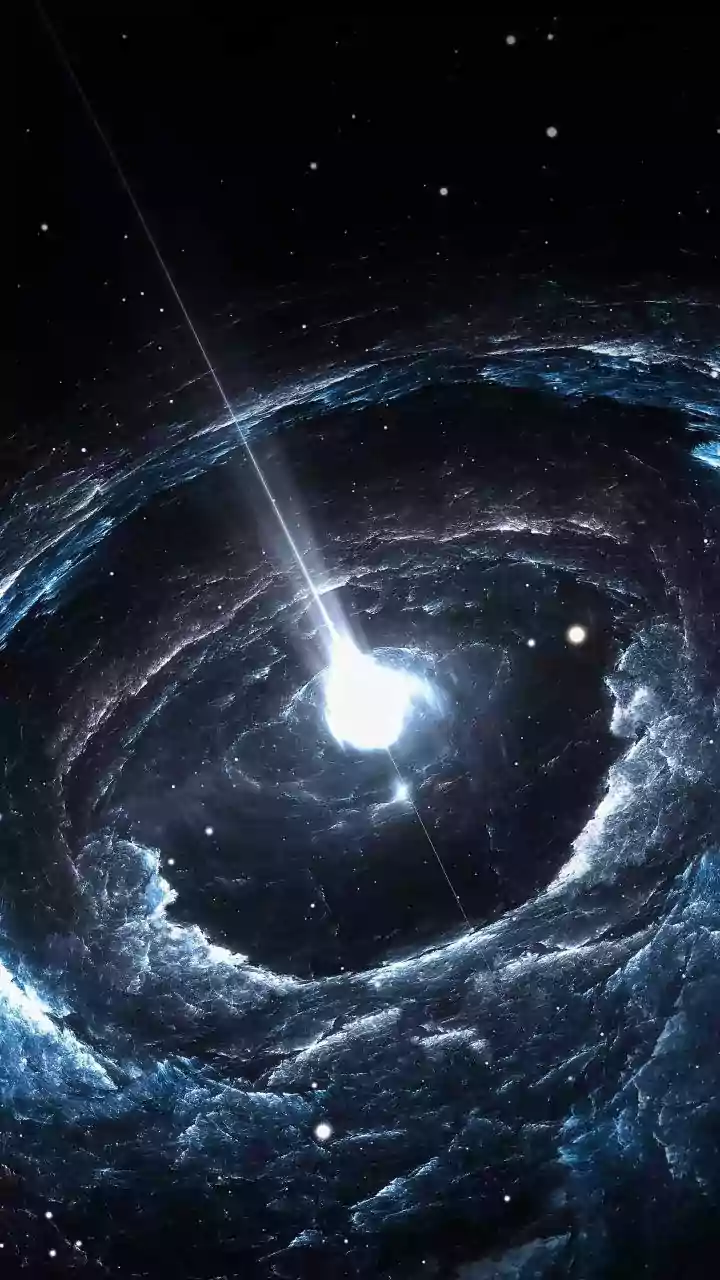
This is where things get interesting. While you can't *hear* sound in space in the traditional sense, the cosmos is full of vibrations. These aren’t sound waves, but electromagnetic waves and plasma waves, which are created by stars, black holes, and planetary magnetospheres. NASA has instruments that can detect these waves. In a process called data sonification, scientists can translate this electromagnetic data into the range of human hearing. The results are haunting. The “sounds” of Jupiter’s plasma waves are a spooky chorus of whistles and chirps. The vibrations from a black hole in the Perseus galaxy cluster have been converted into an astonishingly deep, low hum, millions of billions of times lower than what humans can actually hear. So, while you can't hear a spaceship explode, the universe is 'singing' in its own way—we just need the right technology to listen.