








Beyond the Symbolic Achievement
The image of Indian astronauts, or 'Gaganauts', orbiting the Earth in an Indian-made spacecraft will undoubtedly be a historic milestone. This achievement will place India in an elite club of nations—after the United States, Russia, and China—capable
of independent human spaceflight. While the patriotic fervour is justified, the true value of Gaganyaan lies beneath the surface. The mission is a national endeavour designed to spur innovation, build industrial capacity, and secure India's strategic autonomy for decades to come. It's less about a single flight and more about creating a comprehensive ecosystem for advanced science and technology.
A Crucible for Indian Technology
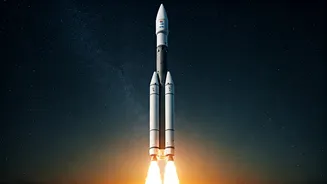
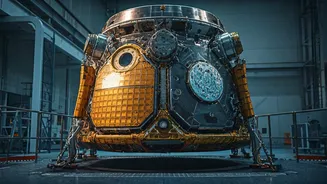
Sending humans to space and returning them safely is one of the most complex technological challenges. To achieve this, ISRO is mastering a host of critical systems, from the human-rated LVM3 launch vehicle to the life support systems within the crew module. The development of the Crew Escape System, which has undergone numerous successful tests, is a testament to the programme's rigorous focus on safety. These technologies have applications far beyond space travel. Innovations in life support, avionics, thermal protection, and robotics can create a ripple effect, leading to spin-off technologies in medicine, materials science, and defence. Essentially, Gaganyaan is a high-stakes research and development project that forces indigenous innovation across multiple sectors.
Fuelling a New Space Economy
The Gaganyaan mission is a significant economic catalyst. ISRO estimates that nearly 60% of the mission's equipment will be sourced from the Indian private sector, providing a massive boost to local industries. This collaboration is expected to create thousands of new employment opportunities, particularly for those with skills in advanced technologies. By developing human spaceflight capabilities, India is positioning itself to capture a larger share of the global space economy. The long-term vision includes not just launching astronauts but also establishing an Indian space station, the Bharatiya Antariksh Station, by 2035. This creates a sustainable, long-term market for private companies and startups to build everything from launch components to in-orbit scientific equipment.
A Platform for Groundbreaking Science
The mission will carry a crew to a low Earth orbit of about 400 kilometres, providing a unique microgravity laboratory for scientific experiments. Researchers will have the opportunity to conduct studies in biology, medicine, and material science that are impossible to replicate on Earth. These experiments can lead to significant breakthroughs, from developing new medicines to creating novel materials. ISRO is actively encouraging the scientific community to propose experiments, ensuring that the mission yields valuable data. Furthermore, ISRO is avoiding the use of animals in its preparatory flights, instead using a humanoid robot named Vyommitra to test systems and simulate human functions, showcasing an innovative approach to spaceflight research.
Securing India's Strategic Future
In geopolitical terms, a successful Gaganyaan mission solidifies India's status as a major space power and enhances its strategic influence. In an era where access to space and related technologies is increasingly crucial, having an autonomous human spaceflight programme is a powerful statement of capability. It reduces dependence on other nations for launching astronauts and participating in future international space exploration efforts, such as missions to the Moon or Mars. By fostering international collaboration on its own terms, India can strengthen diplomatic ties and play a leading role in shaping the future of space exploration. The mission is a key step towards ensuring India's long-term strategic autonomy and access to the resources and technologies of tomorrow.