

Why Millets for Mithai?
For generations, Indian kitchens have relied on millets like Ragi (finger millet) and Bajra (pearl millet) for their incredible nutritional profiles. Unlike refined flour (maida), which offers empty calories, millets are packed with dietary fibre, protein,
vitamins, and minerals. This high fibre content aids digestion, prevents constipation, and promotes a healthy gut. Millets also provide sustained energy, helping to avoid the sugar crashes associated with traditional sweets. By swapping refined ingredients for these wholesome grains, you can create festive treats that are not only delicious but also genuinely nourishing.
Ragi: The Calcium Powerhouse
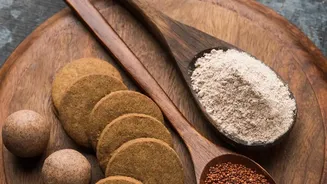
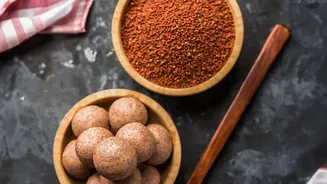
Ragi, or finger millet, is a nutritional champion, particularly celebrated for its high calcium content, which is crucial for bone health. It's also a fantastic source of iron and dietary fibre, making it an excellent choice for weight management as it keeps you feeling full for longer. Ragi is naturally gluten-free and has a low glycemic index, which helps in managing blood sugar levels by slowing down sugar absorption. When roasted in ghee, its flour develops a beautiful, nutty aroma, making it a perfect base for decadent laddoos.
Recipe: Healthy Ragi Laddoos
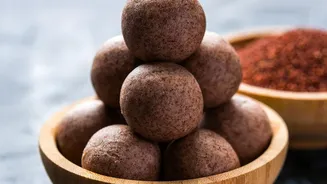
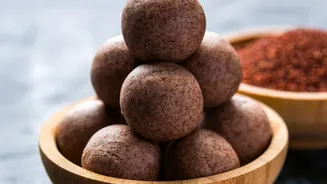
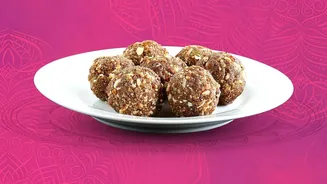
These laddoos are a simple, no-fuss way to enjoy a healthy sweet. To make about 12-15 laddoos, start by heating two to three tablespoons of ghee in a pan. Add one cup of ragi flour and roast on low heat for 10-15 minutes until it becomes fragrant and sandy in texture. Set it aside to cool. In a grinder, blend half a cup of roasted nuts (like almonds or peanuts) and a quarter cup of desiccated coconut into a fine powder. Once the ragi flour has cooled completely, combine it with the nut powder, half a teaspoon of cardamom powder, and three-quarters of a cup of powdered jaggery or date paste for a natural sweetener. Mix everything well, adding a tablespoon or two of warm ghee if needed to help bind the mixture. Take small portions of the mix and roll them firmly between your palms to form round laddoos. These can be stored in an airtight container for up to a week.
Bajra: The Iron and Magnesium Hero
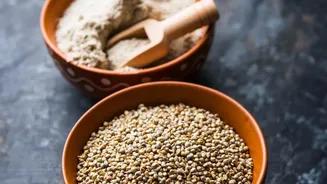
Bajra, or pearl millet, is another ancient grain that works wonderfully in desserts. It is particularly valued for being rich in iron, protein, and magnesium. Like ragi, it is a complex carbohydrate and inherently gluten-free, making it a great option for those with gluten sensitivities. Bajra is also one of the few grains that is alkaline in nature, which can help in reducing acidity. Its slightly crunchy texture, even when cooked, adds a delightful character to creamy desserts like kheer.
Recipe: Creamy Bajra Kheer
This comforting pudding offers a wholesome twist on a classic. First, soak half a cup of bajra overnight. The next day, drain the water and pressure cook the bajra with about one and a half cups of water for 7-8 whistles until it's cooked but still retains a slight bite. In a separate heavy-bottomed pan, bring one litre of milk to a boil and let it simmer, stirring occasionally, until it reduces by about a third. Add the cooked bajra to the thickened milk and let it cook on low flame for 10-12 minutes. Stir in half a cup of a healthy sweetener like jaggery powder, date syrup, or coconut sugar, and continue cooking until it dissolves. Be sure to add jaggery only when the kheer is lukewarm to prevent curdling. Finish by adding a quarter teaspoon of cardamom powder and a handful of chopped nuts like almonds and pistachios. This kheer can be served warm or chilled.