




The Ultimate Off-Grid Problem
On Earth, we take clean water for granted. But in space, every litre is precious. Launching water is incredibly expensive and, for long-duration missions like those planned for the Artemis program, regular resupply from Earth is simply not an option.
Each crew member requires about a gallon of water per day for drinking, food preparation, and basic hygiene. To make a sustained presence on the Moon or a trip to Mars feasible, astronauts must operate in a closed-loop system, recycling as much of their water as possible. This means turning wastewater—including humidity from breath, sweat, and even urine—back into pure, drinkable water.
From Urine to Pristine Water
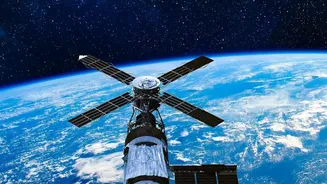
The idea of drinking recycled urine might sound unsettling, but the technology aboard the International Space Station (ISS) already produces water that is cleaner than what most people drink on Earth. The station's Environmental Control and Life Support System (ECLSS) is a marvel of engineering. It collects all wastewater, sends it through a Water Processor Assembly (WPA) that uses a series of filters, and then a catalytic reactor breaks down any remaining contaminants. A dedicated Urine Processor Assembly (UPA) uses vacuum distillation to recover the majority of water from urine. However, this process left behind a salty liquid called brine, which still contained a significant amount of water, limiting total recovery rates to around 94%.
The 98% Breakthrough
The game-changer has been the introduction of the Brine Processor Assembly (BPA). This new component targets the leftover brine from the urine processor. It uses a special membrane and evaporates the remaining water with warm, dry air. This water vapour is then collected by the station's dehumidifiers, just like the moisture from astronauts' breath. The addition of the BPA has pushed the total water recovery rate on the ISS to an incredible 98%. This figure is not just an incremental improvement; it's the magic number NASA has identified as necessary to make long-duration missions to Mars possible without needing to pack unfeasible amounts of water.
Shielding Astronauts from Hidden Dangers
This near-total water recovery is about more than just supply; it’s a major health and safety advancement. In the confined environment of a spacecraft, microbial contamination is a serious risk. Over time, bacteria can form resilient communities called biofilms on surfaces, including inside water systems. These biofilms can degrade equipment and, more importantly, pose a health threat to the crew, especially since spaceflight can suppress the immune system. The advanced filtration and catalytic oxidation in the latest water processing systems are designed to eliminate these contaminants. Furthermore, the system adds iodine to the purified water to prevent any microbial growth while it's in storage, ensuring the water remains safe to drink for long periods.
Paving the Way for the Moon and Mars
While the initial Artemis missions, being shorter, will rely on stored water, the lessons learned and technologies perfected on the ISS are foundational for establishing a permanent lunar presence and venturing to Mars. NASA is already testing next-generation, mobile wastewater treatment facilities on the ground that simulate operations on the Moon and Mars. These new systems not only recycle water but also recover nutrients from waste that could be used as fertilizer for growing food, creating an even more self-sufficient habitat. By mastering the water loop, these breakthroughs ensure that when astronauts set foot on Mars, they will have the most essential element for life, no matter how many millions of miles they are from home.