




The Challenge of Urban Skyglow
The biggest obstacle for most sky-gazers is light pollution, the collective glow from streetlights, buildings, and cars that brightens the night sky. This phenomenon, known as 'skyglow', drastically reduces the contrast between celestial objects and the background,
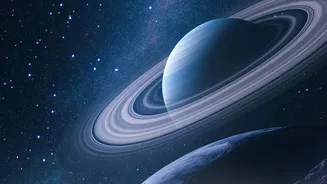
making dimmer objects much harder to see. While planets like Saturn are bright, their finer details, like the famed rings, can be washed out by city lights. This is because the scattered artificial light prevents our eyes from fully adapting to the dark. The effect is made worse by hazy or cloudy conditions, which can reflect city light back down and make the sky even brighter. For a Moon-Saturn alignment, this means that while you will likely see the two bright objects, the subtler beauty of Saturn can be lost.
The Moon's Own Brilliant Glare
It might seem counterintuitive, but one of the biggest light challenges during a lunar alignment is the Moon itself. A full or near-full Moon is incredibly bright—thousands of times brighter than even the brightest planets. This intense glare can overwhelm nearby, fainter objects. When Saturn is positioned close to a bright Moon, the Moon's light scatters in our atmosphere and can make it difficult to spot the ringed planet, especially with the naked eye. This is particularly true for seeing Saturn's own moons or finer details on the planet itself. Your eyes, struggling with the Moon's brilliance, can't achieve the dark adaptation needed to pick up the delicate features of its celestial neighbour.
Finding the Right Viewing Window
Timing your observation is critical. The best views are almost always had when the sky is at its darkest, a period known as astronomical twilight, long after the sun has set. However, when dealing with a bright Moon, you might need to be strategic. If the alignment occurs when the Moon is in a crescent phase, its impact is significantly less. If the Moon is full, you may want to wait until later in the night when the pair are higher in the sky. Observing objects when they are at their highest point, or zenith, means you are looking through the least amount of Earth's turbulent and light-polluted atmosphere, which can improve clarity. Paying attention to moonrise and moonset times can also help you find a window where Saturn is visible in a darker sky before the Moon interferes.
Strategies for a Better View
Despite the challenges, a great view is possible with some planning. First, try to get away from direct city lights. Even moving to a local park or a field away from immediate streetlights can make a difference. Let your eyes adjust to the darkness for at least 20-30 minutes; this allows them to become much more sensitive to faint light. When observing, use a structure like a building or tree to block the direct glare of the Moon. This simple trick can make it much easier to spot Saturn next to it. If you're using a telescope, a dew shield can serve a similar purpose by blocking stray light. Finally, patience is key. Allow your eye time to pick out details at the eyepiece.
Using the Right Tools
You don't need a powerful observatory to enjoy the sight. A good pair of binoculars is an excellent tool for this event. While they might not show the rings as separate from the planet, they will reveal Saturn's distinct, elongated shape, distinguishing it from a star. They are also great for seeing the Moon's craters in sharp detail. A small backyard telescope, even at low magnification (25x), will transform the view, clearly separating the rings from the planet's globe. Some amateur astronomers even recommend using special light pollution filters for telescopes, which are designed to block the specific wavelengths of light common in artificial lighting, thereby increasing contrast and making celestial objects pop.