




The Balcony Gardener’s Dilemma
Keeping plants thriving on a balcony or terrace is a unique challenge. Unlike a garden bed, pots and containers create a highly variable environment. A small pot in direct sun can dry out in hours, while a larger one in the shade might stay damp for days.
The classic 'finger test' only tells you about the top inch of soil, but the real action is happening down at the roots. This constant guessing game often leads to the two most common causes of plant failure: root rot from overwatering and stress from underwatering. For busy urbanites, finding that perfect balance feels less like a green-thumbed art and more like a full-time job.
Enter the Smart Soil Sensor
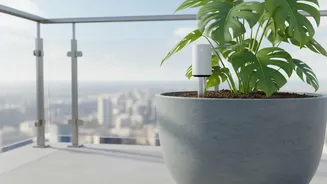
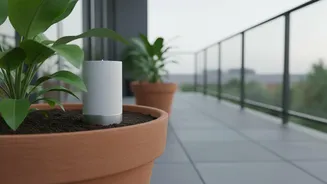
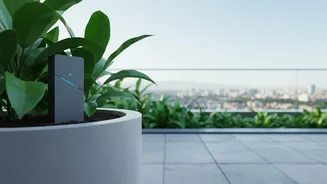
This is where technology steps in. Smart soil sensors are small probes you stick into the soil of your potted plants. These devices go far beyond a simple moisture meter by providing real-time data directly to your smartphone. Instead of a vague 'wet' or 'dry' reading, you get precise moisture percentages. Many models also track other vital signs for plant health, such as the amount of light, the soil temperature, and even the level of nutrients available to the roots. The goal is to replace guesswork with data, allowing you to water only when your plant actually needs it. Brands like Xiaomi, Govee, and RainPoint offer popular models that connect via Bluetooth or Wi-Fi, sending you alerts when conditions fall out of the optimal range for your specific plant.
Decoding the 'Microbial' Magic
The term 'microbial' can be confusing. While most consumer probes don't directly count microbes, some advanced sensors do more than just measure water. They measure the soil's Electrical Conductivity (EC). EC is influenced by the amount of dissolved salts and minerals in the soil water—which are byproducts of microbial activity breaking down organic matter into plant food. So, a sensor that measures EC is, in a way, getting a proxy measurement of the soil's fertility and biological life. More advanced, research-grade sensors are being developed that use microbial fuel cells or track how microbes 'nibble' on a biodegradable sensor to measure activity directly. For most city gardeners, however, the 'microbial' claim on a commercial probe usually refers to its ability to measure these nutrient levels (via EC) in addition to just moisture, giving a more holistic view of soil health.
The Benefits of Data-Driven Gardening
The primary benefit of using a smart probe is preventing over- and underwatering, the leading causes of houseplant death. By receiving an alert on your phone that your hibiscus plant's soil moisture has dropped to 30%, you can water with confidence. This saves water and, more importantly, protects your plants from the stress and disease that inconsistent watering can cause. Furthermore, tracking data over time can help you become a better plant parent. You might notice that a plant in a terracotta pot dries out twice as fast as the same plant in a plastic one, or that your plants need less water during a cloudy week. Some systems even allow you to automate your watering by linking the sensor to a smart irrigation timer.
Are They Truly Effortless?
While these probes make monitoring effortless, they aren't a complete substitute for gardening knowledge. There is an initial setup process, which involves connecting the device to your Wi-Fi or Bluetooth and configuring the app. You also need to know which plant you have to set the correct optimal moisture and light levels in the app's database. The probes run on batteries, which will need changing, though many last for a year or more. And while they tell you when to water, they don't tell you how. You still need to water thoroughly until it runs from the drainage holes to ensure all the roots get a drink. Think of a smart soil sensor not as an autopilot for your plants, but as a highly intelligent dashboard that gives you the precise information you need to be a better, more responsive gardener.