


The Living History of Bonedi Bari Pujas
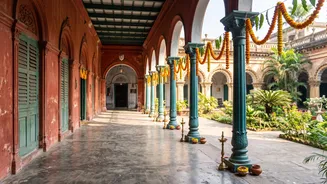
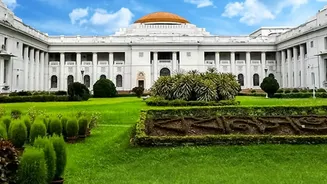
Step away from the dazzling lights and themed marvels to enter the courtyards of Kolkata's old aristocratic families. These are the Bonedi Bari pujas, celebrations that predate the community-funded extravaganzas by centuries. Held in the grand, columned
'thakur dalan' (courtyard for the deity) of ancestral homes, these pujas offer a tranquil, intimate, and deeply traditional experience. Families like the Sabarna Roy Chowdhury, who started their puja in 1610, and the Sovabazar Rajbari, which once hosted Lord Clive, continue rituals passed down through generations. Here, the focus is on heritage, with idols often following a traditional 'ekchala' (single frame) design and adorned with heirloom jewellery. Visiting a Bonedi Bari is like stepping into a living museum, offering a glimpse into the city's opulent past and the unchanging heart of Bengali culture.
Kumartuli: Where Art and Worship Converge
There is no better place to witness the fusion of artistry and devotion than in Kumartuli, the potters' quarter where most of the city's idols are born. The Kumartuli Sarbojanin Durgotsav, held right in the heart of this artisan colony, possesses a raw, creative energy unlike any other. Established in 1931, this puja has a rich history, even having Netaji Subhas Chandra Bose as its committee president in 1938. Instead of polished perfection, you'll find a celebration that honors the very hands that craft the divine. The pandal is often a showcase of innovation and topical themes, reflecting social events and artistic trends. It’s a pilgrimage for art lovers, offering a chance to see the idols in the very environment where clay is transformed into the goddess.
College Square: The Magic of Reflection
While certainly famous, College Square earns its place on this list not for its size but for its singular, defining character. Since 1948, this puja in Central Kolkata has been celebrated beside a large lake. Its main draw is the breathtaking spectacle created at night when the pandal's magnificent lighting is flawlessly reflected in the water, creating a stunning double image. This magical ambience, combined with its location in Kolkata's intellectual hub surrounded by historic universities, gives it a unique energy. While other pandals compete on themes, College Square’s consistent USP is this mesmerizing play of light on water, making it one of the most photographed and iconic sights of the festival.
Badamtala Ashar Sangha: The Art-Forward Pandal
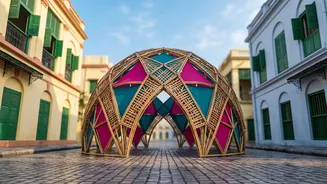
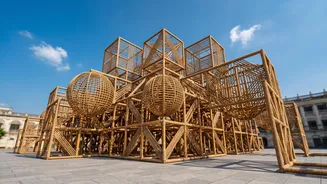
For those who appreciate thoughtful artistry and consistent innovation, Badamtala Ashar Sangha in South Kolkata is a must-visit. This club has built a formidable reputation for its creative and often award-winning themes that prioritize artistic merit over sheer scale. Rather than replicating famous monuments, Badamtala is known for its conceptual and often abstract installations, making it a trendsetter in pandal design. The artists and organizers focus on creating a cohesive, immersive environment where every element contributes to a central theme. This dedication to craftsmanship makes it a favourite among pandal hoppers looking for something that surprises and provokes thought, proving that a puja's impact isn't measured in its height, but in its depth of imagination.
The Socially Conscious Themes
Character isn't always about history or artistry; sometimes it's about a powerful message. In recent years, many smaller and mid-sized pujas have gained acclaim for tackling socially relevant subjects. Pandals have explored themes ranging from the struggles of displaced people during the 1971 war to breaking taboos around menstrual hygiene. For instance, Samaj Sebi Sangha has been known for its socially conscious concepts for years, even creating Braille panels for visually challenged visitors. These pujas use the festive platform to spark conversation and raise awareness. Seeking them out provides a profoundly different experience, one that connects the spiritual celebration to the pressing realities and aspirations of the world today, adding a layer of contemporary relevance to the ancient festival.