

The Unforgiving Lunar Night
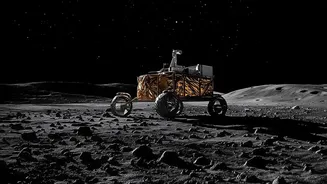
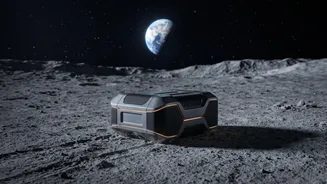
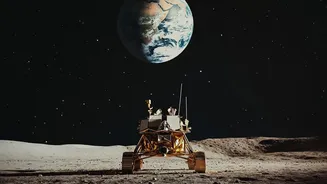
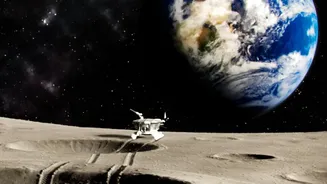
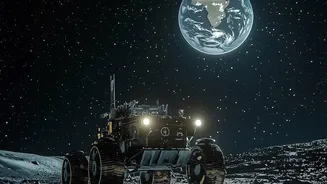
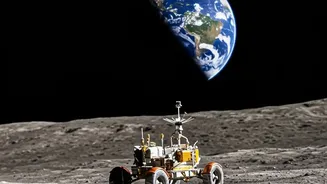
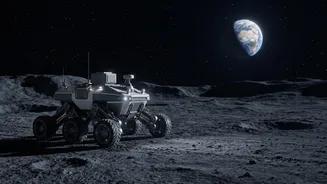
A lunar night is not like one on Earth. It lasts for approximately 354 hours, or nearly 15 Earth days. Without an atmosphere to trap heat, the surface temperature plummets, regularly reaching -173°C (-280°F) near the equator. In the permanently shadowed
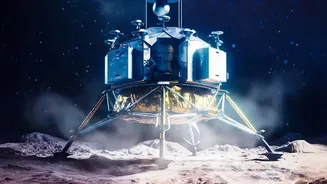
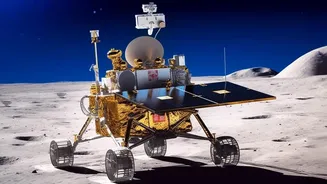
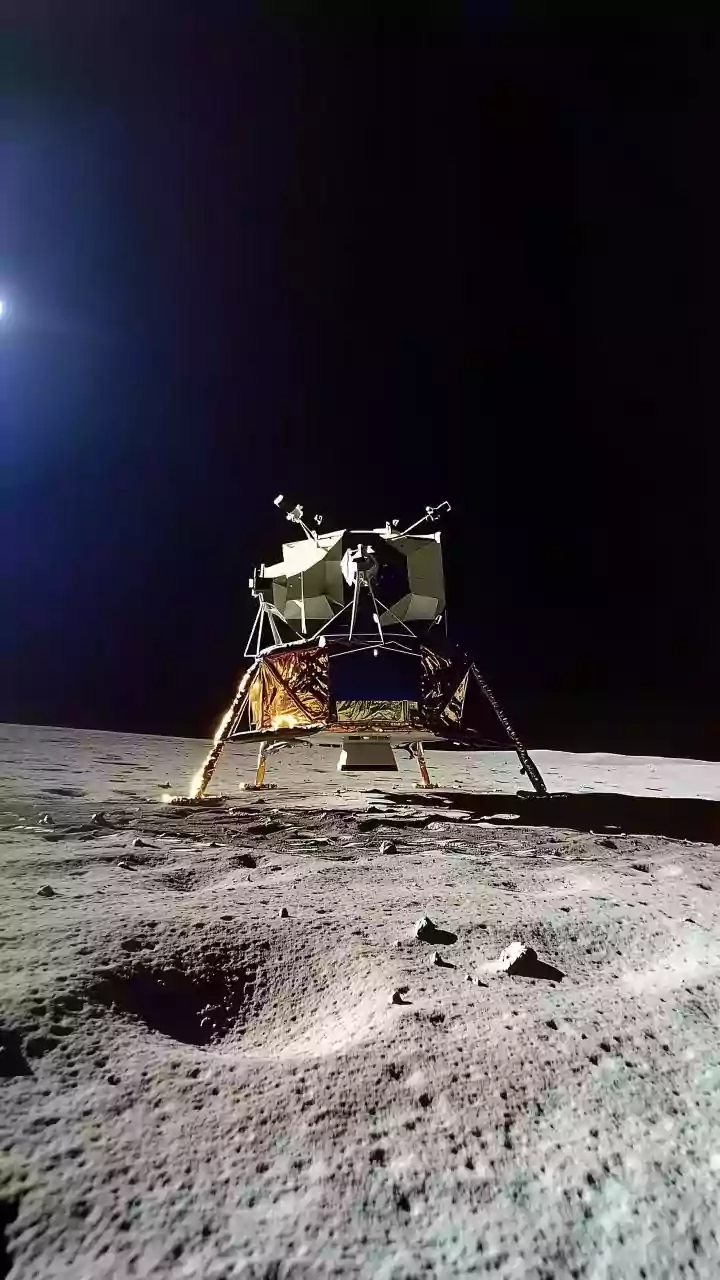
craters near the poles, temperatures can drop even further, to an astonishing -250°C (-418°F). These cryogenic conditions are hostile to almost all electronics and mechanical systems. Batteries lose their ability to hold a charge, circuits can fracture, and lubricants freeze solid. This is why many lunar missions, including India's successful Chandrayaan-3, were designed to operate for only a single lunar day before being put into an unprotected 'sleep mode' from which they were not expected to wake up.
The Old Guard: Radioisotope Heaters
For decades, the primary solution for keeping deep-space probes warm has been the Radioisotope Heater Unit, or RHU. These devices use the natural decay of a small pellet of radioactive material, typically plutonium-238, to generate a steady supply of heat. This heat keeps sensitive components from freezing, allowing missions like the Voyager probes and the Curiosity rover on Mars to operate for years in harsh conditions. While incredibly effective, RHUs come with significant drawbacks. The fuel is scarce, expensive, and adds layers of complexity and safety reviews to any mission. For the new era of faster, more frequent, and commercially driven lunar missions envisioned by programmes like NASA's Artemis, relying solely on nuclear sources is not a scalable long-term strategy.
A Fundamental Power Problem
The core challenge is twofold: without sunlight, solar-powered landers have no way to generate electricity. And as they sit idle, the intense cold saps any remaining power from their batteries, which also need to be kept within a specific temperature range to function. A lander must therefore carry enough battery power to not only run its own survival heaters for two weeks but also to keep the batteries themselves from freezing. This creates a difficult cycle: more heating requires more batteries, which adds more mass, which in turn increases launch costs. The alternative is a lander that simply cannot survive the night, drastically limiting the scope and duration of scientific missions.
The Game-Changer: Self-Heating Solutions
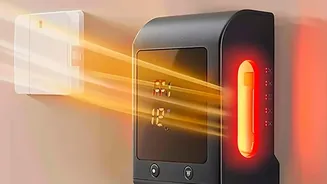
To solve this, space agencies and private companies are pioneering a new generation of power technologies designed specifically for lunar night survival. The headline innovation is the self-heating battery. Instead of relying entirely on external heaters that draw power to warm a cold battery, these new designs can warm themselves from the inside out. This approach is far more efficient, using a small fraction of the battery's own energy to maintain an optimal internal temperature. This concept is already used in some high-performance electric vehicles on Earth to improve performance in cold climates. For space, it means a lander's power system can protect itself through the deep freeze while consuming minimal energy, leaving more power available to restart operations when the sun rises.
Beyond Batteries: A Multi-Layered Approach
Self-heating batteries are just one piece of the puzzle. Engineers are developing a suite of technologies to work in concert. This includes advanced insulation to create 'warm boxes' for critical electronics, and innovative thermal switches. These switches, like the Loop Heat Pipes being developed by a team at Nagoya University, can act as radiators to dissipate heat during the hot lunar day, and then effectively 'turn off' to prevent heat from escaping during the cold night. Other concepts include chemical warming systems that use metal oxidation to generate heat, offering a non-radioactive alternative to RHUs with high energy density. Both NASA and ISRO are actively developing these types of artificial heating and power management systems to extend mission lifespans from 14 days to potentially hundreds.
Unlocking the Moon's Potential
The ability to reliably survive the lunar night is a transformative capability. It allows for missions to last for months or even years, enabling long-term scientific monitoring, such as seismology experiments to listen for 'moonquakes'. It is especially critical for exploring the lunar south pole, a region of intense international interest due to the presence of water ice in its permanently shadowed craters. Surviving the darkness means rovers can wait out the night and then continue their search for resources that could one day be converted into water, oxygen, and rocket fuel. This technology is the key that will shift lunar exploration from a series of short visits to the establishment of a sustained, long-term human and robotic presence on the Moon.