








The Green Engines of Rainfall
For centuries, the Indian monsoon was viewed as a massive weather system driven solely by temperature differences between the land and sea. However, scientists now understand that forests play a much more active and critical role. Through a process called
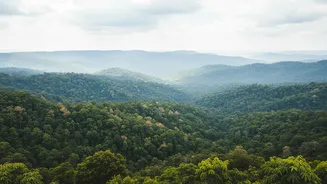
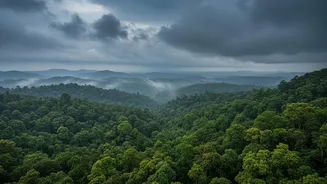
evapotranspiration, vast forest canopies release enormous quantities of water vapour into the atmosphere. This moisture-laden air contributes directly to cloud formation and rainfall, a phenomenon sometimes called "recycled precipitation". In a sense, forests act as giant, self-watering engines. Some theories, like the "biotic pump," even propose that the intense condensation over large forests creates low-pressure zones that actively pull in moist air from the oceans, sustaining the flow of monsoon winds deep into the continent. This process is especially vital during the latter half of the monsoon in regions like the Ganga Basin and Northeast India, where recycled precipitation can account for up to 25% of the rainfall.
An Increasingly Unreliable Monsoon
The familiar cadence of the monsoon is becoming a thing of the past. Recent decades have seen a worrying trend towards greater unpredictability: delayed onsets, long dry spells punctuated by sudden, intense downpours, and an overall chaotic pattern. This volatility poses a grave threat to a nation where agriculture, water security, and the economy are deeply intertwined with seasonal rains. A delayed monsoon shortens the growing season for crucial kharif crops, while intense bursts of rain lead to floods and soil erosion instead of replenishing groundwater. These shifts are no longer just about too much or too little rain; they represent a fundamental disruption of timing that destabilises ecosystems and livelihoods. For example, a recent break in the monsoon in the Western Ghats caused entire clutches of frog eggs, which rely on constant moisture, to dry up, highlighting the immediate threat to biodiversity.
The Alarming Link to Deforestation
Scientists are increasingly confident that the loss of forest cover is a major local factor compounding the global problem of climate change. Studies, including research from IIT Bombay, have found that large-scale conversion of forests to agricultural land has weakened the Indian monsoon, particularly in North and North-Central India. When forests are cleared, the vital process of evapotranspiration is reduced, cutting off a key source of atmospheric moisture. This not only diminishes local rainfall but also alters regional weather patterns. Models suggest that significant deforestation can change air circulation, reduce humidity, and increase the frequency of droughts and heatwaves. The destruction of forests in central India, for instance, may affect rainfall distribution across the entire country. The message from the research is clear: changes to our land are directly impacting the rain that falls from our skies.
What the Research Reveals
To understand these complex interactions, scientists are using a combination of satellite data, sophisticated climate models, and on-the-ground measurements. By comparing land use data from different decades, researchers can quantify how deforestation correlates with declining rainfall. For example, one study found that the Panchmarhi Biosphere Reserve in central India lost 13% of its forest cover over nearly 50 years, a period that also saw rising temperatures and more forest fires. Other research from IIT Kharagpur has uncovered a worrying paradox: while India is technically 'greening' due to irrigated cropland, the photosynthetic health of its natural, pristine forests is declining, particularly in the Western Ghats and Himalayas. This indicates that even where forests remain, their ability to function effectively as climate regulators is under stress from warming and drying trends.
Forests as a Climate Solution
The same science that highlights the problem also points toward the solution. If losing forests disrupts the monsoon, then protecting and expanding them is one of the most powerful tools for building climate resilience. Forests are not just victims of climate change; they are critical infrastructure for climate stability. They act as natural buffers, storing water during heavy rains and releasing it slowly during dry periods, which helps maintain the water cycle even after the monsoon retreats. Mountain ranges like the Western Ghats, covered in forests, are indispensable for regulating the monsoon, acting as a barrier that forces rain-laden winds to release their moisture. Conserving these vital ecosystems and investing in large-scale, sustainable reforestation efforts are crucial for stabilising rainfall patterns, ensuring water security, and protecting the unique biodiversity that depends on a healthy climate.