


The Golden Rule: Use 'Per 100g'
When comparing two products, ignore the 'per serving' information at first. Serving sizes are not standardised and can be misleadingly small. The 'Per 100g' or 'Per 100ml' column is your most reliable tool for a fair, side-by-side comparison. Whether
you're choosing between two brands of paneer or different types of yogurt, this number tells you the true protein density of the food, allowing for an honest evaluation. It is the mandatory standard for nutritional information in India, ensuring you can always find it.
Beware the 'Serving Size' Trap
Food companies decide the serving size, and it is often much smaller than what a person typically consumes in one sitting. A packet of biscuits might list 3 grams of protein per serving, which sounds decent. But if the serving size is just two biscuits and you eat half the pack, the numbers for calories and sugar add up much faster than the protein. Always check the serving size and the number of servings in the container to understand the full nutritional picture of what you are likely to consume.
Decoding 'High Protein' Claims
Front-of-pack claims like 'High Protein' or 'Rich in Protein' are regulated. In India, a solid food must have at least 12 grams of protein per 100g to be labelled 'high protein'. For liquids, the threshold is 6 grams per 100ml. A 'Source of Protein' claim is lower, requiring 6g per 100g for solids and 3g per 100ml for liquids. While these labels are a helpful starting point, they are marketing terms. The real truth is always in the nutritional table on the back. Recent FSSAI actions show that many products have misleading claims, so verifying the numbers yourself is crucial.
Protein Face-Off: Common Indian Foods
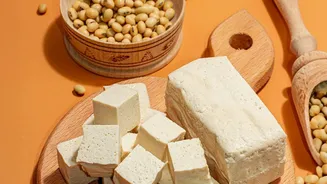
Let's apply this to real-world choices. When comparing paneer and tofu, paneer typically offers more protein, with around 18-20g per 100g, while tofu has about 8-15g depending on its firmness. However, tofu is lower in fat. For dals, masoor and moong dal are among the highest in protein, with about 24-25g per 100g (dry weight). And when it comes to yogurt, Greek yogurt or 'hung curd' packs a powerful punch with around 8-10g of protein per 100g, significantly more than the 3-4g found in regular curd. Soya chunks are a standout vegetarian source, containing over 50g of protein per 100g when dry.
Your 3-Step Shopping Plan
To make shopping faster, follow this simple process. First, ignore the front-of-pack marketing and turn the product over. Second, find the 'Per 100g' column and compare the protein value of the items you are considering. Third, glance at the ingredients list. Ingredients are listed by weight, so if a whole food like milk, paneer, or a legume is one of the first few ingredients, it's a good sign. If sugar or refined flour (maida) is near the top, you might want to reconsider, even if the protein number looks good. This quick check takes seconds but makes a huge difference.