




What Are eVTOLs, Exactly?
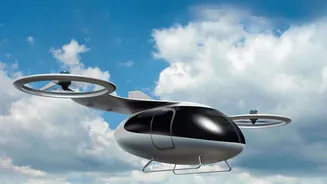
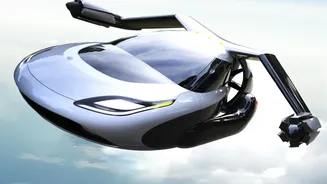
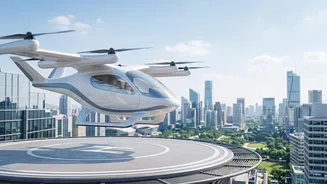
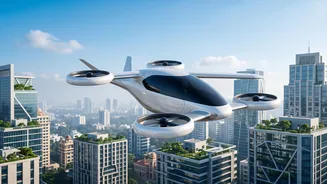
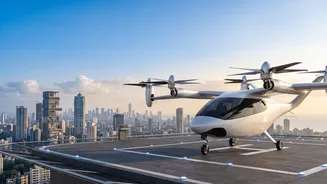
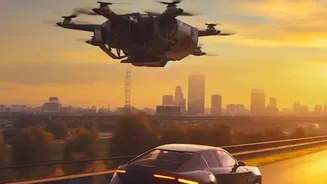
At the heart of this transport revolution is the eVTOL, which stands for electric Vertical Take-Off and Landing aircraft. Think of it as a hybrid between a helicopter and a small plane. They lift off vertically, powered by multiple quiet electric rotors,
which makes them ideal for urban areas without runways. Once airborne, they can transition to fly like a conventional aircraft, making them faster and more efficient than helicopters. Because they are electric, they promise lower emissions and significantly less noise, addressing two major complaints about urban aviation. Companies globally, and now in India, are racing to perfect these vehicles for commercial use.
India's Big Bet on Air Taxis
The most significant move in India's eVTOL scene is the partnership between InterGlobe Enterprises, the parent company of IndiGo, and US-based Archer Aviation. InterGlobe has signed a memorandum of understanding to purchase up to 200 of Archer’s ‘Midnight’ aircraft. This four-passenger, piloted eVTOL is designed for short, back-to-back trips of about 15-30 kilometres. The plan is not just to operate the aircraft but also to build out the entire ecosystem, including financing, training pilots, and constructing 'vertiports' for takeoff and landing. The government is also paving the way. The Ministry of Civil Aviation and the Directorate General of Civil Aviation (DGCA) are actively drafting policies for urban air mobility. The DGCA has already issued crucial advisory circulars for certifying these new types of aircraft and the vertiports they will use, signalling a clear intent to create a regulatory framework for operations to begin.
The Vision: Delhi to Gurugram in 7 Minutes
The initial focus for these air taxi services is on India’s most congested cities: Delhi, Mumbai, and Bengaluru. The flagship route being promoted is the 27-kilometre journey between Connaught Place in Delhi and Gurugram. By car, this trip can easily take 60 to 90 minutes during peak hours. Archer and InterGlobe project their eVTOL service could cover this distance in approximately seven minutes. The Civil Aviation Minister recently stated the government aims to see electric air taxis flying in India by 2028, viewing them as a key solution for urban mobility. The vision extends beyond just passenger convenience to include applications like medical evacuation and cargo logistics.
A Reality Check: The Roadblocks Ahead
While the seven-minute commute sounds incredible, making it a reality is a monumental task. The biggest challenge is infrastructure. Cities like Delhi have no existing network of vertiports. Identifying, acquiring, and building these landing pads on rooftops or in open spaces in a dense urban environment is a complex and expensive process. Secondly, regulation, while in progress, is still evolving. Safely integrating hundreds of low-flying aircraft into the airspace of a city like Delhi requires a completely new air traffic management system. Safety certification from the DGCA is another rigorous and time-consuming hurdle that every aircraft model must clear before carrying passengers.
A Solution for Everyone or Just a Few?
Even if the technical and regulatory challenges are solved, the question of cost remains. Early estimates for the Delhi-Gurugram route place a single ticket between ₹2,000 and ₹3,000. While this is touted as competitive with a premium Uber ride, it is far from being a mass-market solution for the average daily commuter. Initially, eVTOLs will likely serve as a premium, niche service for business travellers or for airport transfers, rather than a tool to solve the city's overall traffic problem. Proponents argue that as the technology matures, fleets scale, and operational efficiencies are found, prices could eventually come down, but for the foreseeable future, flying over traffic will remain a luxury.