


What's in a 'Ghotala'?
To understand the dish, you first have to understand its name. In Hindi and Gujarati, 'Ghotala' translates to 'scam' or 'mess'. While it seems like an odd name for a food item, it perfectly describes the appearance of this popular street food from Surat,
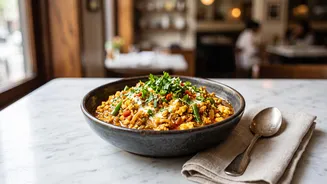
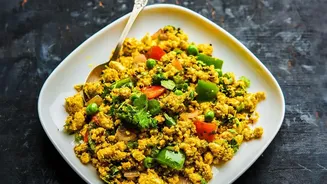
Gujarat. The ingredients are cooked and mashed together into a glorious, flavour-packed scramble where individual components merge into a unified, delicious whole. It’s a messy, chaotic preparation that hides a wealth of flavour, a delightful 'scam' for your taste buds.
A Vegetarian Spin on a Classic
Paneer Ghotala didn't appear out of thin air. It's the vegetarian answer to another famous Surti street food: Anda Ghotala (Egg Ghotala). The original dish involves boiled and fried eggs mashed into a spicy gravy, creating a unique texture. Creative vegetarian chefs adapted this concept, replacing the eggs with paneer to create a dish with a similar textural feel and hearty quality, making it accessible to a wider audience. This clever adaptation is a hallmark of Indian street food culture, where innovation constantly creates new and exciting dishes from established classics.
Texture Is the True Hero
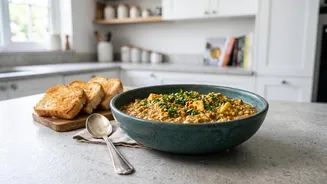
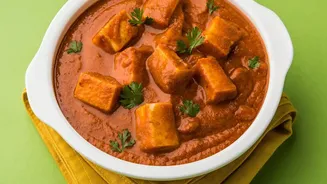
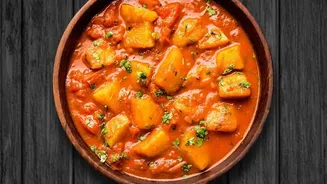
What truly sets Paneer Ghotala apart from other paneer dishes like bhurji or standard curries is its texture. Unlike Paneer Bhurji, where paneer is typically crumbled, Ghotala calls for the paneer to be grated, often using large-holed graters. This results in soft, fine shreds of paneer that melt into the gravy, creating a creamy, consistent mouthfeel rather than distinct chunks or crumbles. The gravy, a rich base of onion, tomato, ginger, and garlic, is also mashed to a near-smooth consistency. The grated paneer absorbs this flavourful base completely, ensuring every bite is saturated with spice.
The Street-Food Spice Signature
While many paneer dishes rely on a standard mix of garam masala, coriander, and turmeric, Paneer Ghotala often borrows a key ingredient from another street-food icon: pav bhaji masala. This specific spice blend is crucial for giving the dish its characteristic tangy, savoury, and slightly pungent flavour profile that is synonymous with the bustling food stalls of Western India. This, combined with butter and sometimes a topping of grated processed cheese, cements its identity as a rich, indulgent street-food delicacy rather than a simple home-style curry.
How It's Served
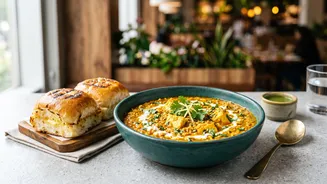
Presentation completes the Ghotala experience. True to its street-food roots, it is almost always served with buttered and toasted pav (soft bread rolls). The soft, spongy pav is the perfect vehicle for scooping up the messy, buttery gravy. Often, the dish is finished with a final dollop of butter, a generous sprinkle of fresh coriander, and sometimes even more grated cheese on top. This rich presentation is not just for show; it adds layers of flavour and reinforces the dish's status as a comforting, satisfying, and utterly indulgent treat.