





North India: Hearty Flours for Fasting
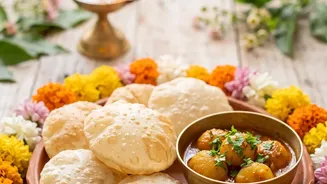
In North India, the Navratri fast, or 'vrat', calls for a specific pantry of ingredients that are both nourishing and permissible. Flours like Kuttu (buckwheat) and Singhara (water chestnut) become the stars of the kitchen. These gluten-free flours are used
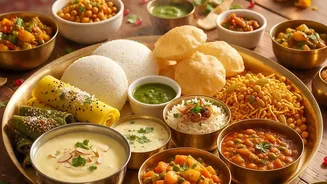
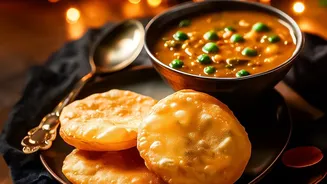
to prepare 'Kuttu ki Poori', a deep-fried bread that is a quintessential part of the Navratri thali. The dough, often mixed with boiled and mashed potatoes for better binding and texture, is seasoned with sendha namak (rock salt), green chillies, and cumin seeds. Another beloved dish is 'Singhare ke Atte ka Halwa', a sweet and rich pudding made from water chestnut flour, ghee, and sugar, providing a burst of energy. These dishes are more than just meals; they are a comforting tradition that marks the festive period across states like Uttar Pradesh, Delhi, Punjab, and Haryana.
Gujarat: A Feast of Farali Favourites
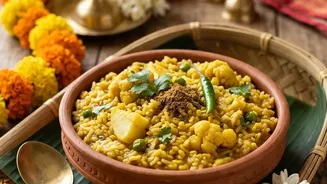
In Gujarat, where Navratri is synonymous with grand Garba nights, the fasting food, known as 'farali', is a celebration in itself. While Sabudana Khichdi is a pan-Indian favourite, Gujarat has its own unique preparations. 'Moraiyo' or 'Samo', a type of barnyard millet, is used to make a fluffy khichdi that serves as a light alternative to rice. Another classic is the 'Farali Pattice', a crispy potato snack with a sweet and nutty filling of coconut, peanuts, and dried fruits. For those with a sweet tooth, 'Rajgira Sheera', a pudding made from amaranth flour, offers a delightful end to a meal. The state's farali menu is a testament to its creative culinary spirit, turning simple, fasting-approved ingredients into a diverse and flavourful spread.
Maharashtra: Savoury Snacks for Upvas
Maharashtrian 'upvas' (fasting) cuisine is packed with robust flavours and satisfying textures. The undisputed star is the 'Sabudana Vada', a crispy, deep-fried fritter made from soaked tapioca pearls, mashed potatoes, and coarsely crushed peanuts, best enjoyed with a side of sweet yogurt. Another regional specialty is the 'Upvasachi Misal', a fasting version of the state's iconic spicy curry, often made with a potato base and topped with a farali chivda. For a wholesome meal, many households prepare 'Upvas Thalipeeth', a savoury multi-grain pancake made from a mix of fasting flours like rajgira (amaranth), singhara, and sabudana, spiced with green chillies and cumin. These dishes provide warmth and energy, making the fasting period both delicious and fulfilling.
South India: The Tradition of Sundal
In South India, particularly Tamil Nadu, Navratri celebrations are intertwined with the 'Golu'—an elaborate display of dolls. Here, the culinary tradition is centred around 'Sundal', a simple and nutritious dish made from legumes and lentils. Each of the nine days features a different kind of sundal, made from chickpeas, black-eyed peas, peanuts, or green gram. The preparation is straightforward: the legumes are soaked and boiled until tender, then tempered with mustard seeds, curry leaves, and chillies, and finally garnished with freshly grated coconut. This protein-rich offering is shared with friends, family, and neighbours who visit to see the Golu display, embodying the spirit of community and sharing that defines the festival.
Bengal: A Different Kind of Celebration
In West Bengal, Navratri coincides with Durga Puja, the state's biggest festival, which is more of a grand feast than a period of fasting. The air is filled with the aroma of 'Bhoger Khichuri', a flavourful rice and lentil dish offered to the goddess, and 'Labra', a mixed vegetable curry. However, for those who do observe the fast, the focus shifts to simpler foods. Fruits, milk-based sweets like 'Sandesh' and 'Mishti Doi', and preparations made from coconut are common. It highlights a different facet of the nine nights, where the emphasis for many is on feasting and community celebration, while still accommodating the personal, quieter traditions of fasting.