




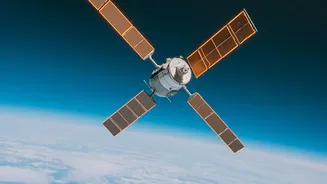


India’s Next Giant Leap in Space
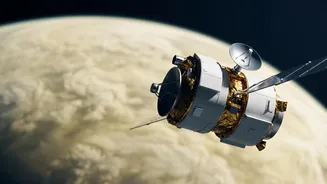
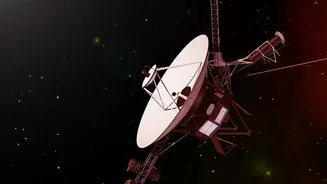
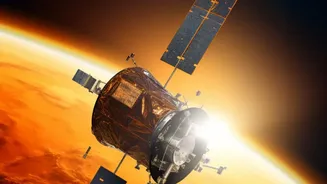
Fresh off the triumphs of Chandrayaan and Mangalyaan, the Indian Space Research Organisation (ISRO) is embarking on its most ambitious interplanetary journey yet. The Venus Orbiter Mission, unofficially known as Shukrayaan, marks India's first dedicated
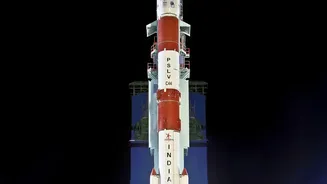
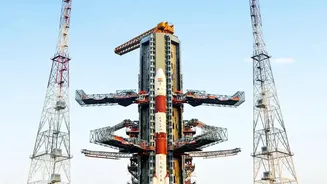
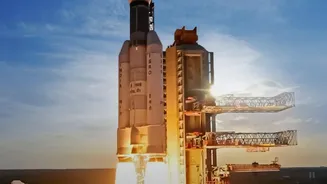
mission to our closest planetary neighbour. Formally approved by the Union Cabinet in September 2024, the mission is a cornerstone of India's vision to become a leading power in space exploration. Scheduled for launch in March 2028 aboard the powerful LVM-3 rocket, Shukrayaan is not just another space mission; it is a statement of India’s growing capabilities and scientific ambition. Following its launch, the spacecraft will embark on a 112-day journey before entering a carefully planned elliptical orbit around Venus, positioning it perfectly to begin its scientific investigations. The mission represents a logical next step, extending India’s presence beyond the Moon and Mars and into the deeper mysteries of our solar system.
Why Venus? Earth's Hellish Twin
Venus is often called Earth’s twin, and for good reason. It is similar in size, mass, and density. But the similarities end there. Venus is a hellscape, with surface temperatures hot enough to melt lead—around 475 degrees Celsius—and a crushing atmospheric pressure over 90 times that of Earth. Its most defining feature is a thick, perpetual blanket of clouds made of sulfuric acid, which traps heat in an extreme runaway greenhouse effect. Scientists believe Venus may have once been more like Earth, possibly with liquid water oceans. Understanding what went so catastrophically wrong in its climate evolution is a key scientific puzzle. By studying Venus, we can gain invaluable insights into planetary formation, atmospheric science, and even the long-term future of our own planet's climate. It serves as a natural laboratory for how a planet's climate can dramatically change, offering crucial lessons for Earth.
The Advanced Sensor Toolkit
To peer beneath the thick Venusian clouds, Shukrayaan will be equipped with a suite of 19 advanced scientific instruments, a mix of Indian and international payloads. The headline instrument is a high-resolution Synthetic Aperture Radar (SAR), which can map the planet's surface in incredible detail, regardless of the cloud cover. Another groundbreaking instrument is a ground-penetrating radar, a world-first for Venus, designed to study the planet's shallow subsurface. For studying the cloud chemistry, the mission will carry several key sensors. These include thermal cameras to measure temperature, spectrometers to analyze the composition of the atmosphere, and instruments to detect lightning. A key collaboration with Sweden, the Venusian Neutrals Analyser (VISWAS), will study the interaction between the solar wind and the Venusian atmosphere. The Venus Infrared Atmospheric Gases Linker (VIRAL), a joint effort with France and Russia, will look for trace gases—including phosphine, a potential biosignature that has caused much debate.
Secrets in the Sulphuric Clouds
The core of Shukrayaan’s atmospheric study is to understand the chemistry and dynamics of its clouds. These clouds of sulphuric acid are critical to the planet's climate but remain poorly understood. The mission's sensors will investigate how these clouds form, evolve, and influence the planet's extreme environment. One of the most intriguing questions is what happens chemically within the lower cloud layers, which are still a mystery. Shukrayaan’s instruments will also search for active volcanic hotspots. Volcanic eruptions could be a source of the sulphur dioxide that sustains the clouds and would be a major discovery, confirming that Venus is geologically active today. Recent experiments have even shown that essential organic molecules like peptides can surprisingly survive in concentrated sulfuric acid, which adds another layer of intrigue to what Shukrayaan might find within the Venusian clouds. By studying these processes, ISRO aims to build a comprehensive model of the Venusian atmosphere.
A New Era of Planetary Exploration
With a budget of approximately ₹1,236 crore, Shukrayaan is a cost-effective mission that showcases ISRO's hallmark frugal engineering. The mission is part of a renewed global interest in Venus, with NASA and the European Space Agency also planning missions in the coming decade. The data collected by Shukrayaan will not only be a national achievement but will also contribute to a global effort to understand our sister planet. The mission will demonstrate new technologies for ISRO, including aerobraking—a technique using the planet's own atmosphere to slow the spacecraft and adjust its orbit, saving precious fuel. This capability will be crucial for future deep-space missions. As India prepares to send astronauts to the Moon by 2040 and establish a space station by 2035, missions like Shukrayaan are vital stepping stones, building the scientific and technological foundation for the nation's future in space.