
Ghent, Belgium: A Fairytale Setting
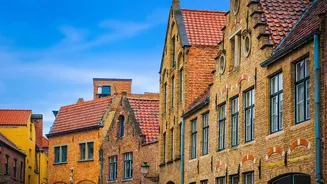
Often living in the shadow of nearby Brussels and Bruges, Ghent is arguably one of Belgium’s most beautiful destinations. Its historic centre is a stunning tapestry of medieval and Renaissance architecture, crisscrossed by picturesque canals. The city's
heart is the Graslei and Korenlei, a pair of quays lined with historic guild houses that reflect beautifully in the Leie River. This area was once the bustling center of the city's port and trade. A short walk from here reveals the city's 'three towers': Saint Nicholas' Church, the Belfry of Ghent, and Saint Bavo's Cathedral. For a dose of history, the formidable Gravensteen (Castle of the Counts) offers a glimpse into the life of the Counts of Flanders and provides panoramic views from its ramparts. The Patershol district, a maze of narrow cobblestone streets, is one of the city's oldest and most atmospheric areas, now filled with cozy restaurants and cafes.
Ljubljana, Slovenia: The Green Capital
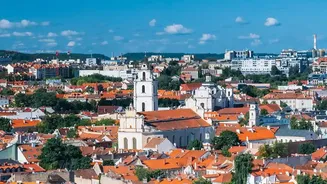
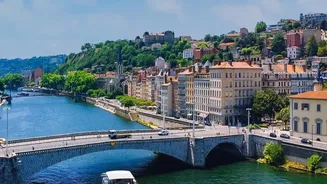
Slovenia's capital is a city that instantly charms with its relaxed atmosphere and vibrant green spaces. The entire historic old town is a pedestrian-only zone, making it a joy to explore on foot. The Ljubljanica River winds its way through the centre, its banks lined with lively cafes and weeping willows. The iconic Triple Bridge, a unique architectural feature designed by Jože Plečnik, serves as the gateway to the old town's cobblestone streets. Overlooking the city from a forested hill, Ljubljana Castle offers spectacular views of the terracotta rooftops and the distant Julian Alps. You can reach it via a scenic walk or a modern funicular railway. Don't miss the bustling Central Market, another Plečnik design, where you can sample local produce, or the whimsical Dragon Bridge, guarded by four impressive dragon statues that have become a symbol of the city.
Gdańsk, Poland: A Resilient Port City
Located on the Baltic coast, Gdańsk is a city with a rich maritime history that has been beautifully resurrected. The main tourist path, known as the Royal Route, runs along Długa Street and Długi Targ (Long Market). This area is lined with colourful, narrow merchant houses, ornate facades, and prominent landmarks like the Neptune Fountain and Artus Court. One of the most atmospheric spots is Mariacka Street, famous for its amber shops and charmingly decorated terraces. It leads from the massive St. Mary's Church, one of the largest brick churches in the world, down to the Motława River waterfront. Here, the medieval crane (Żuraw) stands as a testament to the city's trading past and now houses part of the National Maritime Museum. The city's shipyards are also historically significant as the birthplace of the Solidarity movement, which played a key role in the fall of communism in Poland.
Braga, Portugal: The Religious Heart
While many visitors to northern Portugal focus on Porto, the nearby city of Braga offers a different kind of charm, deeply rooted in its religious heritage. As one of Portugal's oldest cities, it's a place where ancient history feels alive. The historic centre is a compact and walkable web of cobblestone streets, bustling squares, and countless churches. The main pedestrian artery, Rua do Souto, is lined with shops and historic cafes, offering a perfect orientation point. The Sé de Braga (Braga Cathedral) is the oldest in the country, predating Portugal itself. However, the city's most spectacular sight lies just outside the centre: the Sanctuary of Bom Jesus do Monte. This hilltop pilgrimage site is famous for its magnificent baroque staircase, a zigzagging masterpiece of 600 steps that ascends to a church with stunning views. It’s a powerful and visually impressive experience that captures the city's unique spiritual character.