





Tragedy on the High-Speed Line
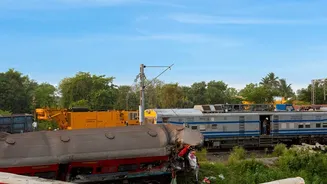
On October 28, 2026, two high-speed trains collided near Urda, south of Madrid, resulting in 69 fatalities and scores of injuries. A state-operated Renfe train crashed into the back of a stationary train run by a private company, Iryo. Preliminary reports
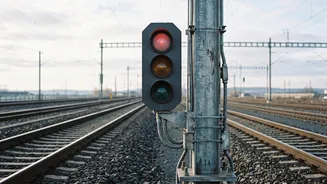
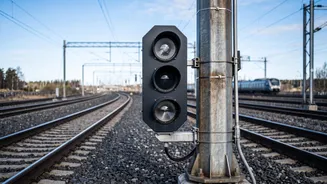
indicate that the incident began with a failure in the automatic signalling and safety system on that stretch of track. Following the system failure, a central control centre reportedly gave the Renfe train clearance to proceed, an 'inexplicable' decision that led it directly into the path of the stopped train. The disaster was Spain's second fatal high-speed rail accident in 2026, shaking public confidence in a network long considered a benchmark of safety and efficiency.
The Automated Guardian Angel
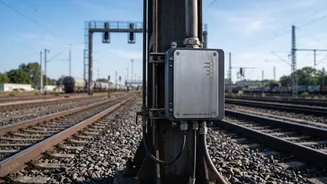
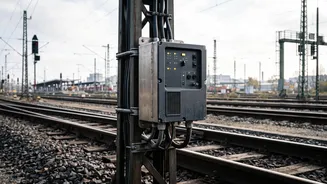
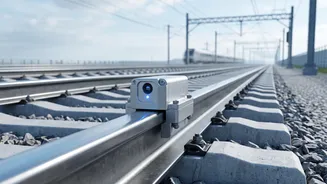
At the heart of high-speed rail safety is the Automatic Train Protection (ATP) system. Think of it as a digital co-pilot that constantly monitors the train's speed and location. These systems use trackside beacons and onboard computers to enforce speed limits and ensure safe distances between trains. If a driver exceeds a limit or fails to respond to a warning, the ATP can automatically apply the brakes. Europe is moving towards a standardized ATP called the European Rail Traffic Management System (ERTMS), designed to replace over 20 incompatible national systems. However, the Madrid-Seville line, Spain's oldest high-speed route, was still using an older system known as LZB, which had reportedly suffered over 170 failures in 2026 alone. The crash highlights a critical vulnerability: when the primary automated system fails, operations fall back on human controllers, reintroducing the risk of human error.
India’s Bullet Train and Its Safety Net
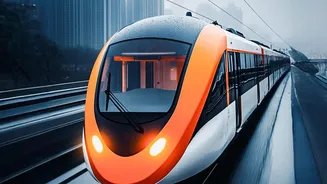
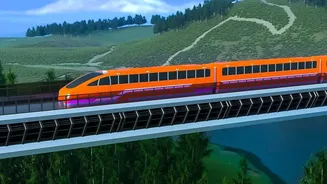
These events in Spain are deeply relevant to India, which is constructing its first high-speed corridor between Mumbai and Ahmedabad (MAHSR). The project, a 508-kilometre line built with Japanese Shinkansen technology, is not just about speed but about importing a world-class safety culture. India's bullet train will feature an advanced, continuous train control system based on the Japanese model, which functions on principles similar to ERTMS. Beyond just train control, the MAHSR corridor is being equipped with an extensive network of sensors, including 28 seismometers for early earthquake detection and anemometers to monitor high wind speeds, both of which can trigger automatic braking. This multi-layered approach is designed to create a comprehensive safety net, learning from decades of global high-speed rail operations.
The Human Factor in an Automated World
The most profound lesson from the Spanish crash is that technology alone is not a silver bullet. The 2013 Santiago de Compostela derailment in Spain, which killed 80 people, was caused by a distracted driver entering a curve at more than double the speed limit, on a section of track where the automated braking system was not active. That incident, like the most recent one, underscores the immense importance of the interface between human operators and automated systems. Even with the most advanced technology, clear protocols, rigorous training, and a robust safety culture are paramount. Failures must account for both technology malfunctions and inevitable human fallibility. As India prepares to launch its trains at an operating speed of 320 km/h, ensuring that drivers, controllers, and maintenance crews are impeccably trained to handle both routine operations and crisis scenarios will be just as critical as the technology itself.